The Platform Builder Who Collects
Turning Points
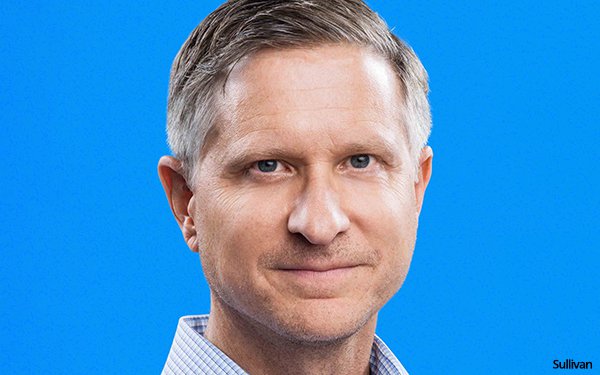
In February 2026, Jay Sullivan walked into Fandom's San Francisco offices as its new Chief Executive Officer. Outside the window: a city that had watched him navigate Mozilla through its most turbulent years, leave Twitter during a convulsive ownership transition, and sit quietly on Signal's board while half of Silicon Valley tried to figure out what came next. This was not the first time Sullivan had entered a room at a critical moment. It was at least the fourth.
Start with the math. Sullivan graduated from Yale with a B.S. in Applied Mathematics — a training that shows up not in his jargon but in how he thinks about systems. In 1999, when the web was still dial-up and mobile was barely a concept, he co-founded PocketThis (later PhoneSpots), a mobile personalization startup that was essentially predicting a world that hadn't arrived yet. The company was acquired by Call Genie, Inc. in 2007, the same year Sullivan joined a nonprofit dedicated to keeping the internet free and open: Mozilla.
Seven years at Mozilla is an eternity in tech. Sullivan arrived as SVP of Product, overseeing the product management and design teams behind Firefox at the height of its influence. He watched Firefox help break Internet Explorer's near-monopoly, shipped major releases during the browser's ascent, and became one of Mozilla's most visible advocates for the open web platform. He argued, loudly and publicly, for giving people genuine choice and control online — a position that was idealistic before it became mainstream.
"I've always been drawn to building products that millions of people use every day - and that also serve as platforms others can build on."
By 2013 he was Chief Operating Officer. When CEO Gary Kovacs departed, Sullivan became Mozilla's Interim CEO — a steady hand during a transition that would eventually bring Brendan Eich briefly to the role before his own rapid exit. Sullivan held the line, kept the organization functional, and moved on. It was a pattern that would repeat: enter an organization in flux, stabilize it, leave it better.
Groupon was next — a company mid-pivot from daily deals to a two-sided marketplace. Sullivan joined as SVP Consumer Product, later Chief Product Officer, running the platform as Groupon tried to evolve its model. Then came Facebook, where he led the development of Reality Labs' AI Assistant before pivoting internally to lead privacy, integrity, and systems product teams for Messenger and Instagram Direct. If building consumer AI at the moment it became real sounds like useful experience for running a fan platform in 2026, that's not a coincidence.
Twitter — or X, by the end — was his last stop before a deliberate pause. As General Manager of consumer and revenue products, Sullivan led the teams across engineering, product, design, research, and data science that made Twitter's front-facing products work. He left in 2022, before Elon Musk's acquisition, and spent three years on the boards of Signal, WineDirect, and the San Francisco SPCA. An encrypted messaging nonprofit. A wine e-commerce business. An animal welfare group. The choices are not random: they trace someone who picks commitments based on values, not optics.
At Fandom, Sullivan inherits 250,000 wikis, a portfolio that includes GameSpot, Metacritic, and TV Guide, and a strategic question with no easy answer. For years, Fandom was a destination people reached via Google search — a reference layer for pop culture. That model is under pressure. AI answer engines are absorbing the traffic. Short-form video is pulling attention elsewhere. Sullivan's play: turn Fandom from a place fans come to look things up into a place fans actually live — real-time, interactive, AI-enhanced, and directly engaged with the IP they love.
"We see amazing opportunity for Fandom in enabling these fans to engage even more deeply with the IP they love, in real time," Sullivan said at the time of his appointment. Jimmy Wales, who co-founded Fandom alongside Wikipedia, was direct: "Jay Sullivan's experience working on products with massive reach, and understanding of the power of community, makes him the perfect leader."
Two decades of platform thinking, three corporate pivots, one interim CEO stint, three patents, and a Signal board seat. That's the resume. The question Fandom hired him to answer is more interesting: can the world's largest fan knowledge base become the world's most engaging fan experience? Sullivan has been building toward exactly that problem his entire career — he just didn't know it yet.