Economist / Author / Policy Adviser
Jared Bernstein
He spent a career asking one stubborn question: does the economy actually work for the people who do the work?
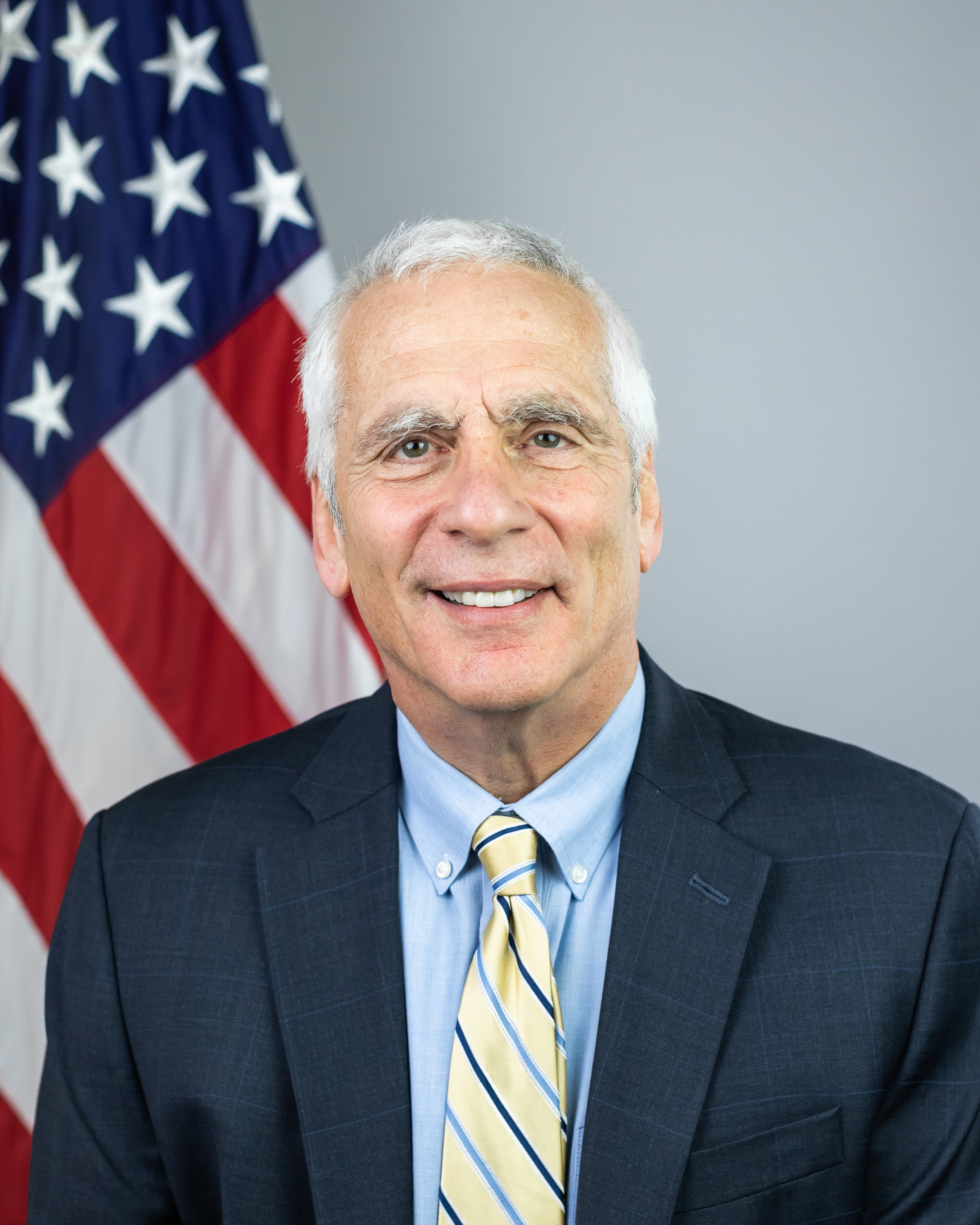
Same guy who used to count off jazz tunes - now counting jobs reports.
He spent a career asking one stubborn question: does the economy actually work for the people who do the work?
Walk into the chair's office at the Council of Economic Advisers and you expect the usual resume: a PhD in economics, a tenured chair, a string of journal citations. Jared Bernstein has none of those. His terminal degree is a doctorate in social welfare. His first paying instrument was a double bass. Before he could tell you what the Phillips curve implies for next quarter, he could tell you how to walk a bassline through a twelve-bar blues at two in the morning.
That is the strange specific worth holding onto. The economist who ran point on White House economic policy from 2023 to 2025 arrived at macroeconomics sideways - through music school, then social work, then a think tank that measured the country one paycheck at a time. He never stopped sounding like a man who had met the people behind the data.
For most of his public life, Bernstein has been a translator. He takes the cold abstractions of labor economics - slack, mobility, the natural rate - and reroutes them through a single human test: is the worker better off this year than last? It is a deceptively simple lens, and he has trained it on everything from minimum-wage law to the federal deficit.
He wrote books about it. He blogged about it relentlessly, often three charts deep. He argued about it on CNBC. And eventually he carried that lens into the West Wing, where the abstractions came with consequences attached and the cameras did not blink.
Low unemployment by itself cannot address all the inequities in society.- Jared Bernstein, on why a hot labor market is necessary but not sufficient
From July 2023 until the Biden administration closed in January 2025, Bernstein chaired the Council of Economic Advisers, the small in-house shop that tells a president what the numbers mean. It is a job usually reserved for academic economists with a wall of credentials. The Senate confirmed him 50-49 - one of the tightest margins the post has ever seen, a reminder that his unconventional path drew both admirers and skeptics.
Inside the building, his brief was the post-pandemic economy: an inflation surge that bruised household budgets, a labor market that kept defying the doomsayers, and an argument, fought daily, over whether the recovery was real for ordinary workers or just for the charts. Bernstein, true to form, kept pointing at wages near the bottom of the distribution, where gains, when they came, mattered most.
He had been here before, in spirit. From 2009 to 2011 he was chief economist to Vice President Joe Biden during the worst stretch of the Great Recession, and executive director of the Middle Class Working Families Task Force. The two men have a long, plain rapport. When Biden wanted an economist who spoke human, he kept calling the same number.
Between those two White House tours, Bernstein did not go quiet. He posted. His blog became a kind of public seminar - jobs-day reactions, deficit explainers, wage trackers - written for anyone willing to follow a chart. He was a fixture on CNBC and a columnist who could turn a confusing data release into something a commuter could finish before the next stop.
At the Manhattan School of Music he learned double bass from Orin O'Brien - the first woman to win a permanent chair in the New York Philharmonic. Bernstein went the other direction with it: out of the orchestra pit and into the jazz clubs.
Before the spreadsheets there was a caseload. He took a master's in social work at Hunter College and worked as a social worker in New York. The doctorate that followed was in social welfare, not economics. The empathy was the entry point, not an afterthought.
A 2023 documentary on modern monetary theory, Finding the Money, captured Bernstein gamely wrestling on camera with how the government actually creates dollars. The clip went viral and the internet argued about it for weeks. He took the heat the way a working musician takes a bad room - and kept playing.
Graduates the Manhattan School of Music with a Bachelor of Music. Plays double bass on the New York jazz scene and abroad.
Earns a Master of Social Work at Hunter College and works as a social worker in the city.
Joins the Economic Policy Institute as a senior economist, leading its Living Standards program.
Completes a doctorate in social welfare at Columbia University.
Serves as Deputy Chief Economist at the U.S. Department of Labor.
Chief economist and economic adviser to Vice President Joe Biden; runs the Middle Class Working Families Task Force.
Senior fellow at the Center on Budget and Policy Priorities; CNBC contributor, columnist, and prolific blogger.
Appointed a member of the White House Council of Economic Advisers.
Confirmed 50-49 and sworn in as Chair of the Council of Economic Advisers.
Term ends with the close of the Biden administration.
Ask him to rank what moves the needle for a typical working household, and the emphasis is unmistakable. This is an illustration of his stated priorities, not a measured index.
Subtitle and all: "Why Do I Feel So Squeezed?" He answers the dollars-and-cents questions real people actually ask - Social Security, immigration, the stock market, a living wage - without the jargon.
A blueprint for reuniting growth and prosperity. He self-published it and gave the e-book away free, because a policy argument nobody reads changes nothing.
Nine editions co-authored - the running scorecard of how labor is faring. If you want the long view of the American paycheck, this is the ledger.
The U.S. government can't go bankrupt because we can print our own money.- Bernstein, in the line that launched a thousand arguments online
There is a temptation to treat the music as trivia, a charming line at the top of a profile. It is more than that. A bass player's job is to hold the bottom - the part of the band nobody applauds and everyone depends on. Lose the bass and the whole thing wobbles. It is hard not to read Bernstein's entire economics through that frame: keep your ear on the bottom of the distribution, because that is where the structure either holds or fails.
His critics call him an ideological pick, too progressive for a job built on academic neutrality. His defenders call that exactly the point - that the council has never been neutral, only differently weighted, and that someone ought to walk in carrying the worker's brief. Both can be true. What is not in dispute is that he showed up to the most credentialed room in economic policy without the standard credential, and held the chair anyway.
He born into a musical, union-adjacent household - his mother taught school and belonged to the teachers' union - and the through-line from that kitchen table to the West Wing is short and straight. Work has dignity. Wages are the measure. The rest is commentary.
Now out of government, he remains what he always was between appointments: a public economist, explaining the numbers to anyone who will listen, still suspicious of any chart that goes up while paychecks go sideways. The aspiration has never moved. Reorient the whole apparatus - monetary, fiscal, trade - around full employment and rising real wages, and let the gains reach the people standing at the bottom of the line.
It is not a fashionable kind of economics. It does not promise a single elegant equation. It is closer to the discipline of holding down a groove: unglamorous, repetitive, essential. Bernstein has been keeping that time for forty years, and he does not appear inclined to drop it.
No economist works alone, and Bernstein's career is a map of the institutions that argue for working people. The Economic Policy Institute, where he spent the heart of the 1990s and 2000s, gave him the data infrastructure and the worldview - a think tank founded to put labor's questions at the center of the conversation rather than the margins. The Center on Budget and Policy Priorities, his home between government stints, sharpened the budget side of his thinking, the unglamorous arithmetic of who gets what from the federal ledger.
The relationship that defined his public career, though, is with Joe Biden. The two found each other in 2009, when the country was hemorrhaging jobs and the new vice president wanted an economist who could explain the wreckage in language a union hall would recognize. Bernstein fit. When Biden won the presidency, the call came again - first to the council, then to its chair. Few advisers get summoned back across a decade and a change of office. Bernstein did, twice over.
Around him sat the wider Democratic economic brain trust - the Cecilia Rouse he succeeded as chair, the academic economists who out-credentialed him on paper, the fellow travelers who shared his conviction that a tight labor market is a moral instrument and not just a statistical condition. He could spar with the centrists and the deficit hawks without losing the room, in part because he had spent years on television learning to disagree without sneering.
And then there is the audience that has nothing to do with Washington at all: the readers of his blog, the commuters who caught his CNBC hits, the students he taught at Howard, Columbia, and NYU. For them he was never the chair of anything. He was the guy who could make a jobs report make sense before the coffee got cold. That is a constituency a confirmation vote cannot grant and cannot take away.