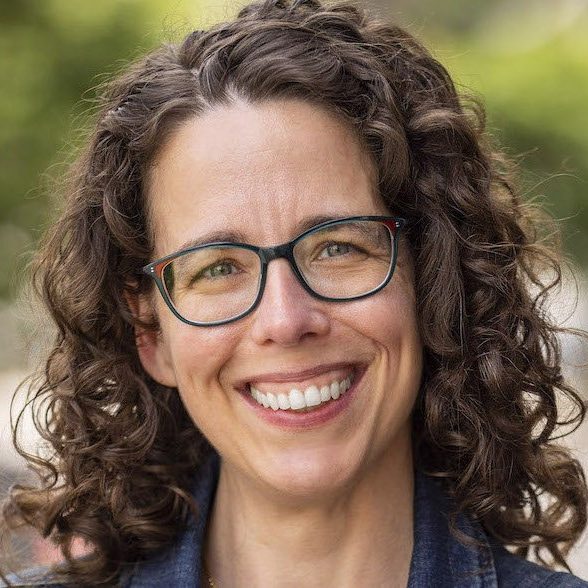
Thirty thousand writers open her email every week. Not because she promises bestseller status or a six-figure deal, but because she tells them exactly what those things actually require. Jane Friedman has spent fifteen years building what might be the only genuinely neutral voice in an industry that runs on relationships, conflicts of interest, and well-dressed self-promotion.
She operates from Cincinnati, Ohio - not New York, not Los Angeles, not the conference circuit that publishing people call "the industry." That distance is intentional. It keeps her honest. No agent owes her a favor. No publisher is hoping she'll go easy on their acquisition strategy. When she writes that the midlist is dying or that AI is reshaping rights negotiations, nobody's calling her editor.
This is what makes her unusual: she has no financial stake in your decision. Most publishing advice comes packaged with an invoice. Someone wants to edit your manuscript, represent you, self-publish your book for a fee, or sell you a course that will unlock the algorithm. Friedman teaches, yes - but she is not running a hybrid publishing service, not taking a percentage, not hoping you'll fail so she can sell you a solution. That independence is her brand, and she guards it like a trade secret.
"Business and art must not be at odds."- Jane Friedman
From Rural Indiana to Running Writer's Digest
She grew up in rural Indiana and credits this, completely seriously, as her professional superpower. There is something about a Midwestern upbringing - the practical, the unvarnished, the slightly suspicious of coastal enthusiasm - that lends itself to the kind of analysis Friedman does. She does not get excited about publishing trends. She documents them.
By the early 2000s she was at F+W Media, publisher of Writer's Digest, overseeing a multimedia brand worth more than $10 million and managing a twenty-person team through the industry's first serious collision with the internet. This was not a straightforward era to navigate. The question of whether digital distribution would help or obliterate the magazine business remained genuinely open. Friedman ran toward the question. She launched Writer's Digest on social media, built out a conference and webinar series, and shepherded the brand through its digital adolescence before departing in 2010.
The academic phase came next. Two years at the University of Cincinnati as a tenure-track professor of e-media, followed by a stint at Virginia Quarterly Review where she doubled web traffic during issue launches and grew digital subscriptions from zero to a quarter of total subscriptions. Then, in 2015, she made the choice that defined everything: she went fully independent.
The Day Amazon Sold Fake Jane Friedmans
In August 2023, Jane Friedman discovered something that most authors would consider a nightmare and most readers would consider science fiction: multiple AI-generated books were being sold on Amazon under her name. Books she had never written, never approved, never seen. The titles mimicked her expertise - writing advice, publishing guidance - designed to exploit her reputation among authors who trusted her name.
Amazon's initial response was to decline removal. This was a mistake Amazon would regret, because Friedman knew exactly what to do with a refusal: she went public. CNN covered it. NPR covered it. The Daily Beast covered it. Bloomberg Law covered it. Amazon removed the books within days.
Her response during the media storm was characteristically Friedman: "Someone was trying to profit off my name. It's a particularly gross violation. But there's also an industry side of me that's also kind of fascinated by what's happening." Most people would not find the fascinating part. She did.
The incident made her the default commentator on AI, authorship, and copyright - a role she has continued to inhabit with the same clear-eyed analysis she brings to everything else.
The Newsletter That Predates Instagram
Electric Speed has been running since 2009. Instagram launched in 2010. Snapchat in 2011. TikTok didn't exist for another decade. Most digital publishing experiments from 2009 have not survived to see 2025. Electric Speed has 30,000 subscribers.
The format is deceptively simple: four digital tools or resources per issue, plus reader recommendations. Nothing flashy. No hot takes. Just consistent, curated, useful. In 2020, Digital Book World named it Media Outlet of the Year. It is the publishing world's most reliable proof that consistency compounds.
The paid newsletter, The Bottom Line, launched in 2015 and built to over 8,000 subscribers who pay for nuanced market intelligence and industry analysis. These are publishing professionals and serious authors who need real information, not reassurance. The readership tells you something about the writing: it is for people who need to act on it.
"I believe history is on the writers' side: they've been sustaining their careers in ever more innovative ways since Gutenberg."- Jane Friedman
The Book That Became Required Reading
In 2018, University of Chicago Press published The Business of Being a Writer. The Library Journal gave it a starred review. MFA programs and publishing degree courses adopted it as a classroom text. A second edition arrived in 2025, updated with a section on AI's impact, exercises at the end of each chapter, and a companion website at businessofwriting.org.
The book's central premise is the one Friedman has always argued: that understanding the business of writing is not a betrayal of the creative impulse, but a condition of the creative life. Treating it as something separate, something distasteful, something to be dealt with by an agent or a publisher or a manager, is a form of professional helplessness that hurts writers far more than it protects them.
She says it plainly: "Marketing is not what lures a writer to this pursuit. Marketing is the adversary that arrives smuggled inside the Trojan Horse of one's creative impulse." This is the kind of sentence that gets quoted by people who have learned the hard way that she is right.
The Other Jane Friedman Problem
There is another Jane Friedman in publishing. She was President and CEO of HarperCollins Worldwide from 1997 to 2008, one of the most powerful figures in the corporate book business. She invented the author's tour. She founded the first audiobook division at a major trade publisher. She is, by any measure, a legend.
The educator Jane Friedman has been confused with the executive Jane Friedman for over a decade. She has addressed it with genuine amusement, rather than frustration. Being mistaken for the former CEO of HarperCollins is, she seems to acknowledge, a peculiar kind of problem to have. It has not noticeably slowed either of them down.
What She Actually Believes
She listens to Alan Watts lectures. This is a detail she has mentioned publicly and it reveals something about the architecture of her thinking - beneath the practical analysis of trade margins and rights deals, there is a philosophical disposition, a genuine curiosity about why people do what they do and what they are actually trying to accomplish when they sit down to write.
Her view of writers is not sentimental. She doesn't traffic in the myth of the suffering artist or the transformative power of authentic voice. She thinks writers are people with a skill and a vocation who deserve clear information about the industry they are trying to work in. The clarity is the gift.
She has served as an advisor to the Chicago Manual of Style - the book copy editors treat as scripture. She has sat on grant panels for the National Endowment for the Arts, the Whiting Awards, and the Creative Work Fund. She has been curriculum faculty at Southern New Hampshire University's MFA program and at the University of Virginia. She is deeply embedded in the institutional machinery of American letters while remaining, institutionally, answerable to none of it.
That contradiction - embedded but independent, knowledgeable but unobligated - is the whole point. It is what 100,000 readers show up for every month.