A travel website competition is an unusual place to begin a career in airline payments. Yet that is where Jan Blanchard’s route into the business took its turn. He ran a contest at Tourist Republic. The winner introduced him to a small drinks company. That company became Retail inMotion, and Blanchard went on to spend nine years helping build its airline technology business. A prize had produced an introduction; the introduction produced an occupation.
The pleasing thing about this origin story is its lack of tidiness. There was a travel entrepreneur, a conversation and an opportunity to work on the machinery behind an ordinary transaction. Today, as co-founder and CEO of MOST, Blanchard works on what happens when somebody buys something aboard an aircraft. For the passenger, this should occupy very little of the journey. For the people making it work, there is rather more to consider.
A sofa before the cabin
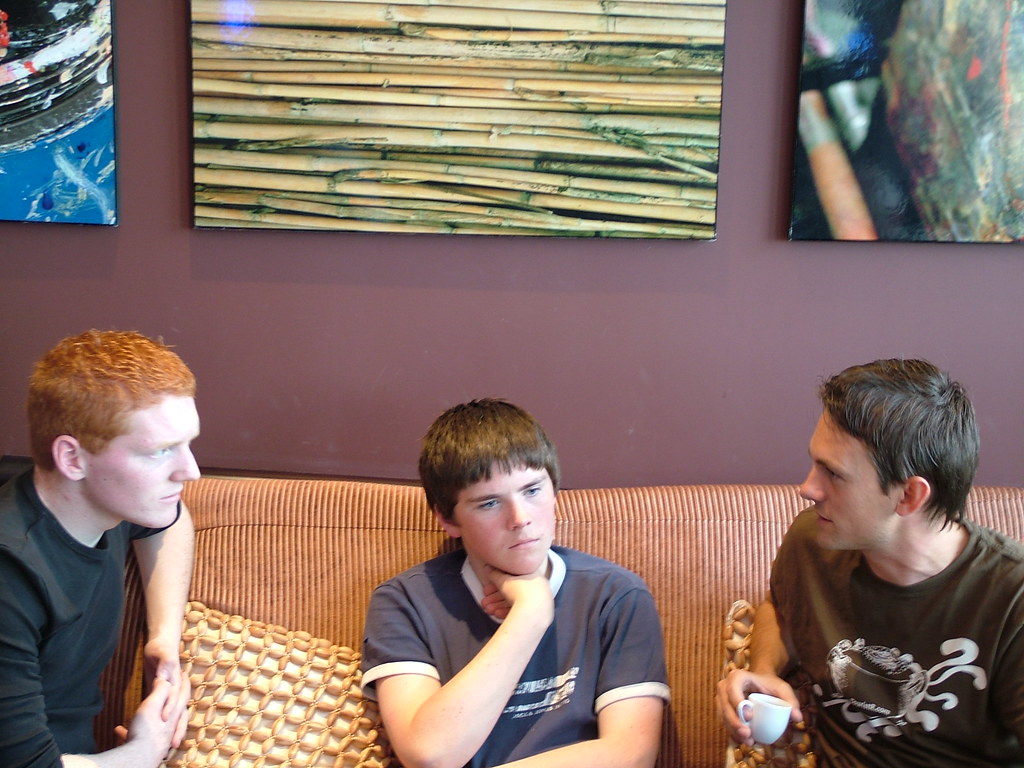
One photograph places him in the Irish startup scene long before MOST. It was taken at Limerick OpenCoffee on August 9, 2007: Blanchard sits with Patrick and John Collison, a small cup in his hand. Bernie Goldbach called the picture “Collison Couch.” It is an appealingly modest record of people exchanging ideas. Whatever else entrepreneurship requires, it still seems to need somewhere to sit.
By June 2008, he was CEO of Tourist Republic, working with the Digital Enterprise Research Institute at NUI Galway on an intelligent trip planner called TripPlanr. The €200,000 project, supported through Enterprise Ireland’s Innovation Partnership programme, aimed to bring traveller recommendations together with airline and accommodation information. It would help someone assemble a trip around several destinations, a budget and a fixed amount of time.
That was a specific ambition. Travel planning involved choices that affected one another: spend another night here, take a different flight there, and the rest of the itinerary changes. Blanchard’s business wanted software to handle more of that work. The traveller would still have the adventure. Ideally, arranging it would require less administration.
One airline becomes nearly thirty
Retail inMotion gave him another set of connected problems. He joined in 2012. By January 2017, when he was appointed to lead its new US branch in Dallas, its portfolio of IT customers had grown from one airline to nearly 30. His title then was director of IT sales. The American operation opened with an existing American Airlines IT contract and an intention to expand across North America.
The move also changed his family’s geography, taking them from the west of Ireland to Dallas. His work now involved airlines, airports and colleagues across a much wider map. He later became Retail inMotion’s chief commercial officer. The commercial job sat close to a practical question: how could the tools make an onboard retail programme work better for the people actually running it?
- 2008Tourist Republic
TripPlanr collaboration - 2012Retail inMotion
Airline technology - 2017Dallas
Leading the US branch - 2021A fresh start
Leaving after nine years
When he left in September 2021, he described having helped develop the technology offering from its first customer through the company’s acquisition by the Lufthansa Group and subsequent growth. He also gave the account a less polished, more useful sentence: “I failed much more than I succeeded.” It is a striking admission to place beside a successful expansion. It allows room for the part of a career that a list of job titles leaves out.
“I failed much more than I succeeded.”
Jan Blanchard, reflecting on nine years at Retail inMotion
By 2020, his work at Retail inMotion included helping airlines introduce cashless sales, digital menus, contactless payments and orders placed before departure. Those changes involved several moments in the same purchase: choosing, paying and receiving the item. A passenger could make a decision before reaching the aircraft, leaving the crew to deliver the order aboard. For Blanchard, onboard retail already extended beyond the moment a trolley appeared beside a seat.
The phone comes back around
There is another 2007 memory in his story. That summer, Blanchard bought his first iPhone at Apple’s Palo Alto store. Travelling back to Ireland, he remembers imagining how the device could change the way people used technology. It was the sort of purchase that came with possibilities attached, rather than merely a charging cable.
Years later, the iPhone became part of the equipment his company offered airlines. MOST’s FlexPay for iPhone combines Apple Tap to Pay with an integrated slim payment device. The company has also developed on iPads and iPad Minis. The distance between being interested in a device and making it useful in a cabin is substantial: an airline needs a tool that works within its own operation, with its own crews and payment arrangements.
Blanchard launched MOST with fellow aviation technology veteran John Vaughan. Their proposition brought retail software and payment technology together for businesses on the move. His earlier work had included helping introduce cashless cabin payments in 2013 and participating in the development of phone-based payment devices for cabin crew. Starting again meant carrying that experience into another company, with another set of decisions about what to build.
A shop with a departure time
An aircraft presents a rather demanding setting for a checkout. Connectivity can be unreliable. Flights can be short. Inventory changes. The crew has responsibilities beyond selling refreshments. Blanchard has described those constraints as forces that shape the product. A screen has to earn its place in somebody’s working day, particularly when that day takes place in a narrow aisle.
In a 2024 discussion of onboard retail, he described a quick-pay implementation that needed just one button press to complete the order and payment. That is a wonderfully small unit in which to express an ambition. It makes the result intelligible to anyone who has ever watched a simple purchase become a prolonged consultation with a machine.
A schematic of the connected tasks MOST brings together. Actual workflows vary by airline.
Hardware and software both matter here. A payment device can be physically suitable and still be attached to a cumbersome ordering process. An attractive ordering screen can still leave a difficult payment problem behind it. Blanchard’s argument for offering both is that the experience can be designed across those joins. The useful improvement may be something a passenger barely notices.
The chair in Wicklow
His interest in how things are made extends beyond electronics. After moving to Wicklow in 2016, he spotted an unusual chair at a local market, took a business card and discovered that its maker’s workshop was only ten minutes away. The maker, Brendan Lawless, had revived an Irish boat-builder’s chair from an 1830 design.
Blanchard wrote about the workshop and the chair, including its steam-bent ribs and traditional construction. He photographed his own chair there. It is a revealing detour in a career spent around software: an account of noticing an object, asking about it and going to see where it came from. The pleasure is in the particular thing and the person who knows how to make it.
He also wrote in 2016 about meeting Rick Turoczy in Portland and discussing different kinds of entrepreneurs. Some recognised a market opportunity and needed help making a product; others loved building products and needed help finding a market. Blanchard was interested in how that entrepreneurial activity could reach larger organisations. The question fitted a career that would keep bringing smaller technology teams into contact with established airlines.
More airlines, familiar questions
MOST’s 2025 results supplied one measure of progress. The company reported that average sales per passenger across its airline customers had risen by about 17 percent. It linked the improvement to faster checkout, clearer crew workflows, forecasting and other product changes. This is a company-reported average, rather than a promise about what any individual airline will achieve.
Average increase in sales per passenger reported by MOST across its airline customers in 2025.
Company-reported result · published January 7, 2026That year also included an end-to-end programme with Aer Lingus, expansion into three additional South American countries and a doubling of the team. For 2026, MOST set out plans to serve more airline programmes and explore applications beyond aviation, including an internal concept called PayHero. Blanchard has connected those wider possibilities to lessons learned with airline partners.
By September 2026, Lufthansa’s onboard retail programme was live on MOST. SWISS was using the platform to connect crew iPads, its Saveurs catalogue, payments and operational systems, including payment with miles and forecasting food requirements flight by flight. Austrian Airlines likewise brought its retail programme in-house with MOST as technology partner. The expansion makes the work broader while preserving some remarkably concrete questions, including how many sandwiches should go on a particular aircraft.
Finding a place to talk
Blanchard makes room for the conversations around the work, too. After the engineering and product teams gathered in Toledo in 2026, he described the pleasure of building things and exploring ideas together: “I wish we could do this every week.” The summit combined two days of work with time spent learning about the city.
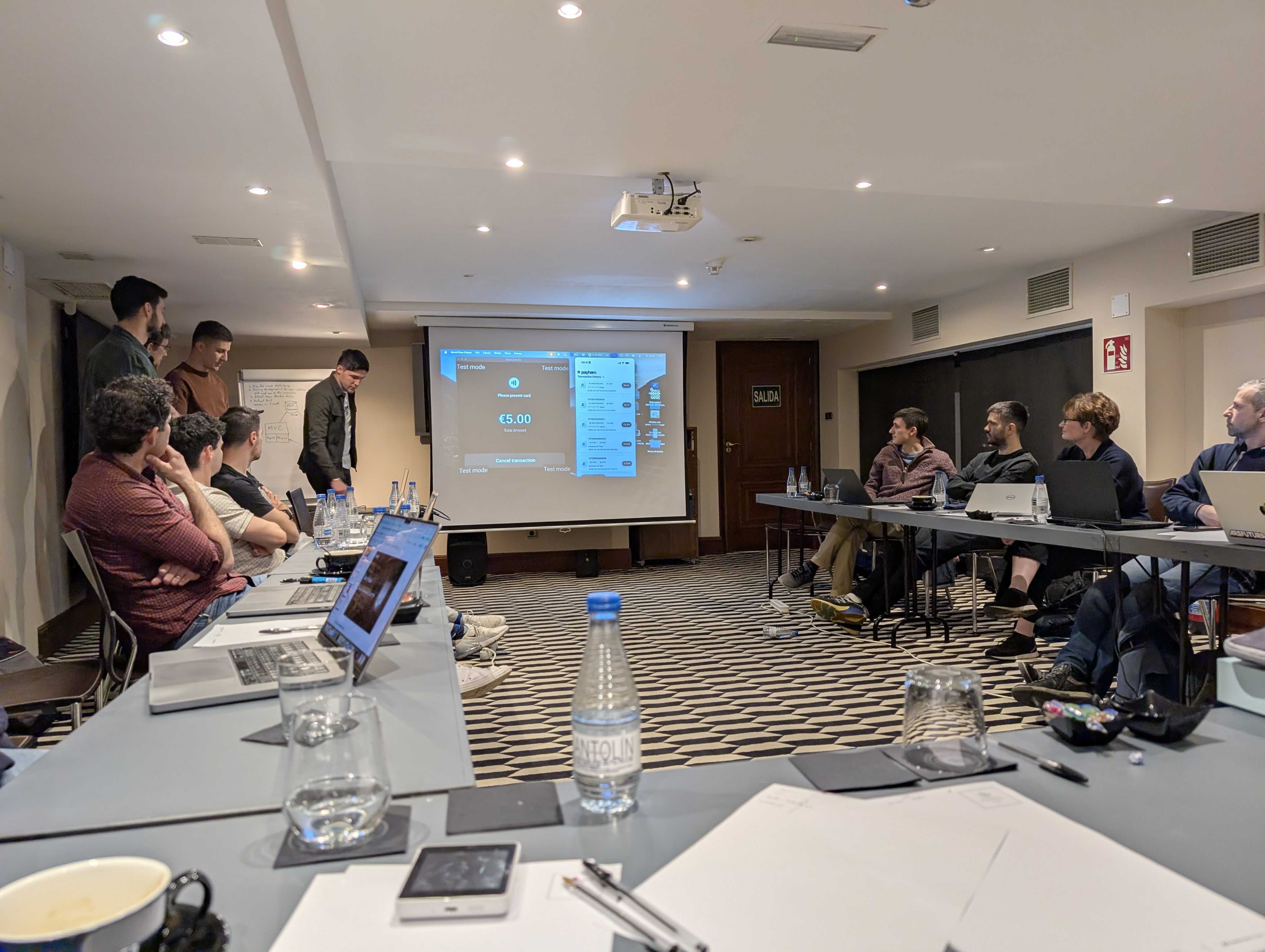
In October, MOST held its third annual client event in the west of Ireland, with the conference at the Foynes Flying Boat Museum. The gathering was designed to let airline customers compare experiences openly. For a company working across the Atlantic, an aviation museum in a region with personal connections for its team provided an apt meeting place.
There is a satisfying continuity between the Limerick sofa and that gathering at Foynes. Across the intervening years are trip planners, an American move, a new company and a great many payment decisions. Conversations remain part of the working equipment. Blanchard’s career began its airline turn because somebody made an introduction. He now helps create occasions where other people can make their own.
Follow the route
- MOST · the company
- Jan Blanchard · LinkedIn
- Jan Blanchard · X
- Jan Blanchard · essays on Medium
- Thank you RiM · his 2021 farewell
- TripPlanr · the Galway research collaboration
- The Irish Boat-Builder Chairs · his workshop visit
- MOST · 2025 in review
- First Crossing · the October 2026 gathering
- Watch · Jan Blanchard in conversation with TRBusiness (2020)