J. Jean Cui had been on this street before. When BlossomHill Therapeutics announced its move to Science Center Drive in San Diego, its co-founder recognized the address as something more than a new place to put the desks. Her first startup, Turning Point Therapeutics, had been there. Before that, she had spent ten years at Pfizer’s La Jolla site on the same street. A career can cover a remarkable distance without requiring an especially adventurous change of postcode.
She welcomed the return in a public post. The pleasure was specific: the familiar street, the earlier company, the decade that preceded it. The detail gives her professional biography a useful scale. Corporate histories count financing rounds and acquisitions. People remember where they worked. Science Center Drive allows both accounts to occupy the same patch of pavement.
Cui now holds three titles at BlossomHill: scientific founder, president, and chief executive officer. Together they describe the range of her responsibilities, from the scientific premise of the business to its direction as an organization. Her earlier company went public in 2019. Her current one began trading on Nasdaq in August 2026. Between those two listings sits a decision to start again.
Before the titles, a teacher
Long before San Diego, there was a student in China whose teachers encouraged her interest in science. Cui has described that encouragement as especially consequential during high school, when students were deciding the direction of their studies. Her account gives teachers an active part in the story. They recognized an interest and helped her follow it.
Her educational route continued through bachelor’s and master’s degrees at the University of Science and Technology of China. She then moved to the United States for graduate study, earning her doctorate in organic chemistry at Ohio State in 1994. Postdoctoral work took her to Lawrence Berkeley National Laboratory and the University of California, Berkeley. The itinerary crossed countries and institutions while keeping chemistry at its center.
There is an appealing continuity here: the student who received encouragement later argued for giving girls’ scientific interests more attention during their formative school years. That conviction comes from her own account of learning. A successful career gives a person plenty of opportunities to discuss individual talent. Cui made room in hers for the people who noticed it early.
- ChinaUSTC · Bachelor’s + master’s
- OhioOhio State · Ph.D., 1994
- BerkeleyPostdoctoral research
- San DiegoResearch + company building
A reunion worth remembering
At Ohio State, Cui completed her doctorate under Derek Horton. The university would later recognize her with a Distinguished Alumni Achievement Award in 2022. By then, the student’s name belonged among the institution’s accomplished graduates. Yet a smaller moment, years before the alumni recognition, offers a more personal view of that connection.
In August 2011, Cui met Horton and his wife at an American Chemical Society meeting after presenting her work. When she later paid tribute to her former professor, she remembered that reunion and credited him with helping illuminate her career path. The memory joins two stages of her life: the graduate student receiving guidance and the industrial chemist returning with work of her own to discuss.
Academic biographies tend to compress mentorship into a surname beside a degree. Cui’s recollection restores the encounter. There was a presentation, a meeting afterward, and a former student glad to see her professor again. It is possible to describe a scientific career entirely through appointments. The people encountered along the way make a better story.
Horton’s own career included research, teaching, and scientific publishing. For Cui, the relationship carried forward beyond the doctorate. Her later recollection makes the point without the usual corporate vocabulary for networks: someone had helped her find a direction, and she remembered.
“Hard work will make a difference.”
J. Jean Cui · Personal philosophy, 2012
Learning the size of an organization
Cui identified her first job as a chemist at Glycomed. She entered the industry in 1995. By 1999, she was at SUGEN, where her roles included project leader and group leader. From 2003 to 2013, her work at Pfizer brought the titles of senior principal scientist and associate research fellow.
Those job titles trace a gradual enlargement of responsibility. A project, a group, an established research organization: each places the scientist’s work inside a different arrangement of people and decisions. Her eventual move into founding came after years spent working within those arrangements. The sequence matters because the founder arrived with an industrial career already behind her.
Recognition accumulated during the Pfizer years. There were Worldwide Research and Development Achievement Awards in 2006 and 2012, an Innovation Award in 2011, and the 2011 Inventor of the Year honor shared with her chemistry team. The team belongs in that last sentence. Individual biographies can become crowded with solitary accomplishments; this particular award arrived with colleagues attached.
In 2013, Cui received an American Chemical Society Heroes of Chemistry honor. A second followed in 2021. These dates fall on opposite sides of her transition into entrepreneurship. Scientific recognition continued as her organizational role changed, a useful reminder that becoming a founder did not erase the chemist from her professional identity.
Two founders, a second beginning
Cui co-founded Turning Point Therapeutics in 2013 and served as its chief scientific officer until early 2020. She also served on its board. The company listed on Nasdaq in April 2019. In 2022, Bristol Myers Squibb acquired it for $4.1 billion, after Cui had moved on to her next venture.
That chronology deserves to stay intact. BlossomHill was founded in June 2020, two years before the Turning Point acquisition. The second company was already under way when the first reached that later corporate milestone. A neat tale of one completed chapter followed by another would put the events in the wrong order.
Her co-founder at both companies was Y. Peter Li, now BlossomHill’s executive chairman. Li had led Turning Point as chairman and chief executive from its founding through 2018. His background combines science, venture investing, and business training, including an MBA from Berkeley’s Haas School of Business.
Their educational histories contain several of the same institutional names: the University of Science and Technology of China, Ohio State, and Berkeley. Those shared points are documented; the working partnership is visible in two companies. At BlossomHill, their titles place Cui in the chief executive’s seat and Li in the executive chairman’s role. A second beginning can involve familiar collaborators and a different division of responsibilities.
- 2013Turning Point co-founded
- 2019Turning Point lists on Nasdaq
- 2020BlossomHill founded in June
- 2022Turning Point acquired for $4.1B
- 2026BlossomHill lists on Nasdaq
The arithmetic of another beginning
Starting again means returning to the practical business of financing an organization. In February 2024, BlossomHill announced a $100 million Series B round led by Colt Ventures. Participants included Cormorant Asset Management, OrbiMed, and Vivo Capital. The round brought the company’s announced capital raised to $173 million at that point.
The financing also changed the board: Sundeep Agrawal of Colt Ventures and Timothy Stubbs of Vivo Capital joined as directors. Money and governance arrived together. It is an unromantic detail, which is precisely why it belongs in a founder’s story. A new company requires people who can make decisions together, as well as a persuasive scientific idea.
In August 2026, BlossomHill priced an upsized initial public offering of 9,375,000 shares at $16 each. That produced a headline figure of $150 million in expected gross proceeds before underwriting discounts, commissions, and offering expenses. Its common stock began trading on the Nasdaq Global Select Market on August 7 under the symbol BLSM.
The numbers describe the company’s financing, with all the ordinary distinctions that financing requires. Gross proceeds precede costs. A public listing adds shareholders and reporting obligations. For Cui, the event placed another organization she had co-founded on Nasdaq, seven years after Turning Point’s debut. The repetition is striking even without confetti.
9,375,000 shares × $16 per share
Expected gross proceeds before underwriting discounts, commissions and offering expenses.An academy election, and a list of thanks
In 2024, Cui was elected to the National Academy of Engineering. Her public response began with gratitude, naming family, past and current colleagues, and collaborators. It is a revealing choice of emphasis: an individual honor prompted an acknowledgment of other people.
The election followed recognition from several different communities. Ohio State honored its former student in 2022. The San Diego Section of the American Chemical Society named her its Distinguished Scientist in 2023. That same year, the Committee of 100 selected Cui and Li for its Circle of Excellence Award in Humanity in Science & Technology.
The Committee of 100 presentation was tied to its annual conference and gala in San Jose. The San Diego award placed her among local scientific peers; the alumni award connected her to her training; the academy election reached a national professional institution. Seen together, these honors trace the communities through which her career has moved.
Awards can flatten a biography into a procession of engraved objects. Cui’s thanks put the people back into the frame. The collaborators belong beside the inventor, much as Horton belongs beside the doctorate and the high school teachers belong near the beginning. The pattern is there in her own acknowledgments.
Still a chemist
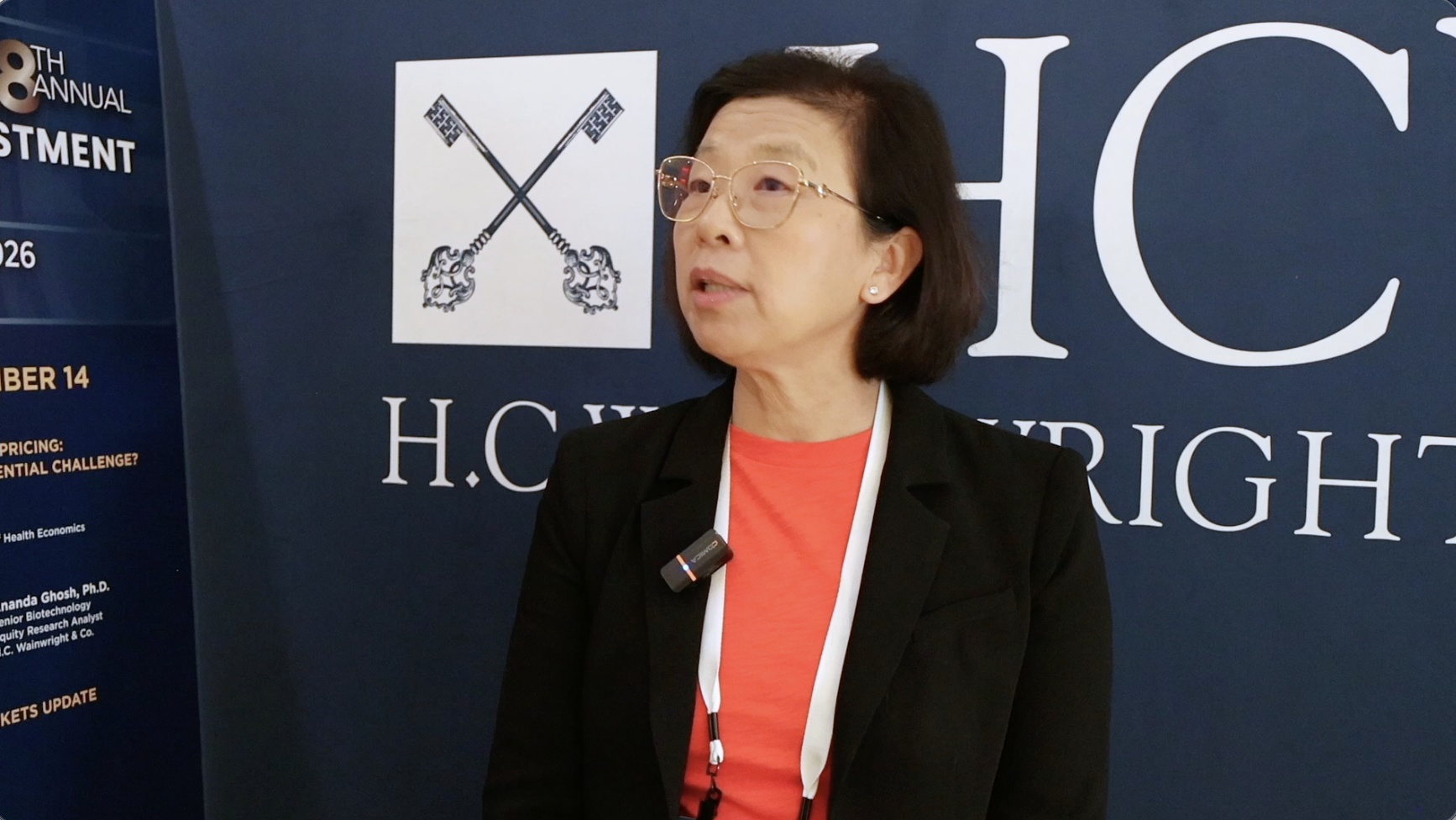
In September 2026, Cui sat down for a BiotechTV interview at the H.C. Wainwright investment conference in New York. BlossomHill had gone public the previous month. The setting brought together the two sides of her current work: a scientific founder explaining her company and a chief executive speaking in the orbit of investors.
Her professional life now extends from the classroom memories of a student in China to the obligations of running a public company in San Diego. Along the way came Ohio, Berkeley, industrial research, an initial startup, and another one. Each stage added a role. The scientific training remained the connecting thread.
Her stated philosophy, offered years earlier, is refreshingly short: “Hard work will make a difference.” There is very little room in that sentence for a keynote presentation, which may be part of its charm. It supplies no promise about how quickly the difference will appear, or which job title a person will hold when it does.
On Science Center Drive, the biography has acquired another return address. The student became a chemist, the chemist became a founder, and the founder became a chief executive without losing the earlier parts. Cui’s career keeps bringing old knowledge, familiar collaborators, and remembered encouragement into the next beginning. The street is familiar. The company is the next piece of work.