At eleven, Iqbol Temirkhojaev began competitive programming. The year was 2017, and a child in Tajikistan had discovered the severe little pleasure of making a machine obey. Programming contests reward economy: a problem arrives, the clock starts, and elegance becomes measurable. Temirkhojaev says he went on to win three Olympiad gold medals. Long before pitch decks and investor calls, there was already a scoreboard.
His public timeline soon acquired the pace of an impatient biographer. A venture-backed startup at 13. An acquisition connected to a United Nations initiative at 14. A software patent at 15. A medal from the president of Tajikistan at 16. At 18, he says, he retired his mother. At 19, he entered Y Combinator's Winter 2026 batch as the solo founder of Wayco.
This collection of ages invites amazement, but amazement is not especially useful. The more revealing detail is that someone who began unusually early now repeats a lesson about being late. “My advice to founders: launch earlier,” Temirkhojaev has said. He waited too long, in his telling, to put the product in front of users. The child who learned to race a clock grew into a founder learning that the market keeps a different sort of time.
Chapter One
A childhood measured in shipped projects
Before Wayco, Temirkhojaev's projects clustered around education, augmented reality, mobile software and entrepreneurship in Central Asia. Maorif, which he co-founded and led, served teachers and was later folded into a government program in Dushanbe. Dono used augmented reality to teach English and mathematics. He worked on the Android version of the local marketplace noon, and briefly ran nodir, a platform for augmented-reality marketing campaigns.
Then came Sohibkor, a platform intended to help emerging entrepreneurs navigate the business-building process. Temirkhojaev says it served more than 15,000 people and was acquired through a United Nations Development Programme initiative. The chronology is compressed because his adolescence was compressed. School-age years that ordinarily separate first interests from first jobs became, for him, years of products, partnerships and institutions.
The ventures also show a recurring preference for practical distribution. Maorif was built for teachers rather than as a classroom demonstration. Dono paired educational content with augmented reality, an attempt to make physical and digital learning meet. Sohibkor addressed the procedural questions that can keep a prospective entrepreneur from beginning. The technologies changed, but each project sat close to a moment when a person needed to act and lacked either information or an accessible interface.
His engineering job at noon added a different sort of apprenticeship. Temirkhojaev says his work on the Android application improved the platform's efficiency by 26 percent. A marketplace is an education in impatience: the screen must load, the listing must make sense, and the transaction must survive contact with an actual customer. Those demands would later echo in Wayco, where the polished intelligence of a model matters less if a caller, case manager or attorney cannot use it at the required moment.
There is a family detail in that list worth pausing over. Temirkhojaev includes retiring his mother alongside patents and company milestones. It is a statement of motive disguised as a line item. Startups are often narrated as campaigns for independence; this one includes an early promise of responsibility.
“Never let your zip code define your trajectory.”Iqbol Temirkhojaev
After years of building, he took nearly two years away from a conventional job title. His description of the period is playfully self-aware: travel after doing “too much aura farming as a kid.” He lived with host families and took classes in places including Denmark, Costa Rica and Sweden, as well as Kentucky and Lake Tahoe. For a résumé obsessed with speed, the pause reads like an experiment in width.
Chapter Two
The unfamiliar room
Wayco began in 2025 and brought him to a problem with very different scenery. The company is building a unified data and workflow layer for med-legal cases. Its territory includes client intake, case records, referral coordination, communication and the movement of work toward settlement. Legal cases are consequential, but their machinery can be surprisingly ordinary: calls, notes, forms, follow-ups and the repeated transfer of context from one person to another.
The phrase “unified data layer” sounds bloodless, as software phrases tend to do. Its human purpose is continuity. A new matter begins with a person explaining a situation. That account becomes structured information, the information travels through a firm, and the firm may coordinate with outside providers. Each transfer risks delay, repetition or a missing piece of context. Wayco's proposition is that software can keep the thread intact while handling some of the routine movement around it.
The elegance of the opportunity is also its trap. A programmer can see a chain of manual steps and imagine automation before understanding why each step exists. Temirkhojaev has been candid about the education required. The American legal and medical systems differed sharply from what he knew in Central Asia. Technical ability could help build the engine; it could not provide local knowledge of the road.
That distinction changed his advice. “The sooner you launch, the sooner you learn what people actually need,” he said in a 2026 interview. “Build something people truly want - not what you assume they want.” Coming from a founder with years of technical work before his twentieth birthday, the words have a pleasant lack of ornament. Code is a way to express certainty. Customers are very good at removing it.
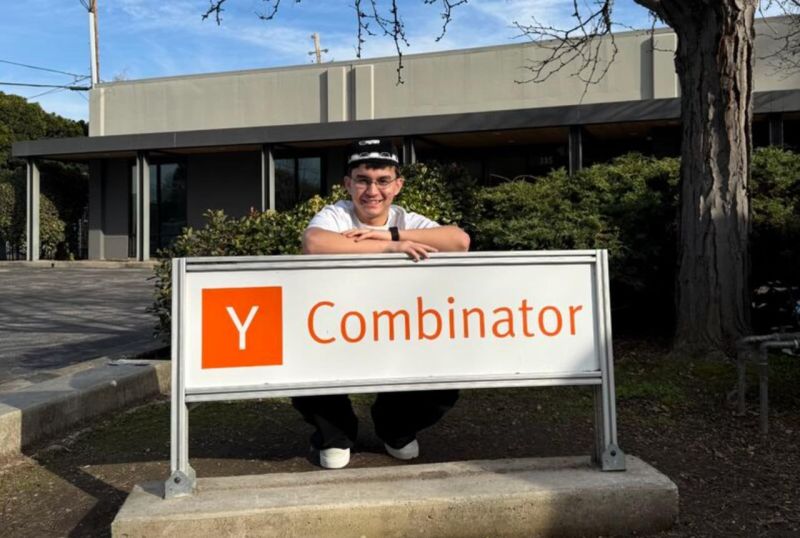
Y Combinator lists Wayco as an active New York company with five team members and Temirkhojaev as founder and CEO. The batch gave the young company a recognizable institutional address, but the founder's preferred line remains geographic rather than corporate: never let your zip code define your trajectory. He posted it after becoming the first founder from Tajikistan to enter the program, a distinction repeated by founders and technology communities across Central Asia.
Being a solo founder sharpened the contrast between biography and organization. The origin story belongs to one person; the company cannot. Wayco's public hiring for a founding full-stack engineer makes the next phase plain. Systems that coordinate casework need builders, customers, operators and specialists who know the edge cases. A solo acceptance is a milestone. Building a durable team is a separate craft, conducted without the convenience of age-based headlines.
The phrase could have hardened into inspirational wallpaper. Its better reading is practical. Geography shapes access to customers, investors, peers and tacit knowledge. Temirkhojaev did not pretend otherwise. He moved, traveled, entered programs and learned a foreign market. Refusing to be defined by a zip code still requires the trouble of leaving it, understanding another one, and deciding what to carry between them.
Chapter Three
Doors are useful. Rooms contain the work.
By August 2026, Temirkhojaev had completed Y Combinator and reported several new milestones. He spoke at Harvard and at America's 250th Freedom Fest. He also received approval for an O-1 visa, the American category formally reserved for people of extraordinary ability. He announced it with the bureaucratic phrase, an alien emoji and evident delight. Government language seldom has such comic timing.
“Never assume you don't belong,” he wrote. “Walk into the rooms you were told you couldn't enter.” It is easy to see why rooms recur in his thinking. A childhood in Tajikistan, classrooms abroad, Y Combinator, Harvard and the United States immigration system each place a literal doorway around an abstract form of permission.
Yet permission is not the product. Wayco still has to turn a delicate sequence of human work into dependable software. It must fit the tools firms already use, preserve context across organizational boundaries and earn confidence in a field where missing details cost time. The company's hiring and public description suggest an intentionally small team working on that connective layer.
“The sooner you launch, the sooner you learn what people actually need.”Iqbol Temirkhojaev
Temirkhojaev has teased new partnerships, investors and a six-month plan for Wayco. The specific announcements can wait. His story is more interesting at the unfinished stage, when the celebrated entrance has happened and the quieter proof is still accumulating. A founder can be early to coding, early to companies and early to acclaim. A market remains stubbornly on time.
What can other builders borrow? First, technical speed does not cancel the need for patient observation. Second, unfamiliarity can be admitted without making ambition smaller. Third, a polished personal history is less valuable than an imperfect product exposed to real use. Temirkhojaev's chronology attracts attention because of the ages attached to it. His current work asks a more adult question: can he stay close enough to an intricate market to know what deserves to move faster?
The answer will be written in ordinary units: calls handled, context preserved, referrals completed and customers who return. There is almost no romance in a reliable handoff. That may be why it is worth building.