There is a peculiar sort of wealth that can take years to accumulate and still feel hard to touch. The cash value of a whole life insurance policy belongs to this category. It is visible on a statement. It can serve as collateral. Yet turning that value into usable cash has often required a patient tour through an insurer, an advisor, a bank and a stack of forms. Inclined Technologies was founded to make that tour shorter.
- Inclined arranges a revolving bank line secured by eligible life insurance cash value.
- Advisors can introduce clients and track applications; policyowners can apply online and manage draws and payments.
- There is no Inclined platform fee, but borrowed money carries interest and a policy must qualify.
- The application may take 15 minutes. Opening a line can take as little as 10 business days, depending partly on the insurer.
The founders knew the annoyance firsthand. Joshua Wyss, Mark Shaw and Graham Gerlach started Inclined in 2020 after confronting the slow, opaque process of borrowing against policy value. Shaw had previously co-founded Strava, a rather different exercise in making data useful. The connection is less strange than it first appears: both products need to take something people already have and give them a clearer way to act on it.


First, understand the old door
A whole life policy can build cash value as premiums are paid. A policyowner can ask the insurer for a policy loan, or in some cases borrow from a bank using the policy as collateral. Those are familiar transactions in wealth management. They are less familiar to the typical policyowner, and the details can change the arithmetic. An insurer's treatment of dividends on a borrowed amount, the bank's interest rate, fees and the owner's repayment plan all affect the result. There is no universal cheapest route.
Inclined concentrates on the bank route. Its Inclined Line of Credit, or iLOC, is a revolving line secured by eligible policy cash value. A client can draw, repay and draw again through an online account. The policy remains in force while the loan is outstanding, subject to keeping it properly funded and meeting the lending terms. The company's public pages say it charges no platform fees to policyowners. Interest on borrowed funds is the real cost to compare with alternatives.
The $5,000 minimum is an unusually revealing number. Insurance-backed lending has often catered to large balances, where a bank can afford a manual process. Inclined's bet is that software can make smaller lines workable. Its site says eligible whole life policies can support a line of up to 95% of cash surrender value, though underwriting, existing balances, carrier rules and state minimums can reduce the actual offer. Multiple policies can be combined to reach the minimum.
The product is a four-way handshake
Inclined is easiest to understand as a workflow between four parties: a policyowner who needs liquidity, an advisor who understands the policy, an insurer that must acknowledge collateral assignment, and a lender willing to extend credit. The company provides the interface and coordinates the steps. Its advisor portal lets professionals send invitations, see where applications stand and, with client permission, follow active line details. Consumers can also start an application directly from Inclined's website and identify their advisor during the process.
That hinge explains a pair of numbers that sound contradictory until they are put beside one another. Inclined says the initial application usually takes about 15 minutes. It also says an account can open in as little as 10 business days; timing depends on carrier response and can run longer. Once active, a draw to a linked bank account generally arrives the next business day, sometimes two. The distinction between applying, opening and drawing is the difference between a useful promise and a misleading one.
Carrier eligibility is another boundary. Inclined currently lists Guardian, Northwestern Mutual, MassMutual, New York Life and Penn Mutual on its advisor page, with product and policy restrictions. Credit requirements apply as well. A low minimum may widen access; it does not turn every life policy into collateral.
An account that behaves like an account
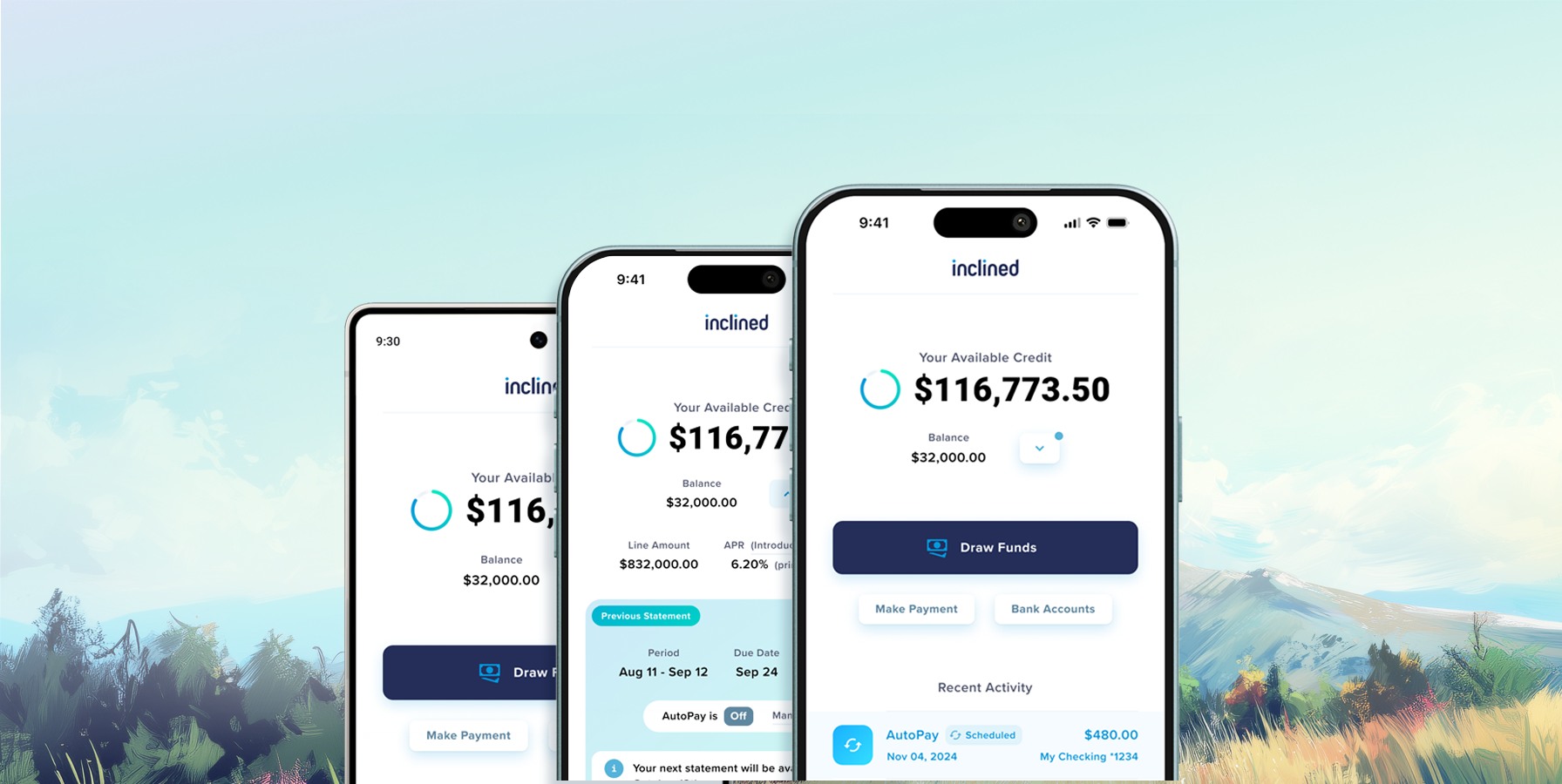
In January 2026, Inclined launched a mobile app for active iLOC clients, first on iOS and then on Android. It shows available credit, permits draws and payments, manages linked bank accounts and stores documents. These sound like ordinary banking features. That is the point. When a valuable asset is trapped behind phone calls and forms, ordinariness is an improvement.
“With the Inclined app, policyowners can see and manage their available cash in the same way they manage the rest of their finances.”Joshua Wyss, CEO, on the 2026 app launch
The customers are both policyowners and their advisors. A homeowner may use a line for a renovation or an unexpected bill; a business owner may value flexible working capital. Inclined's published client stories describe mortgage payments, rental property purchases and business expenses. These are examples, not a prescription. Drawing credit creates a debt secured by a policy, and a borrower should compare the rate and repayment burden with the policy loan, a home-equity line or other available financing.
Inclined also publishes case studies about premium payment schedules. Some insurers charge more, in annualized terms, when a customer pays monthly or quarterly rather than yearly. Inclined argues that a borrower could use an iLOC to pay a premium annually and repay the line over time. Its own analysis says the method can save money under some policy configurations and not others. The transferable lesson is to calculate the full financing cost, including the policy's dividend rules, rather than compare two advertised rates in isolation.
The quiet scale of a narrow idea
The company raised $15 million in a 2022 Series A led by HSCM Ventures, then $8 million in a 2025 Series B led by the same firm, with Northwestern Mutual Future Ventures participating. By the latter round, Inclined said thousands of whole life advisors were using its platform. Its founders told Crunchbase News that more than $1 billion in credit had been originated through it. Credit originated is transaction volume, not company revenue, but it shows how much demand a narrow piece of infrastructure can carry.
The business sits in an interesting middle position. Inclined is a software company serving consumers, but its reach depends on advisors, lenders and insurance carriers. The lender supplies credit; the policy secures it; Inclined makes the pieces connect. Public materials do not spell out its revenue split with banks. What they do show is a business organized around reducing the operating work of originating and servicing relatively small insurance-backed lines.
The same narrowness gives the company its limits. The product is for people who already have suitable permanent life insurance, meet underwriting rules and want to borrow rather than surrender value. It is irrelevant to someone with only term insurance. It may lose on price to a policy loan or another credit source, depending on the policy and rate. And the carrier's paperwork can still slow the digital journey. These are practical conditions, not footnotes to be wished away.
What can another company copy? Start with the unglamorous map. Identify a financial asset people already own, find the particular handoffs that make it difficult to use, and build a workflow that tells every party what happens next. Inclined did not discover the cash value inside whole life insurance. It treated access to that value as a product in its own right. There is a certain wit in building a modern business around money that was there all along.