The smart refrigerator was there for a reason. When Samsung opened its Rzeszów incubator in April 2017, the equipment included phones, tablets, an interactive display, a robot vacuum and a Family Hub fridge. For founders working on the Internet of Things, these were objects against which an idea could be tested. HugeTECH, the local company operating the incubator, had a rather concrete assignment: help people turn technological possibility into something another person might use.
That assignment still explains HugeTECH better than a venture-capital label. Its work spans incubation, acceleration, corporate introductions and consulting. The interesting part is the arrangement: a founder can need a prototype, an accountant and a potential customer at roughly the same moment. HugeTECH tries to put those needs within reach of one another.
- Start with an idea: Revolution offers six-month incubation rounds aimed at an MVP and market validation.
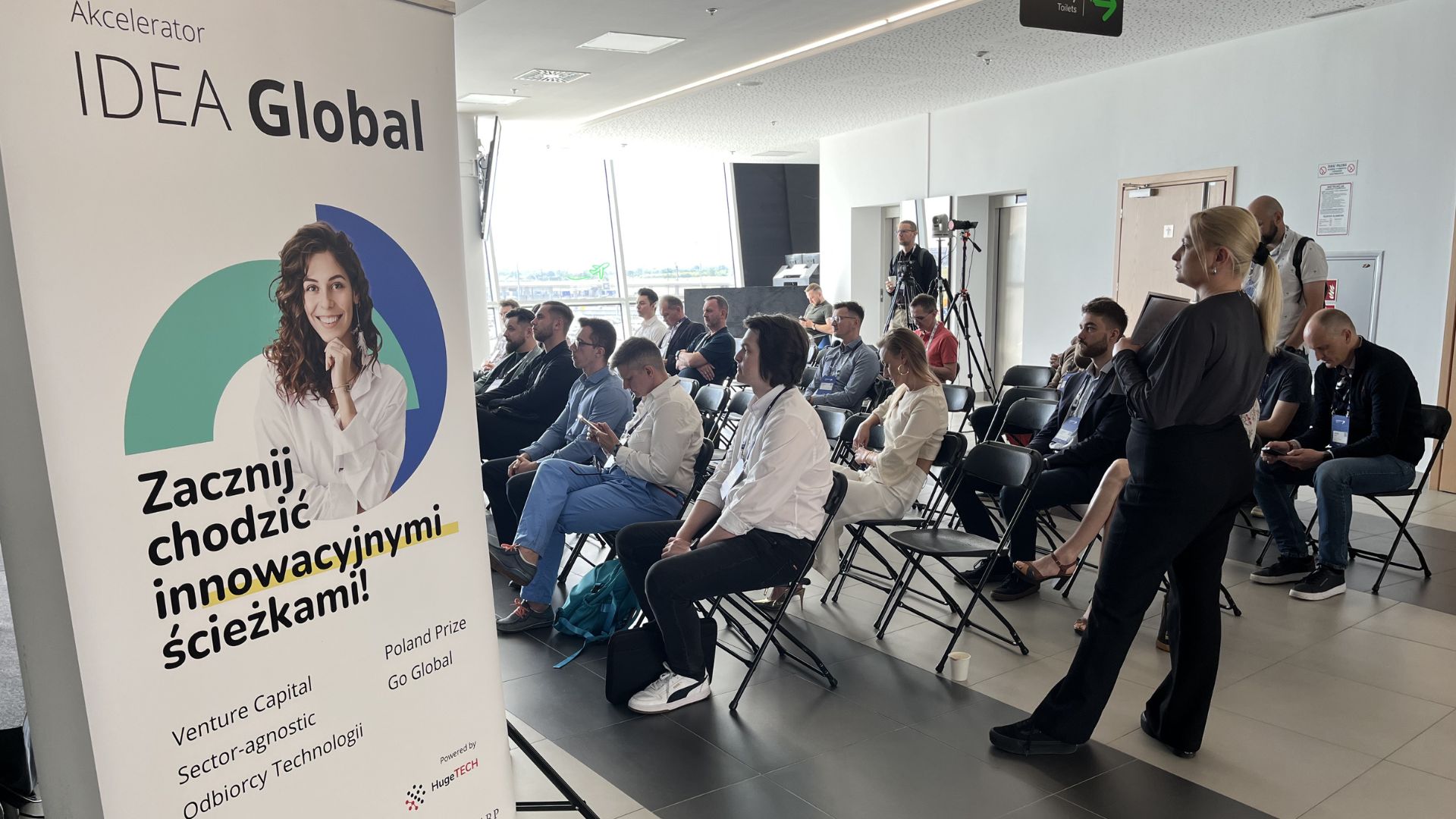
- Arrive with a company: IDEA Global has five acceleration routes, from investor preparation to corporate testing.
- Read the conditions: public support comes with selection, eligibility rules and documented milestones.
A room full of useful complications
Samsung’s original program brought together the company, Rzeszów University of Technology and Aviation Valley. The university supplied the setting; Samsung supplied devices and access to business and engineering expertise. HugeTECH supplied the local operation. The three-month incubation format put founders close to people who could challenge a business model as well as discuss a technical problem.
There is a distinction here that a glossy accelerator brochure can obscure. A product can work beautifully and still answer a question nobody is asking. Samsung’s launch announcement specifically described checking market demand. In that arrangement, engineering advice and commercial skepticism occupied the same room. The fridge was useful; someone asking who would buy the solution was useful too.
CEO Daniel Dereniowski’s published background includes technology transfer at the University of Information Technology and Management. Business advisor Rafał Cencora’s includes coordinating Samsung’s Rzeszów incubator. Those biographies help explain the company’s range: it works where researchers, founders, corporations and public programs have to understand one another’s expectations.
Six months to make the idea answer back
HugeTECH Revolution addresses an earlier problem. Its stated aim is to support 150 innovative startups through incubation. Applicants can begin as individuals or teams intending to establish a new company in Eastern Poland. The idea must meet at least a national level of innovation. Each incubation round lasts six months.
The work includes building a minimum viable product, examining feasibility, researching the market and understanding how consumers receive the proposed product. Legal, accounting, tax and basic marketing support sit alongside it. An office and a visual identity are practical ingredients, though neither can persuade a customer to want something.
The budget makes the scale visible. Revolution’s published total project value is PLN 18,504,210, including PLN 16,980,000 from European funds. These figures describe the incubation project. They do not represent a venture investment in HugeTECH, or a sum divided into identical cash awards for every founder.
The portfolio supplies a pleasingly unruly illustration of what early ideas can look like. SmartHorse proposed movement monitoring integrated into ordinary riding accessories. Mediprintic proposed personalized orthoses for people with forearm and hand injuries. These descriptions concern projects and intended products. Their presence in a portfolio establishes the breadth of work, rather than proving commercial success.
Five routes, because startups arrive unevenly
IDEA Global starts from a different premise: companies have reached different stages and need different next steps. The published project plan allocates 60 startup places across five routes. Thirty go to acceleration with technology recipients, thirteen to sector-agnostic development, eight to Go Global, five to venture-capital preparation and four to Poland Prize.
The technology-recipient route asks for a complete team, market analysis and first sales. It seeks technology ready for demonstration in a relevant environment. The VC route works earlier, asking for an initial customer group without first sales. Go Global prepares expansion abroad; Poland Prize helps foreign startups establish themselves in Poland. Choosing a route therefore involves an honest account of what already works.
Standard acceleration lasts four months, with possible extension. Published grant ceilings are PLN 200,000 for sector-agnostic development and PLN 400,000 for the other routes. Participation requires no capital contribution. Selection and the individual acceleration plan still matter: a ceiling describes the upper limit of support.
The queue behind the promise
On June 2, 2026, IDEA Global published an unusually instructive explanation. The edition had attracted 860 applications. Each went through two or three verification stages, generating nearly 3,000 individual assessment cards. Applicants were waiting for reasons behind their evaluations, and the operator apologized for delays.
HugeTECH said it would send the cards progressively and had recorded inquiries. The episode exposes a capacity problem in the feedback process. At this volume, explaining decisions becomes substantial work of its own. Anyone copying the accelerator format should budget for that work before inviting the applications.
“Firma HugeTECH otwiera duże drzwi dla małych przedsiębiorców.”
Krzysztof Wróblewski, Matrix Dynamix, in a company-published testimonial: “HugeTECH opens big doors for small entrepreneurs.”
Borrow the sequence, check the fit
HugeTECH also advertises consulting, technology scouting, innovation audits, marketing, accounting and office services. Its customers therefore include established businesses and corporations alongside founders. It describes a nonprofit social mission while operating as a Polish limited liability company. Publicly cofinanced projects and business services form the visible operating model.
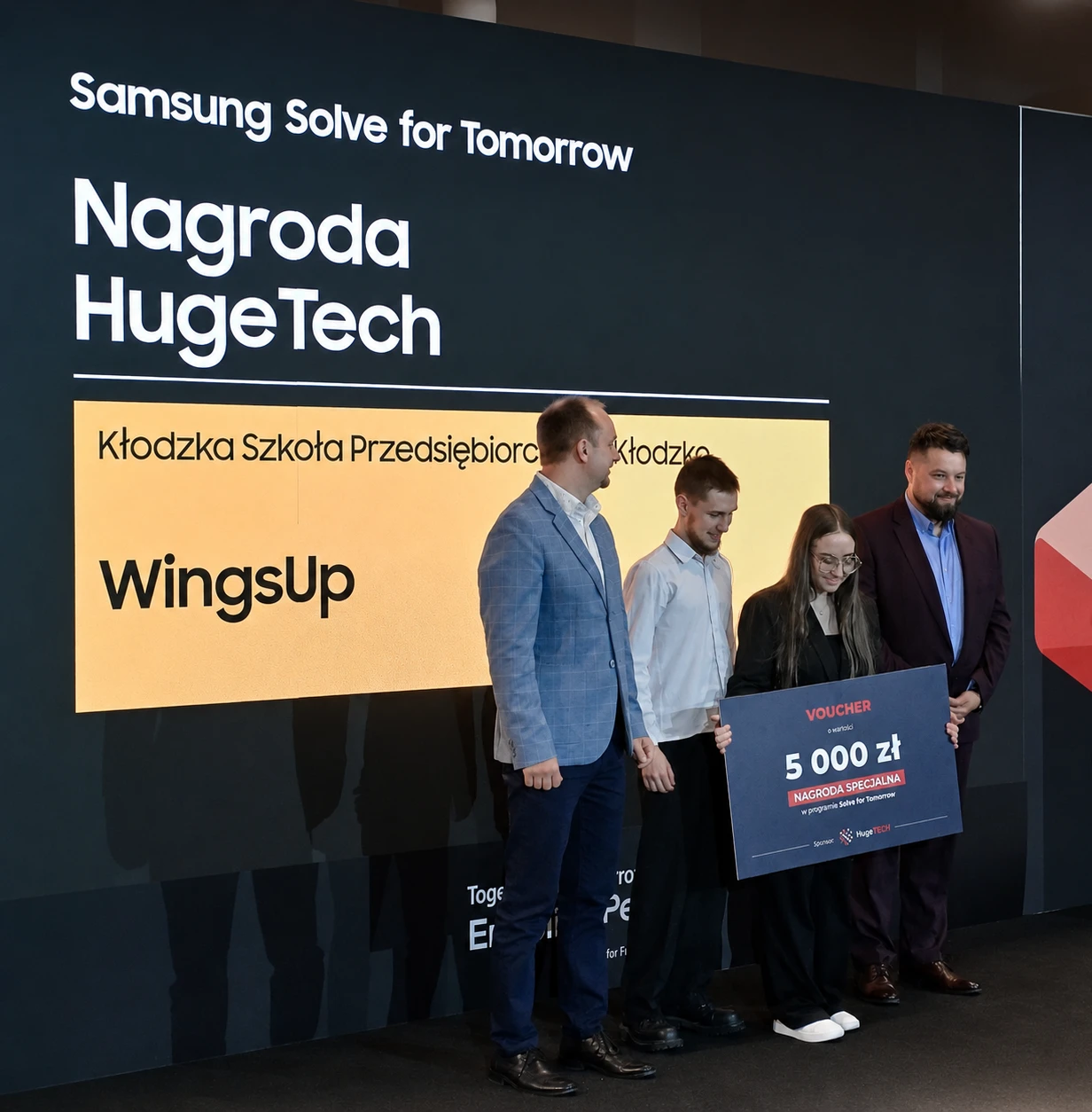
The useful lesson is to choose the next uncertainty carefully. Test demand, build the necessary prototype, clarify ownership and find a relevant partner. HugeTECH packages that sequence with specialists and program management. University incubators, other public accelerators and direct corporate pilots offer alternative routes; the fit depends on the founder’s stage and intended customer.
For applicants, fit also has a literal meaning. IDEA Global requires Polish registration, appropriate intellectual-property rights and compliance with its startup definition. Revolution requires a new company in Eastern Poland. Calls have deadlines, and the current program sites mark recruitment as closed. A good idea still needs the right appointment. For a founder, the practical first step is to compare the current rules with the company’s actual position: where it is registered, what it owns, what has been built and whether customers have already paid. That check can save a very polished application to the wrong program.