A health insurance card is small enough to lose in a jacket pocket. The machinery behind it is another matter: doctors, contracts, claims, prescription lists, software and someone willing to answer when the machinery jams. Hometown Health built that machinery around a place. Now the Nevada insurer is changing who helps run it.
- Hometown Health covers families, employers and Medicare Advantage members.
- Kaiser Permanente and Renown became joint owners in February 2026.
- New offices are open; Kaiser-branded coverage is planned for 2027.
- Members should check their exact provider network during the transition.
01 / The neighborhood was the product
Hometown Health entered the market in February 1988 as a community-based, not-for-profit HMO. Its connection to Renown gave it a recognizable proposition: buy coverage from an organization connected to the people delivering your care. Insurance could feel less like a distant financial arrangement and more like something rooted in the same streets as your doctor.
That connection remains the company’s defining market position. Its customers include people buying individual coverage, employers arranging benefits, and older adults choosing Senior Care Plus Medicare Advantage plans. These customers have different budgets and eligibility rules. They share a practical problem: getting from “I have insurance” to “I can get care.”
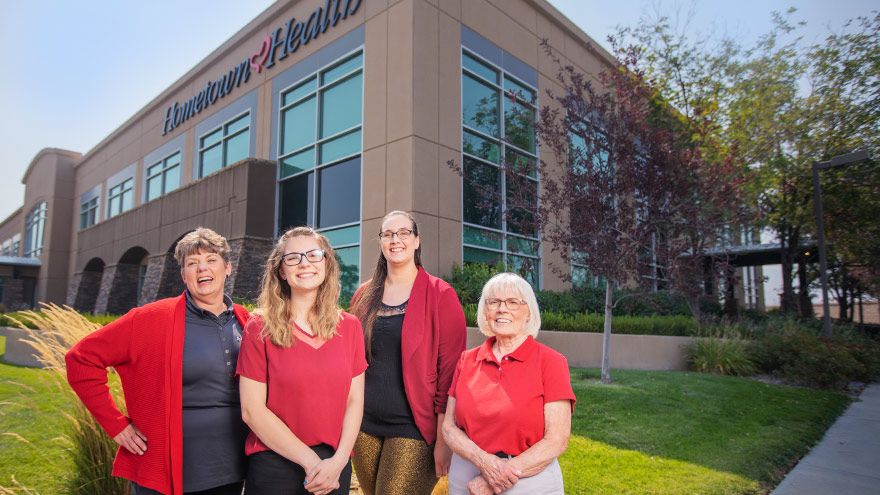
02 / Local affection doesn’t pay every claim
The difficulty was scale. In a 2026 interview, Renown CEO Brian Erling estimated Hometown Health had roughly 77,000 members, compared with about 150,000 before the pandemic. He described limits in technology investment and serving larger employers, alongside recurring seven-figure monthly losses. Better intentions and local loyalty could not make those economics disappear.
“Seven figure losses - essentially every month - is not sustainable”
Brian Erling · Renown Health CEO · 2026
Leadership considered selling, closing or forming a joint venture. The board wanted to preserve an affordable-care mission and Renown’s independence. A nonprofit organization combining insurance and care delivery offered a way forward. The partnership choice followed an uncomfortable recognition: the existing health-plan model needed capabilities it could not supply alone.
That is the useful lesson for other regional businesses. Identify the part customers value, then ask whether every supporting capability must be owned outright. Here, the proposed answer pairs local clinical relationships with national infrastructure. It remains a proposition whose results members will experience through appointments and bills.
03 / A bigger partner, a precise boundary
Kaiser Permanente and Renown announced their agreement in September 2025 and completed it on February 3, 2026. Hometown Health became jointly owned. The venture combines a health plan with outpatient care delivery in northern Nevada. Renown continues as an independent, locally governed nonprofit health system operating its hospitals and specialty services.
One member experience, across distinct organizations.
This boundary matters. A patient may reasonably hear “Kaiser” and imagine every Renown building changing hands. The arrangement is narrower. The practical ambition is coordination across the organizations, with new Kaiser Permanente coverage starting in the 2027 plan year. Bethany Sexton, formerly Hometown Health’s CEO, was appointed health plan leader for the new Nevada operation.

04 / The alphabet on your insurance card
Hometown Health’s products make more sense when you read them as different routes into care. Its 2026 individual and family catalogue includes Renown HMO, Sensible HMO and Hometown EPO plans. It explicitly lists no individual or family PPO offering. Employer products include PPO choices, with national-network variants available for certain plans.
Employers can also use self-funded administration. In that arrangement, the employer funds claims while Hometown Health supplies administrative and network services. That is a different financial responsibility from purchasing fully insured coverage. The company advertises self-funded options for groups of 50 or more. Its expertise lives in the unglamorous work: benefits, provider arrangements, claims and member support.
The price question therefore needs a plan attached. Premiums, deductibles, copays and network rules differ. One 2026 individual Silver schedule lists eligible Teladoc general medical urgent-care visits at $0, without applying the deductible, and Teladoc behavioral-health visits at $20. Those figures belong to that particular schedule; they are not a universal Hometown Health price list.
Teladoc adds virtual access, including general medical care and, on eligible plans, dermatology and behavioral health. MyChart supplies online member tools. These services can reduce some of the friction around using coverage. Their usefulness still depends on the member’s actual benefits and the type of care required.
05 / Twenty-eight rooms make the deal tangible
By July 2026, Kaiser Permanente had announced two open northern Nevada medical offices: Del Monte in Reno and Ion in Sparks. Together they have 28 exam rooms. Primary care and lab services were available immediately; pharmacy and imaging were scheduled for 2027. For a member, this is where an ownership announcement becomes somewhere to go.
15 at Del Monte, Reno
13 at Ion, Sparks
The current Nevada information page schedules a third office, on Fifth Street in Reno, for January 2027. It also says current Hometown Health members can use the new facilities. The promise is a more connected trip through healthcare, with services brought together rather than leaving the patient to assemble every connection.
06 / Start with your doctor’s name
Convenience depends on the network fitting your life. Carson Valley Health announced that certain Hometown Health HMO plans and Senior Care Plus HMO plans would leave its primary-care network effective August 29, 2026. Its notice said specialty care remained in-network. A hospital relationship and a primary-care relationship can have different answers.
So the useful move for a prospective member is specific: check the doctor, the clinic, the prescription and the relevant plan year. Compare Anthem, Prominence, Health Plan of Nevada or other available alternatives against those same needs. A coordinated regional plan may fit someone whose care is concentrated nearby; it may fit poorly if essential providers sit outside its network.
Hometown Health’s next chapter will be judged in ordinary moments. A booked visit. A prescription collected. A claim understood. The partnership has changed the ownership and added places to receive care. Making those ordinary moments easier is the work that gives the new insurance card its value.