Breaking
SatPaq: a satellite messenger the size of a deck of cards GEOFix aims to back up GPS when it gets jammed Customers include DoD, DHS, NASA and the FAA AES-256 encryption, spread-spectrum signal, no monthly plan Founded in Palo Alto by Rob Reis Talks to Intelsat's geostationary Galaxy satellites 35,000 km up SatPaq: a satellite messenger the size of a deck of cards GEOFix aims to back up GPS when it gets jammed Customers include DoD, DHS, NASA and the FAA AES-256 encryption, spread-spectrum signal, no monthly plan Founded in Palo Alto by Rob Reis Talks to Intelsat's geostationary Galaxy satellites 35,000 km up
Company Dossier  /  Satellite Hardware

Higher Ground

The Palo Alto startup that put a satellite in your pocket - and now keeps the military connected when GPS goes dark.

satellite comms gps backup defense tech hardware
Higher Ground SatPaq satellite communicator
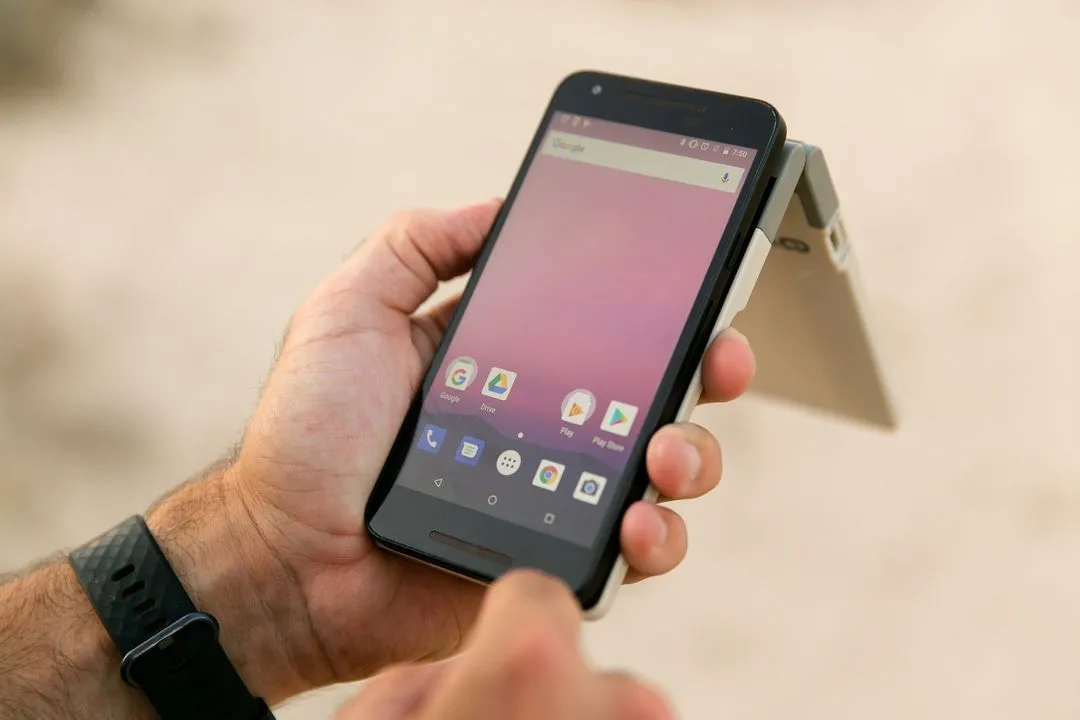
THE DEVICE. Higher Ground's SatPaq - a handheld satellite communicator built to send secure text and email far beyond the last cell tower.
Photo: Higher Ground
2011
Founded
~54
Employees
~36
Patents (reported)
35,000km
Satellite altitude
The Story

A small team, aiming antennas at space

Most satellite communicators are bulky, expensive and tied to a monthly plan. Higher Ground LLC set out to prove none of that had to be true.

Founded in 2011 and based in Palo Alto, Higher Ground is a hardware startup with an unusually literal name: its whole business is about reaching higher - past the cell tower, past the horizon, all the way up to satellites parked in geostationary orbit. The company's founder and CEO, Rob Reis, frames the mission plainly: connect anyone, anywhere, and keep that communication available, secure and confidential.

The device that made Higher Ground's name is the SatPaq, billed as the world's most compact, easy-to-use and secure satellite communicator. In its first incarnation it was a smartphone case, roughly the size of a deck of cards, with a flip-out antenna. Pair it to an Android phone over Bluetooth, point the antenna skyward, and it could send a text or an email through a satellite - no cell signal required.

What set the SatPaq apart was less the hardware than the philosophy around it. Where rivals bounced messages off the low-Earth-orbit Iridium constellation and charged a subscription, Higher Ground aimed at Intelsat's geostationary Galaxy satellites - the same distant birds that carry television - and priced its service pay-as-you-go. You paid for the messages you sent, not for the privilege of owning the device.

That contrarian engineering has since carried the company somewhere its early campers and hikers might not have predicted: into the world of national defense, where the same skills - secure links, jam-resistant signals, positioning that does not depend on GPS - turn out to matter enormously.
Under The Hood

How the SatPaq talks to space

01

Compose

You write a message in the SpaceLinq app on an Android phone.

02

Pair

The phone hands the message to the SatPaq over a Bluetooth link.

03

Aim

A flip-out directional antenna locks onto a geostationary satellite using GPS and compass.

04

Send

An AES-256-encrypted, spread-spectrum burst travels ~35,000 km up and back down to the network.

Change-the-world advances hardly ever come from large companies. They come out of start-ups like Higher Ground.
Rob Reis · Founder & CEO
Products & Services

What Higher Ground builds

2017 · flagship

SatPaq / SatPaq2

A compact, roughly five-ounce satellite communicator that pairs to a phone over Bluetooth and sends encrypted text and email via geostationary satellites - no subscription required.

app

SpaceLinq

The Android messaging app that drives the SatPaq, letting users compose and route messages over the satellite link.

2021 · defense

GEOFix

A non-jammable, low-probability-of-detection navigation system that uses geostationary satellites as position datums - a resilient backup when GPS is jammed or spoofed.

tracking

TrackPod

Real-time location tracking built on Higher Ground's satellite link for field teams and remote assets.

connectivity

UAV / Drone Flight

Beyond-line-of-sight satellite connectivity enabling drone flight and robotic agricultural equipment in remote areas.

The Problem It Solves

When the map goes blank

Two problems sit at the center of Higher Ground's work. The first is coverage: cellular networks reach a surprisingly small fraction of the planet's surface, and the moment you step past that edge - into wilderness, open ocean, disaster zones or contested terrain - a phone becomes a camera. The SatPaq exists to keep a text message flowing where there is no tower to catch it.

The second problem is trust in GPS. Modern life quietly assumes GPS always works, yet the signal is faint and easy to jam or spoof. For the military, that is not a nuisance but a vulnerability. Higher Ground's GEOFix answers it by treating geostationary satellites - which broadcast across a wide passband and are hard to hijack - as an alternate source of position, ready to take over when GPS is denied.

That combination places Higher Ground in a growing corner of the market often called assured positioning, navigation and timing, alongside the broader push for resilient communications. It is a field where consumer names like Garmin's inReach and Globalstar-powered SOS features dominate the outdoors, but where defense buyers want something more: signals that are encrypted, low-probability-of-detection and independent of any single constellation.

Higher Ground's edge is not scale - it is depth. A compact team holding dozens of patents has spent more than a decade on the hard, unglamorous engineering of pointing small antennas at distant satellites reliably enough that a soldier, a pilot or a drone can bet on it.

Who Uses It

From trailheads to the Pentagon

Higher Ground began selling to outdoor and off-grid consumers. Today its primary customer is the U.S. Department of Defense, with a roster of federal agencies alongside it.

Reported focus of customer & partner relationships (illustrative)
Dept. of Defense
primary
DHS
agency
NASA
agency
FAA
agency
Consumer / outdoor
origins
Sources: Higher Ground, IEEE Spectrum, U.S. Air Force SBIR records. Bars indicate emphasis, not revenue share.
How It's Different

The geostationary bet

Most satellite messengers lean on low-Earth-orbit constellations, which sit close but sweep past overhead and demand large fleets of satellites. Higher Ground went the other way, aiming at geostationary satellites 35,000 km up that hold a fixed spot in the sky. The trade-off is a longer reach and a harder engineering problem - and the payoff is a signal footprint spanning North America, the Caribbean, parts of Europe, the Middle East and Africa from existing infrastructure.

The other differentiator is security by design. The SatPaq's transmissions use AES-256 encryption and a spread-spectrum signal; GEOFix layers on spreading codes to stay below the noise floor as a low-probability-of-detection link. For defense customers, a message or a position fix that is hard to detect, intercept or jam is worth more than raw bandwidth.

Even the small details signal a certain obsessiveness. The original SatPaq carried an infrared sensor that would refuse to transmit if any object came within 20 centimeters of the antenna - a safety and interference safeguard baked into the hardware rather than bolted on. It is the kind of corner-case engineering that separates a shipping product from a prototype.

The world's most compact, easy-to-use, and secure satellite communicator.
Higher Ground
Milestones

The road so far

2011

Higher Ground is founded

Rob Reis starts the company in Palo Alto to build compact satellite communication hardware.

2014

FCC grants first testing permission

Regulators authorize initial field trials of the SatPaq satellite transceiver.

2016

Testing expands - and a spectrum fight begins

Trials reach cities including New York as telecom incumbents question interference with emergency links.

2017

SatPaq goes public

The subscription-free satellite messenger is introduced to outdoor and off-grid users.

2019

CES spotlight

Higher Ground demonstrates affordable satellite texting at CES, drawing press coverage.

2021

GEOFix wins an Air Force SBIR

The company secures U.S. Air Force funding to build a non-jammable backup to GPS.

2023

Consumer service winds down; defense focus deepens

After the FCC opens the 6 GHz band, SatPaq's consumer service ends and Higher Ground concentrates on government and defense work.

Good To Know

Frequently asked

What does Higher Ground LLC do?

It designs and builds compact, secure satellite communication and navigation hardware - most notably the SatPaq messenger and GEOFix, a jam-resistant backup to GPS - for consumers, enterprises and government and defense customers.

What is the SatPaq?

A small satellite communicator, about the size of a deck of cards, that pairs with an Android phone over Bluetooth and uses a flip-out antenna to send AES-256-encrypted texts and emails via geostationary satellites, without a monthly subscription.

Who runs Higher Ground?

Rob Reis is the founder, President and CEO. The company is based in Palo Alto, California.

Who are its customers?

It began with outdoor and off-grid consumers and now works primarily with U.S. government and defense customers, including the Department of Defense, DHS, NASA and the FAA.

What is GEOFix?

A non-jammable navigation technology that uses geostationary satellites as position references to provide a resilient backup when GPS is jammed or spoofed, developed under U.S. Air Force SBIR contracts.

Connect & Watch

Explore Higher Ground