Breaking
Rob Reis builds satellite comms that work where phones don't SatPaq: 5 oz. Two-way satellite messaging. 18 cents a message. U.S. Air Force awards GeoFix contract for unjammable GPS backup Navy 2022 exercises: "SatPaq performance was superb" From Finial Technology's laser turntable (CES 1986) to satellite defense tech Higher Ground covers 2/3 of the globe using geostationary satellites Rob Reis builds satellite comms that work where phones don't SatPaq: 5 oz. Two-way satellite messaging. 18 cents a message. U.S. Air Force awards GeoFix contract for unjammable GPS backup Navy 2022 exercises: "SatPaq performance was superb" From Finial Technology's laser turntable (CES 1986) to satellite defense tech Higher Ground covers 2/3 of the globe using geostationary satellites
Founder & CEO • Higher Ground LLC • Palo Alto, CA

Rob
Reis

The engineer who makes satellite comms affordable enough for a hiking trip and secure enough for a military op

Stanford-trained. Three companies founded. One satellite communicator that fits in your jacket pocket and costs less than a latte to use. Rob Reis has been building the future of wireless connectivity since before the internet was a household word - and the Pentagon is paying attention.

2011
Higher Ground Founded
5 oz
SatPaq Weight
18¢
Per Satellite Message
54
Employees
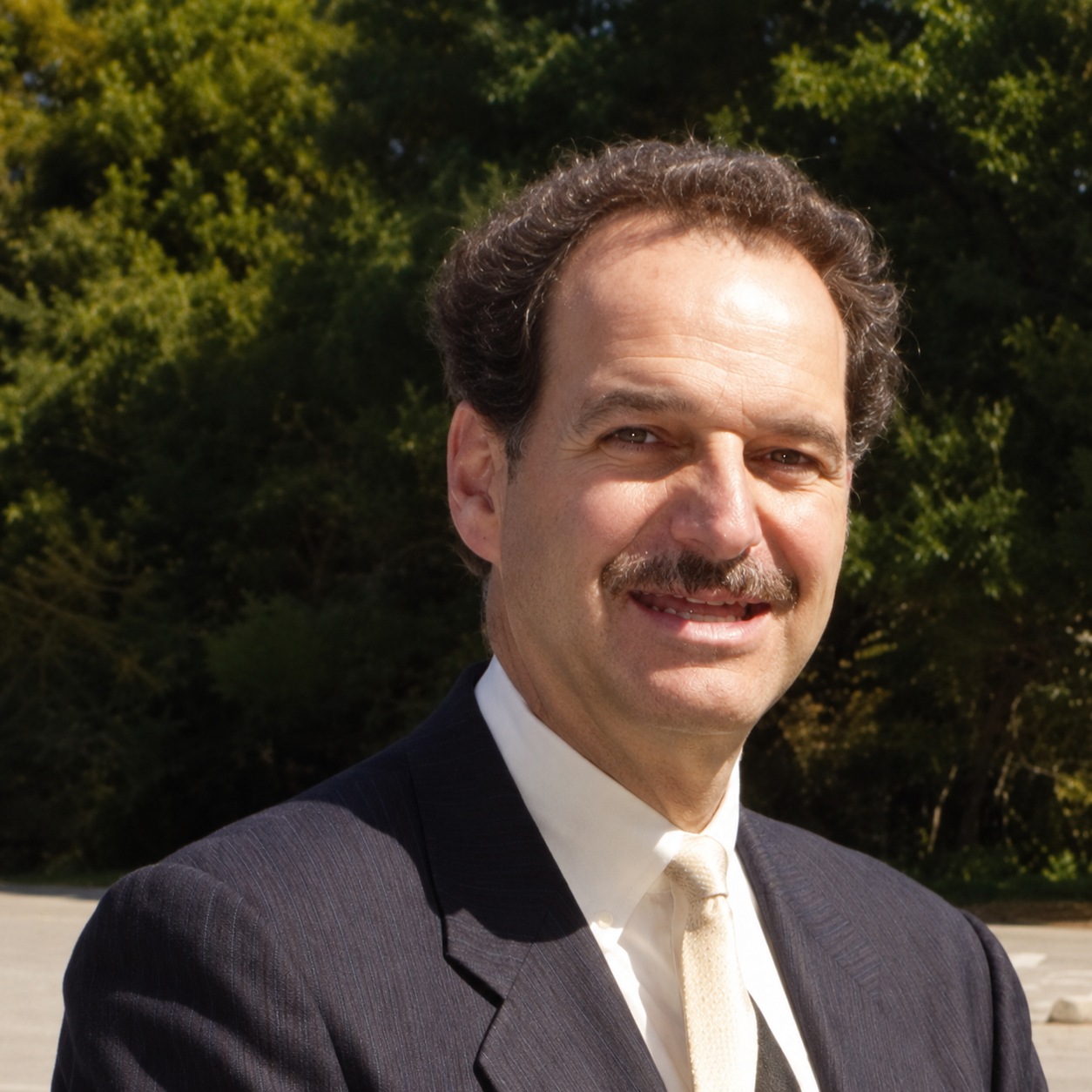
Rob Reis, Founder & CEO of Higher Ground LLC
50,000
FCC-Authorized Earth Stations
256-bit
AES Encryption
2/3
Globe Coverage
3
Companies Founded
$7M
VC Raised (Finial Tech)

Where every network ends, Higher Ground begins

There's a moment on every backcountry trail, every remote field op, every offshore operation when the signal bar disappears and your device becomes an expensive rock. Rob Reis built his career around that moment.

His company, Higher Ground LLC, makes the SatPaq - a Bluetooth-connected satellite communicator about the size of a TV remote that piggybacks on geostationary satellites to send texts, transmit GPS coordinates, and shuttle encrypted files. No subscription drama. No Iridium premium. Just 18 to 37 cents a message, military-grade AES-256 encryption, and coverage across North America, the Caribbean, Central Europe, the Middle East, and Africa.

Reis chose geostationary satellites deliberately. Unlike low-earth-orbit constellations - where satellites zip overhead and require complex antenna tracking - geostationary birds sit fixed at 35,786 km altitude. Point the device at the sky. Done. The simplicity is the feature.

The product has moved from backcountry gear shelves to DoD contracts. The U.S. Air Force funded development of GeoFix, Higher Ground's GPS-backup technology that uses geostationary satellites as position datums instead of GPS - making it essentially immune to the jamming and spoofing that now regularly plagues military navigation. In naval exercises in 2022, sailors called SatPaq performance "superb."

Palo Alto is full of people who believe they're changing the world. Reis is the one who keeps doing it in hardware.

"Change-the-world advances hardly ever come from large companies. They come out of start-ups like Higher Ground."
- Rob Reis, CEO, Higher Ground LLC

Two products. One satellite link. Zero cell towers.

📡
SatPaq 2
World's Most Compact Satellite Communicator

Pairs with any Android 9+ device over Bluetooth. Weighs 5 ounces. Fits in a shirt pocket. Sends two-way texts, GPS coordinates, cropped images, and digitized voice over geostationary satellites using Higher Ground's SpaceLinq app.

Weight 5 oz
Dimensions 2.95" x 5.6" x 0.85"
Battery 2400 mAH (months)
Encryption AES-256
Per Message 18 - 37¢
🛰️
GeoFix™
Unjammable GPS Backup • U.S. Air Force Contract

GPS can be jammed. GeoFix can't. Uses geostationary satellites as position datums rather than GPS birds - exploiting the wide 500 MHz passband through multiple signal channels. No GPS needed. No spoofing possible.

Signal Type Spread Spectrum
Satellite Type Geostationary (GEO)
Jam Resistance By Design
Spoof Resistance By Design
Backing USAF SBIR Contract
🔒
Security Stack
Three-Layer Military-Grade Protection

Higher Ground's architecture runs outside the public internet entirely. No cloud servers, no ISPs, no single point of failure. The combination of spread spectrum signaling, AES-256 encryption, and a private service layer creates a communications channel that's genuinely hard to intercept or disrupt.

Layer 1 Spread Spectrum
Layer 2 AES-256 Encrypt
Layer 3 Private Service (no internet)
Customers DoD, FAA, NASA, Outdoor

Four decades. Three companies. One consistent bet.

Rob Reis graduated from Stanford University with degrees in Electrical Engineering - and then immediately did something that would define the next four decades: he started building things that didn't exist yet.

In 1983, Reis co-founded Finial Technology alongside Stanford EE colleague Robert E. Stoddard. The company's product, the LT-1, was a laser-based turntable that played vinyl records without physical contact. They showcased it at CES in 1986, raising $7 million in venture capital along the way. The technology was extraordinary. The market timing was brutal. The compact disc was winning. Finial Technology was liquidated in 1989 - but the work itself was ahead of its era, which would become a recurring theme.

That same year, Reis founded Savi Technology, an early RFID-based asset tracking company. The idea was simple in retrospect but genuinely novel in 1989: tag things, track them, know where they are. Texas Instruments saw the potential and acquired Savi. Then Lockheed Martin acquired it from TI. Today, the principles Reis helped pioneer are embedded in virtually every supply chain on Earth.

Reis spent time at Texas Instruments as Director of the Innovation Center (1996-1998), then shifted into the role of CEO coach and innovation advisor - running Breakthroughs Innovation Center and working with companies like Silicon Gaming. The pattern was consistent: enter early, build something real, exit before the inevitable consolidation, and move on to the next hard problem.

In February 2011, Reis launched Higher Ground LLC from Palo Alto. The premise was deceptively simple: existing satellite communication was either too expensive (Iridium, SPOT), too limited (one-way devices), or too complex for civilian use. He wanted to build a two-way satellite messenger that a hiker, a farmer, a disaster responder, or a soldier could use without a manual - and priced it so that the cost per message was under 40 cents.

Getting there required years of FCC regulatory navigation. Higher Ground's approach - using dynamic frequency sharing in the 5925-6425 MHz band alongside existing satellite earth stations - raised alarm bells in the telecom industry. Incumbents argued it could interfere with emergency services. IEEE Spectrum covered the controversy in 2016. In January 2017, the FCC issued Order DA-17-80, authorizing Higher Ground to deploy up to 50,000 mobile satellite earth stations. Clearance granted.

The company's pivot toward defense applications wasn't opportunistic - it was logical. GeoFix, the GPS-backup system developed with U.S. Air Force SBIR funding, addresses one of the most pressing concerns in modern military operations: the vulnerability of GPS to electronic warfare. Using geostationary satellites as position references rather than GPS birds, GeoFix provides navigation that's architecturally immune to conventional jamming and spoofing methods. The Air Force noticed. The Navy tested it and called the results "superb."

Reis serves on the Consumer Technology Association's Board of Industry Leaders (since December 2019) and the Judges Advisory Council for the Society for Science and the Public - roles that put him at the intersection of emerging tech policy and the next generation of STEM talent. For someone who has been building communications infrastructure since the Reagan administration, these positions feel less like credentials and more like continuity.
Building forward since 1983

1983
Co-founds Finial Technology with Stanford EE colleague Robert Stoddard. Begins developing the LT-1 laser turntable.
1986
Finial Technology's LT-1 laser turntable showcased at CES. $7 million in venture capital raised. National attention.
1989
Finial Technology liquidated. Reis immediately founds Savi Technology, one of the world's first RFID-based asset tracking companies.
1996
Joins Texas Instruments as Director of the Innovation Center. Oversees emerging technology initiatives.
1998
Leaves TI. Transitions to CEO coaching and innovation consulting through Silicon Gaming and Breakthroughs Innovation Center.
2011
Founds Higher Ground LLC in Palo Alto. Focus: affordable, secure, two-way satellite communications using geostationary satellites.
2014
FCC grants experimental licenses for Higher Ground's dynamic frequency sharing satellite messaging system.
2016
IEEE Spectrum covers Higher Ground's FCC controversy. Telecom incumbents push back on dynamic frequency sharing.
2017
FCC issues Order DA-17-80: up to 50,000 mobile satellite earth stations authorized. GCN covers SatPaq for government use.
2019
SatPaq featured at CES. Joins CTA Board of Industry Leaders. Techstination podcast interview on affordable satellite comms.
2021
U.S. Air Force SBIR contract awarded for GeoFix - unjammable, non-spoofable GPS backup using geostationary satellites.
2022
SatPaq deployed in U.S. Naval exercises. Navy evaluation: "performance was superb."

What he's actually built

🏛️
Co-developed the LT-1 Laser Turntable at Finial Technology - one of the earliest laser-based vinyl playback devices. Showcased at CES 1986, raised $7M in VC.
📦
Founded Savi Technology (1989), pioneering RFID-based military logistics tracking. Later acquired by Texas Instruments, then Lockheed Martin - proof of concept validated at enterprise scale.
📋
Secured FCC Order DA-17-80 (January 2017): authorization for up to 50,000 mobile satellite earth stations after a multi-year regulatory battle against telecom incumbents.
🛡️
Developed GeoFix with U.S. Air Force SBIR contract support - a GPS-alternative navigation system that cannot be jammed or spoofed using conventional electronic warfare methods.
💬
Built SatPaq into one of the most affordable two-way satellite communicators on the market: AES-256 encrypted, 5 ounces, 18-37 cents per message, covering 2/3 of the globe.
SatPaq rated "superb" by the U.S. Navy following operational exercises in 2022 - DoD validation of a product originally designed for the consumer outdoor market.
🏆
Elected to the Consumer Technology Association Board of Industry Leaders (December 2019) and Judges Advisory Council for the Society for Science and the Public.
🌐
Built Higher Ground's global coverage architecture: geostationary satellites serving North America, the Caribbean, Central Europe, the Middle East, Africa, and Eastern Europe - no subscriptions, no outages.

Global Satellite Coverage

Higher Ground uses geostationary satellites - fixed in orbit, no tracking required. Point at the sky. Done.

  • North America
  • Caribbean
  • Central & Eastern Europe
  • Middle East
  • Africa
  • Approximately two-thirds of the globe total
Global Coverage

Five things that don't fit anywhere else

01

Higher Ground's satellite service runs entirely outside the public internet - no cloud servers, no ISPs, no single point of failure. Your message either goes through a geostationary satellite or it doesn't go at all.

02

Rob Reis helped invent a laser turntable in the early 1980s, more than a decade before it was commercially viable. The company raised $7 million and showed at CES 1986. The CD won. He moved on.

03

Savi Technology, which Reis founded in 1989, pioneered RFID tracking for military supply chains. The same technology now underpins retail inventory management in stores worldwide.

04

GeoFix doesn't improve GPS. It replaces it. By using geostationary satellites as position datums through a 500 MHz passband with multiple channels, it achieves navigation that conventional jamming equipment simply can't reach.

05

The FCC controversy around Higher Ground's 2014 experimental licenses drew alarm from emergency services providers who feared interference with 911. It took three years of regulatory work to resolve. The FCC sided with Higher Ground in 2017.