A press release, in the old imagination, travels like a telegram: written here, wired there, safely arrived. Hector Botero has spent most of his career objecting to the last part. Arrival is not a line on a distribution receipt. It is a person on the other end - preferably the right person, in the right market, with some evidence that the encounter happened.
That distinction sounds obvious until one remembers how much of the newswire business was built on proxies. A release appeared on a recognizable website. It entered a database. It was available to an enormous theoretical audience. The impressive noun was reach; the awkward question was whether any intended reader had actually been reached.
Botero's public argument has rarely been coy. In 2021, when iCrowdNewswire and LexisNexis launched Nexis Newswire, he said that posting releases on low-traffic website subdomains might help search visibility but delivered news to only a fraction of the right audience. The product pitch followed the critique: use paid promotion on premium sites, add voice distribution, and aim traffic at the release instead of waiting decorously for traffic to wander by.
“Posting releases on website sub-domains where traffic is minimal can be an effective strategy for search engine optimization, but it delivers news only to a fraction of the right audience.”Hector Botero, on the launch of Nexis Newswire
The map before the dashboard
His fixation on audience predates the vocabulary of ad targeting. In 1996, Botero founded International Media Services, or IMS. It began by covering Latin America from Mexico through Central and South America, building the unglamorous connective tissue of media research, monitoring, translation and release distribution. Four years later, he expanded into Asia-Pacific and Europe. IMS partnered with Business Wire to develop Business Wire Latin America and Business Wire China.
The work was geographic, linguistic and operational. A 2008 account of IMS described a network of news agencies, financial services and publishing organizations, supported by regional offices and affiliates from Miami to Montevideo, Beijing to São Paulo. The company coordinated the contracts, copyright, currencies, technical systems and translations that a glossy phrase like “global distribution” politely hides.
Botero also became president of Business Wire's Greater China operation. In 2006, he was among a group of international journalists received by Taiwan President Chen Shui-bian during an anniversary celebration for the Central News Agency. It is a small photograph in a long corporate career, but a revealing one: a Miami operator had become part of the institutional choreography of Asian news.
Then the operator became the acquired. Marketwired bought IMS in January 2008, adding its distribution, translation, media-management and monitoring businesses. Botero joined as vice president for emerging markets and later led Marketwired's international division. His comment at the time was less an exit speech than a continuation notice. He was eager, he said, to put more than ten years of emerging-market experience to work inside a larger, ambitious company.
One distribution problem, five generations of machinery
A new wire with an advertising engine
iCrowdNewswire was incorporated in December 2014 and opened in April 2015. Botero described its early business in practical segments: wholesale distribution, custom services and direct retail. “Ideas are only as good as the ability to implement them and bring them to a profitable fruition,” he said that summer, crediting vision, dedication and a talented team. It is as close to a personal motto as his public record offers. Ideas are pleasant. Operations pay the invoice.
The company initially addressed crowdfunding and investment communications, then widened its field. The consequential turn came when it began working with Google's advertising technology in 2018. The press release headline became an ad unit. Geography, industry and demographic criteria could help define the audience. Analytics could show impressions and headline views. In Botero's preferred comparison, a publication's prestige and total traffic were beside the point if the relevant stakeholder never saw the announcement.
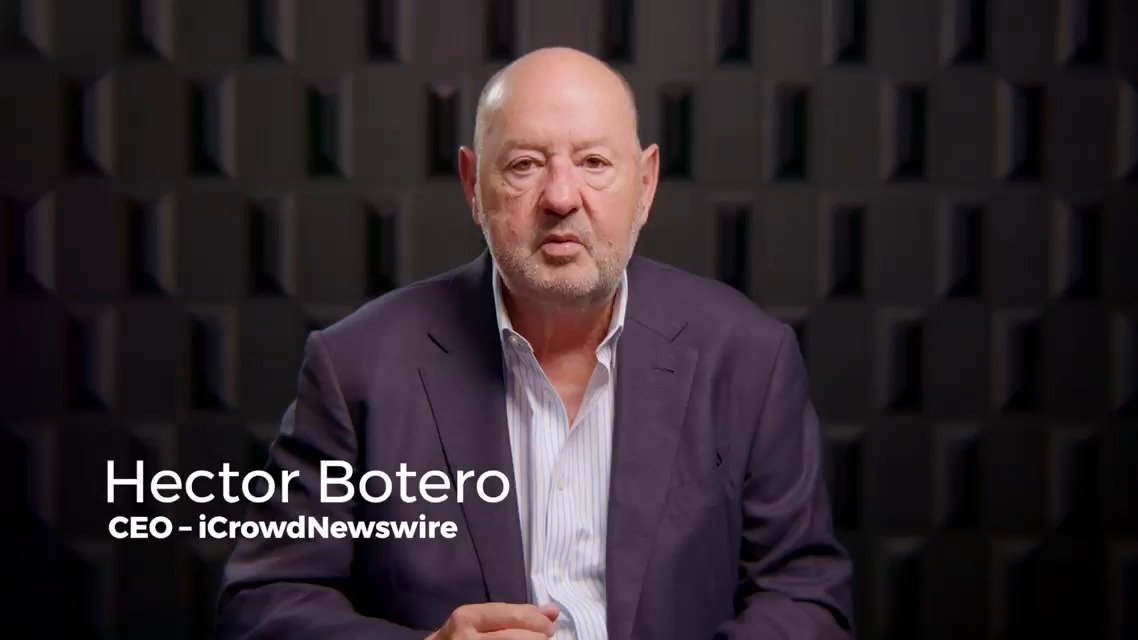
By 2024, iCrowd was pairing GlobeNewswire distribution with Google-powered headline campaigns. Customers could select audiences and commission creative banners, while reports drew on analytics from both systems. A partnership with MediaConnect took the Paid Media Release service to France. Other partnerships connected the technology with Medianet in Australia, PA Media in Britain, NewsVoir in India, Media OutReach in Asia and The Newswire in Canada.
The logic is not subtle, and that is its appeal. Earned distribution carries an announcement into editorial and information systems. Paid media goes looking for viewers. The combination admits what the classic wire sometimes preferred to blur: publication and attention are separate events.
One company sends, another gathers
Botero also founded ContentEngine in 2016, one year after iCrowd opened its doors. The pairing clarifies the larger plan. iCrowd distributes corporate announcements outward; ContentEngine organizes licensed news and information for regional markets. One is concerned with a message finding an audience. The other is concerned with an audience finding useful material. Both sit in the same unruly middle ground between publisher and platform.
That dual view matters because distribution is never only a sending problem. Someone has to describe the content, translate it, place it in a useful taxonomy and deliver it in a form another system can ingest. Botero encountered those chores when IMS coordinated agencies and translation centers across continents. ContentEngine updated them for feeds, databases and digital products. The plumbing changed; the need for clean connections did not.
Scale, in iCrowd's telling, now means a menu of more than 3,700 sites across 26 countries and 15 industries, with paid campaigns ranging from 50,000 to one million headline impressions. Those are the company's product figures, not a substitute for a customer's results. Their significance lies in the choices they expose. A communications team can specify a country, an industry, a language and a volume instead of accepting “global” as a wonderfully spacious but rather evasive answer.
Botero's career has therefore moved in both directions at once. The networks grew wider, from regional partnerships to global digital inventory. The targeting grew narrower, from everyone theoretically able to find a release to a chosen cohort expected to see it. More reach and less vagueness: that is the business in seven words.
A famous domain is a location. Botero wants distribution to behave like a journey - one with a destination, a passenger count and a receipt.
When the reader is partly a machine
The next destination arrived with a new problem. Search engines once returned lists of links. Generative systems increasingly return composed answers. In April 2025, iCrowd announced distribution channels aimed at making releases more discoverable across AI platforms. In July 2026, it followed with AEO and GEO services, designed to structure announcements so answer engines could interpret, summarize and cite them.
Botero called the change “a pivotal shift” in information discovery. His line that “GEO is not replacing SEO” but is instead “the next layer of visibility” is marketing, certainly, but it also neatly describes his career. Each layer keeps the previous infrastructure and adds another demand. A release must be available, searchable, targetable, measurable and now machine-readable. The telegram has accumulated quite a wardrobe.
There is an irony here. Newswires were invented to make information legible to networks. Botero's current project is to make it legible to systems that read on behalf of people. The harder editorial question is whether optimization for answers improves understanding or merely produces another contest for visibility. His answer is commercial and concrete: communications teams must adapt because audience behavior already has.
The other field
Botero's life outside the wire offers a more personal version of the same instinct. Rosina Polo, he writes, was a dream he shared with his wife, Roxanne, and made real to honor his mother's wish that the family remain together. The name belongs to a world of inheritance, animals, seasons and land, far from dashboards and distribution reports.
Yet technology followed him onto the field. In 2025, Botero and Argentine champion Bautista Heguy formed Chapa La Rosina Polo Club in Pilar. Botero said the goal was “to build a different kind of polo club” and introduce technical innovation in Argentina's central polo market. The venture adopted sensors and analytics for measuring equine performance. Even in a sport dense with tradition, he reached for data.
It would be too tidy to pretend that a newswire and a polo club are the same enterprise wearing different boots. They are not. But the family venture supplies something his corporate biography otherwise lacks: an origin deeper than market opportunity. One project begins with a complaint about distribution. The other begins with a promise to a mother. Both turn sentiment into infrastructure.
The stubborn question
Thirty years after IMS, Botero is still in Miami and still arguing with the abstraction of reach. The network has changed shape around him. It moved from agency agreements and translation desks to web syndication, voice assistants, ad exchanges and generative models. His vocabulary changed with it. His temperament, at least in public, appears remarkably consistent: skeptical of ceremony, fond of implementation, impatient with a metric that cannot survive one more question.
Did the message go out? Yes. But to whom? Where did it appear? Who encountered it? What can be counted? And now, can the machines organizing tomorrow's answers understand what it says?
The newswire once ended when the release crossed the wire. Botero's version begins there.