The headquarters had wheels, a curved aluminum shell, and very little patience for clutter. For three and a half years, Heather Holmes ran Publicity For Good while living with her husband in a 23-foot Airstream. The arrangement sounds like the sort of detail a publicist might invent after the fact. In Holmes's case, it was simply where the laptop opened each morning.
A trailer makes an unforgiving editor. There is nowhere to hide the extra chair, the extra box, or the managerial habit that exists only because there is room for it. Holmes has said the small space removed distractions and narrowed attention to the business. During the pandemic, that focus stopped being picturesque and became necessary. Publicity For Good lost roughly 40 percent of its business as the shock arrived. The same year became the agency's first million-dollar year.
Her account is not a fairy tale about positive thinking. It is about the brutal usefulness of a constraint. Everything else was closed. The business had to survive. She and her team worked, measured, pitched, and kept moving. If the Airstream gave the company a creation myth, 2020 supplied the stress test.
The planner was the first dashboard
Long before the trailer, there was a paper planner. At an early advertising-agency job, Holmes tracked how many people she called, how many she emailed, and how many interviews she booked. The expectation was direct: secure interviews for clients every week. After enough repetition, she says she was booking as many as 35 interviews in a week.
This is the less cinematic origin of her career, and the more revealing one. Public relations is described in the language of instinct and relationships, but Holmes learned it as a counted practice. A conversation mattered. So did the number of conversations. Charm without follow-through is merely a pleasant afternoon.
She had studied communication at Wittenberg University, where she graduated in 2011. Her college years already contained the ingredients she would later combine: student government, service work, field hockey, a program for at-risk teenage girls, and a summer institute on philanthropy and voluntary service at Georgetown. She was class president and, in 2011, Greek Woman of the Year. The pattern was not subtle. Holmes liked platforms, but she liked using them for something.
She briefly started an upcycled-clothing venture called Romp Away. Publicity proved the stronger fit. In April 2016, she founded an agency under her own name. It became Publicity For Good, a change that moved the emphasis from one person's reputation to the work's intended effect.
“Serve first, pitch second.”Heather Holmes on media relationships
A crown is useful because it expires
In 2018, Holmes became Miss Ohio International. She did not approach the title as a detour from business. It was a live demonstration of what she tells clients: a platform is borrowed attention, and borrowed attention needs a point.
She used the role to speak about building profitable companies that also contribute to their communities and teams. The title gave her a timely reason to appear in the media. Then it ended, as pageant titles do. What lasted was the lesson that relevance has a clock attached.
Holmes's practical advice begins before anyone drafts a press release. What is the outcome? More sales, backlinks, recognition, or reach? What pivotal moments explain why the founder built the thing? What is happening now that makes the story useful? Her method is to place a product or person inside a larger conversation without pretending the larger conversation exists merely to sell the product.
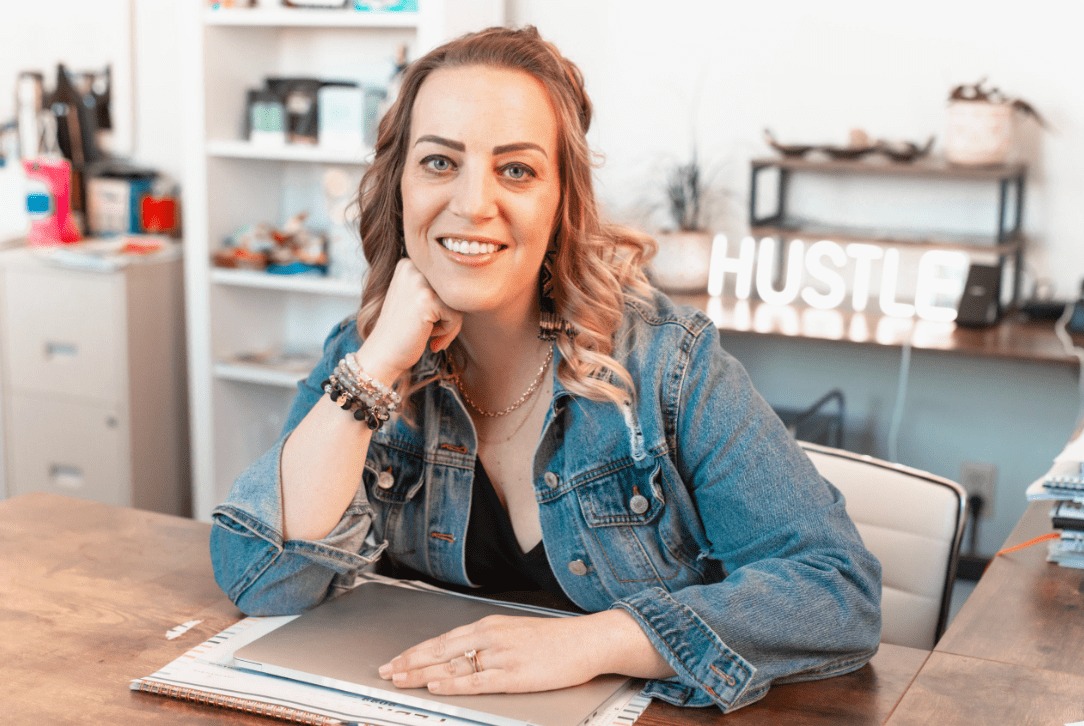
This is where purpose enters, a word so overworked in marketing that it often arrives with its pockets empty. Holmes insists on making it carry evidence. Publicity For Good focuses on brands that put a mission into the business itself. Yet the agency also emphasizes placements, reach, visibility, and return. Good intentions may choose the destination. Metrics tell the driver whether the wheels are turning.
The route from service to search
The office grew roots
Eventually, the wheeled life gave way to land. Holmes and her family moved to a homestead with chickens and a garden. She has spoken cheerfully about gathering fresh eggs in the morning, a routine whose feedback loop is wonderfully free of analytics. The agency, meanwhile, stayed remote and spread across countries.
Holmes does not offer a polished doctrine of work-life balance. Her phrase is more useful: “life is one.” In interviews, she has described children appearing on calls, work happening while they sleep, and the founder and parent roles refusing to clock in on separate shifts. She calls parts of it a hot mess. This may be the most trustworthy phrase in her media kit.
The integration is intentional, even when the days are not neat. During the first week she dated Austin Holmes, the pair sat with a journal and mapped the life they hoped to build. Marriage, children, business, and home were treated less like competing brands than one shared project. Austin later took a leadership role in Publicity For Good.
Her public manner mixes intensity with domestic candor. She can discuss media targets, then eggs with goat cheese. She can speak about legacy and admit the schedule is imperfect. The combination keeps her purpose-first language from floating away. Ideals are easier to trust when they arrive with a calendar, a call sheet, and a child somewhere just outside the frame.
When the search box started answering back
By 2026, Holmes had moved her central argument into a new arena. Her book Seen by AI, Found by Customers asks what happens when customers stop scanning a page of links and begin accepting a synthesized answer from an AI system. She calls PR the new SEO and urges brands to think about whether machines can find enough credible third-party evidence to recommend them.
The terminology is new: answer engines, generative discovery, share of model. The underlying instinct is the one she learned with the planner. Authority is accumulated through visible proof. A brand cannot merely describe itself as trustworthy on its own website and expect every audience, human or computational, to salute.
There is an appealing circle to the idea. Holmes began by counting booked interviews. Now she studies what all those interviews, articles, podcasts, and outside mentions become when software reads them at once. The old media placement has acquired a second audience, one made of models deciding which names belong in an answer.
“The only way you make a difference is if you show up.”Heather Holmes
The claim deserves some healthy resistance. Platforms change, measurements wobble, and every new marketing era produces a person announcing the death of the previous one. Holmes's more durable insight sits beneath the forecast. Credibility needs witnesses. Whether discovery begins with a newspaper, a search engine, a podcast app, or a chatbot, reputation travels farther when other people can verify it.
That is also why her personal story works. The Airstream is not evidence that every founder should buy a trailer. The pageant is not evidence that every CEO needs a crown. The homestead is not an off-site strategy. Each is a vivid setting for the same operating habit: decide what matters, use the platform at hand, and count whether the message moved.
The company her children can inspect
Holmes has said she is building a business her children will be proud of and the world will not ignore. It is a very publicist sentence, polished to travel. It is also a useful standard because it contains two audiences. One asks whether the company was built well. The other asks whether anybody noticed.
Her aspiration now stretches beyond her own agency: a network where mission-led founders, particularly women and parents, can access media, mentorship, and resources strong enough to compete with legacy companies. It is the service project enlarged to industry scale.
The road from a college service program to AI search is not as crooked as it looks. Holmes has spent her career considering who gets heard, why they get heard, and what they do with the attention. The equipment changed. The assignment stayed put.
There is discipline hiding inside that continuity. Holmes tells founders to excavate the pivotal moments in their lives, but she does not let the exercise become autobiography for its own sake. The point is to locate the moment that clarifies the business for somebody else. A childhood fundraiser, a first client, a sudden loss of revenue, or a kitchen table covered in work can become material only after it becomes useful. The story earns its place by carrying meaning to an audience, not by flattering its owner.
Some founders build monuments. Heather Holmes built a company that first had to fit through a trailer door. That may explain its preference for portable things: a clear story, a useful promise, a measurable result. None takes much room. All can travel.