In 1996, Rev. Shawn Collier bought the beginnings of an institution for roughly the price of a used sedan. Two thousand dollars from her savings. One employee. A 6,400-square-foot building with a mortgage attached. Collier says she paid herself $300 a month and sometimes worked more than 80 hours a week. It is the sort of origin story that nonprofit brochures love because the arithmetic is so obliging: little money, enormous conviction.
But the revealing detail comes next. The building did not stay empty. Volunteers repaired it; teenage girls moved in; the rooms filled. The first thing to fail was not belief or effort. It was capacity. Five years after Harvest Time Ministries opened, the organization moved to nine acres in rural Alabama with an A-frame chapel, a parsonage, offices, a gymnasium, a dormitory and a pool. Within a few years, Harvest Time says, the property it had agreed to buy was donated free and clear.
The biography became the blueprint
Collier did not arrive at this work by studying a market gap. In her public account, she describes years of drug and alcohol addiction beginning at thirteen, followed by a Christian conversion at twenty-six. That experience changed the question from “What service should exist?” to “What would have reached me?” Harvest Time's answer was a place with rules, time, religious conviction, and people close enough to notice when someone disappeared into herself.
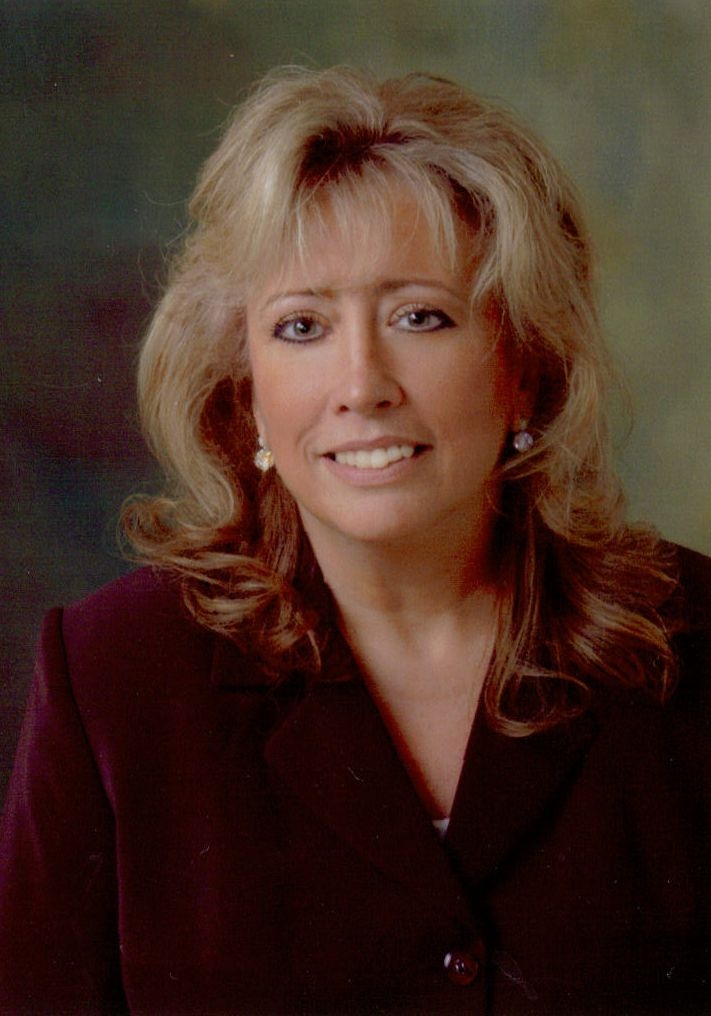
Founder as operating system. Collier is listed not only as founder and president, but also as senior pastor, executive director, fundraiser, special-projects coordinator, ministry-team leader and missions coordinator. In small organizations, the org chart can look suspiciously like one person's calendar.
“We are more like a family than a facility.”Freedom Women's Ministry
That sentence is the center of the model. Freedom Women's Ministry, Harvest Time's long-term residential home, serves women eighteen and older dealing with addiction, self-harm, abusive histories, trauma and other problems the organization calls life-controlling. Each resident is assigned a case manager. Together they set goals for the stay and for whatever comes after graduation. The public language is domestic - home, family, correction, guidance - rather than clinical.
Seven problems, because one problem is never one
Harvest Time divides the work into seven domains. This is more sophisticated than it first appears. Addiction can be visible while debt, isolation, interrupted schooling, weak job prospects and physical neglect do their quieter work underneath. Treat only the most obvious behavior and the rest of the system waits patiently for its return.
The institution around those seven boxes is unusually mixed. Harvest Time is a residential program, but also a non-denominational Spirit-filled church, a local outreach operation, and an itinerant evangelistic ministry. Collier has traveled with teams of interns and students who tell their own stories. The ministry documents trips to the Philippines, Greece, Kenya and Nicaragua between 2010 and 2018. In market terms, Harvest Time sits between a church, a recovery residence, a life-skills program and a missions organization. The overlap is its differentiation.
The campus is part of the program
By Harvest Time's description, the Clayton campus eventually contained six buildings. The dormitory could house nineteen residents, with a separate two-person staff apartment. An intern house held as many as six interns and two staff. The administration building combined a large kitchen, classrooms, offices and enough room for events or services of up to 500 people. A coffeehouse doubled as classroom space. The pool and pavilion were used for ordinary enjoyment as well as special occasions.
That sounds like a facilities inventory. It is also a theory of change. A dormitory provides duration. A kitchen creates work and ritual. Classrooms make learning visible. A chapel makes the ministry's beliefs unavoidable. Recreation prevents recovery from becoming a permanent meeting about recovery. The grounds allow a resident to rehearse a whole life in one place.
$2,000 and a mortgage
The first building opens with one employee and extensive volunteer repair work.
Capacity forces a move
The ministry relocates to a larger, nine-acre campus.
A school building
A new dedicated building expands the educational side of the work.
The radius widens
Documented mission work reaches four countries across three continents.
The alumni do not vanish at graduation
One of the more interesting features is the staffing loop. Public biographies describe women who entered as residents, graduated, spent a year as interns, and then joined the staff in case management, administration, worship and support roles. Emily Addison, for example, is described as a former student who graduated in 2008, interned for a year and became a full-time case manager. Lived experience here is not confined to the testimonial page. It becomes operating knowledge.
This also explains the culture's intensity. Harvest Time asks people to see themselves as a family, to volunteer where gifted, and to accept a specifically Christian account of change. That can offer continuity to someone who wants exactly that. It also draws a clear boundary. This is not a neutral wellness product. People seeking a secular setting, a different religious framework, or medical care as the primary service need a different fit.
Donations, volunteer labor, and a long time horizon
Harvest Time is a tax-exempt religious and charitable nonprofit. Its history includes donated labor and donated real estate, while its site invites giving and volunteer involvement. The launch cost is unusually clear - $2,000 plus a mortgage - but the current cost to residents is not part of its public description.
What another small organization can borrow
The copyable part is not the eighty-hour week or the founder's tiny salary. Those are emergency fuels, not an operating system. The useful pieces are more ordinary: define the whole person you intend to serve; translate that definition into a small number of memorable domains; assign a human owner to each person's plan; create an alumni path into responsibility; and make the physical setting reinforce the behavior you are asking for.
Seven domains keep one urgent symptom from swallowing the rest of a person's life.
A case manager turns a broad mission into goals someone can revisit after graduation.
Resident to graduate to intern to staff is both a talent pipeline and a culture loop.
Kitchens, classrooms and common spaces can teach belonging without another lecture.
Harvest Time's work is easy to caricature from either direction - as pure faith or pure social service. It is more accurately a compound. The church supplies language, belief and community; the residence supplies time and structure; case managers supply continuity; alumni supply proof and memory. Remove any one of those pieces and the place becomes something else.
The $2,000 is a good headline because it makes the start feel improbable. The nine acres make a good ending because they make the growth visible. But the transferable achievement sits between them: Harvest Time turned a founder's conviction into rooms, roles, routines and a way for former residents to come back through the front door as staff.