An acquisition can change the owner of a business without changing the name a customer looks for. In December 2024, Northwinds Services Group acquired Cornetta Bros, a plumbing and heating company serving Nassau County, New York. Harry Carpenter, Northwinds’ chief executive, singled out Joe and Steven Cornetta as the third generation serving its customers. The transaction brought a family history into a larger organization. It also gave Carpenter a rather particular management assignment: help the company grow while keeping the identity that had made it worth buying.
There is a small irony here. The familiar name is often the thing an acquirer wants, yet acquisition brings the power to change almost everything behind it. A buyer can provide money, systems, and support. Customers still have to decide whether the business deserves another call. The purchase price cannot make that decision for them.
Carpenter’s work lives in that gap. He leads a network of heating, air conditioning, and plumbing companies, with local brands supported by a shared organization. His career has moved through finance, large-scale service operations, landscaping, and home services. Across those settings, the recurring problem is practical: how to organize resources around work that happens somewhere else, in front of a customer.
A career in the work behind the work
Before Northwinds, Carpenter spent more than 25 years at Aramark. His roles included senior financial leadership for its North American food, hospitality, and facilities businesses. He later became president and chief operating officer of its Business & Industry sector. The position joined responsibility for the numbers with responsibility for the operation producing them.
He subsequently led BrightView’s Landscape Maintenance Division. In October 2017, he joined the board of Merit Service Solutions, an outsourced exterior facilities management business backed by Eureka Equity Partners. These were different services, but each depended on coordinating people and work across locations. The thread through his résumé is the management of services rather than one particular piece of equipment.
His education also connects him to Philadelphia: a BBA from Temple University and an MBA from Saint Joseph’s University. On March 22, 2013, Temple’s hospitality school hosted him in its Executive in Residence series, listing him as Aramark’s president and COO. The series brings working executives into discussion with students. For Carpenter, it was a return to the university where he had earned his undergraduate degree, this time with an operating career to bring into the room.
That is a useful scene in a career otherwise described by job titles. A student hears about an organization from someone responsible for making it function. Years later, a local business owner considering a sale asks a related question: what will this organization actually do for the people inside it?
- AramarkFinance, then Business & Industry operations
- BrightView & MeritLandscape maintenance leadership; exterior-services board work
- Northwinds · September 2022Appointed chief executive by TruArc Partners
A new name above the old names
TruArc Partners appointed Carpenter CEO of Northwinds in September 2022. The platform was anchored by Isaac Heating & Air Conditioning, following TruArc’s investment in Isaac in May 2021. Its intended geography included the Northeast, Mid-Atlantic, and Midwest, serving residential and commercial customers.
In April 2023, Isaac Holdings adopted the Northwinds Services Group identity. A new name at the group level gave the growing collection of businesses a common identity. The local company names remained part of the proposition. The distinction matters: a group can introduce itself to prospective sellers while its operating businesses remain recognizable to the customers they already serve.
The model asks Carpenter to oversee two kinds of growth at once. Acquisitions increase the network’s reach. Support for existing companies is intended to help those businesses develop within their own markets. A list of acquisitions tells only the first part of that story. The second part involves people, systems, and the everyday usefulness of belonging to the group.
Northwinds describes a process that begins with checking whether a business and the network fit each other, moves to valuation and payment, and continues into a jointly developed integration approach. Its stated aims include reducing administrative burdens and sharing operating practices. The third step is where an agreement begins to become an organization.
It is also where the language of partnership meets a calendar full of ordinary tasks. Payroll needs doing. Customers need answers. Employees need support. Those tasks may lack the glamour of a deal announcement, but they are a fairly demanding way to judge whether the announcement meant anything.
The classroom inside the acquisition
Training gives the shared-resource idea something more tangible than a corporate diagram. Northwinds’ 2023 identity announcement included Isaac University, a 30,000-square-foot facility for HVAC technician training. In a business that promises service at a customer’s home or workplace, teaching the people who deliver it belongs close to the operating model.
There is an appealingly literal quality to this. A company discusses growth, then points to a room where someone can learn to do the work. The resource can be understood without a valuation model. A technician needs equipment, instruction, and time to practice. A local employer needs people able to take on the next assignment.
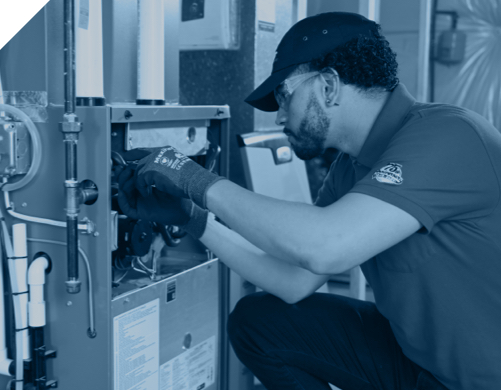
The network also includes ITEC Training & Education Center. Its published record describes more than 300 HVAC and allied-trade classes since 2019, training over 1,500 technicians from nearly 100 companies across the eastern United States. Its instruction uses live equipment and emphasizes hands-on learning. Those are ITEC’s figures, rather than a measure of Carpenter’s individual output, but they show the kind of resource available within the organization he leads.
For an acquisition strategy, that distinction is useful. Buying a business and developing its employees are separate activities. A buyer can commit to both. The training resources make that commitment specific enough for a prospective partner to examine, and for an employee to ask what opportunities might follow.
Technician-training facility described in the 2023 Northwinds identity announcement
What sellers asked to keep
The companies joining Northwinds offer a more detailed account of the proposition than the word “platform” ever could. When Rebmann Plumbing Heating & Air Conditioning joined in May 2023, president Scott Ambrosio had already spoken with other Northwinds companies. He wanted to keep employees, preserve the business’s values, and gain resources that could help it develop. He also pointed to sharing information across the group as an opportunity.
That sequence is revealing. A seller did some checking with the people already inside. The organization was being evaluated through other operating businesses, each with its own experience of membership. For Carpenter’s model, the existing network is therefore part of the argument to the next owner considering a sale.
LePrevost Plumbing Heating & Cooling joined that July. Its business served seasonal and year-round customers in Massachusetts’ Berkshire County. CEO Tim LePrevost emphasized employee training and an alignment between Isaac’s values and those of his family-owned company. The benefits he described were tied to people and continuity, as well as growth.
In November 2023, W.F. Hann & Sons, a Northeast Ohio business dating to 1907, joined the group. President Karen DiSanto identified training, service, family values, and work ethic among the reasons for the decision. The next year, Bailey Plumbing & Heating’s founder Christopher Bailey also pointed to the integration approach and access to training when explaining his company’s choice.
These are sellers’ stated reasons for choosing a partner. Taken together, they describe what Carpenter’s organization has promised to support: established teams with their own histories, seeking resources for another stage of business. The varied company names are doing some useful explanatory work here. Each belongs to an operation that existed before the deal.
“Their integration approach, culture and emphasis on customer service and training are why we chose to partner with Northwinds.”
Christopher Bailey, founder, Bailey Plumbing & Heating · November 2024
The map gets wider
By August 2025, the network had added Suburban Services Group, which had served New York’s Capital District since 1983. Former owner Craig MacDonald emphasized shared services and investment in people alongside the preservation of values. In January 2026, Phoenix Mechanical joined, adding a business founded in 1996 and serving Westchester and Putnam Counties, New York. Its president Jonathan Nissman put employee opportunities and continuity of customer service at the center of the partnership.
White Heating followed in April 2026. Founded in 1954, it served Pittsburgh homeowners, extending Northwinds’ presence in Western Pennsylvania. Carpenter’s comments focused on supporting the company’s next period of growth while building on its existing foundation. In September, Air Dynamics, based in Oswego, Illinois, joined the network, adding to its Chicagoland presence. President Paul Paruolo emphasized the continuation of the brand and development opportunities for employees.
For Carpenter, those additions enlarge an operating responsibility as well as a map. Each business arrives with a team that already does the work and a set of relationships already in use. The group’s resources have to connect with those operations. A common ownership structure supplies the opportunity; integration determines how people can use it.
His career makes this a fitting assignment. He has worked with finance, operations, and services delivered across locations. At Northwinds, the local names give that experience a specific setting. Cornetta Bros, White Heating, Phoenix Mechanical, and the others retain histories that a new owner can acknowledge, support, and build upon.
The next service appointment provides a modest but useful ending to any acquisition story. A customer calls a familiar business. Someone answers. Someone arrives to do the job. Whatever changed behind the name has to help that sequence work. Carpenter’s task continues long after the deal gets its date.