The Dispatch
A chemist who handed the lab bench to an algorithm
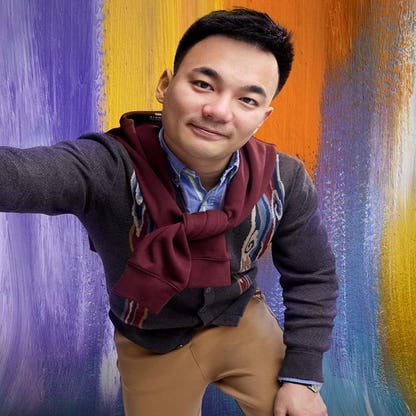
Haojun Jia runs Deep Principle, a company with an unusual employee at its center: an AI scientist. Its job is to invent - to propose new materials and chemical reactions, coordinate the experiments that test them, and shave months off work that used to crawl. Jia is the co-founder and CEO. His pitch fits on a lab coat pocket: deep learning plus first-principles physics, pointed at the messiest problem in industry, which is finding the next useful molecule before someone else does.
The idea did not arrive in a boardroom. It arrived at MIT, where Jia was deep into a PhD in physical chemistry, studying how single atoms behave when you ask them to do the work of a catalyst. Somewhere between the quantum calculations and the coffee, a question stuck: if the physics is knowable, could a model learn to predict chemistry it had never actually seen? He turned that question into Deep Principle rather than into another paper.
Most founders sell software. Jia is selling something closer to discovery itself. The company's platform - marketed first as ReactiveAI and now as the agentic tool Agent Mira - lets a researcher describe a goal in plain language and have the system orchestrate wet-lab experiments, simulations, and AI models to chase it. The target markets are the ones where a better material changes the math for everyone downstream: batteries, polymers, biodegradable plastics.
“Reconstruct the fundamental operating principles of the microscopic world.”
Deep Principle's stated mission — Deep Learning + First Principle
Origin
Physics in two languages, on two continents
Before chemistry, before Cambridge, there was physics - and a lot of frequent-flyer distance. Jia earned dual bachelor's degrees in 2019, one from Jilin University in China, the other from National Research Tomsk Polytechnic University in Russia. It is the kind of resume line that sounds like a rounding error until you sit with it: he learned the same laws of nature twice, in two systems, in two languages.
In November 2019 he joined the Kulik Research Group at MIT as a PhD student in physical chemistry. His research homed in on the spin-state-dependent properties of single-atom catalysts - the smallest functional units you can build a reaction around. His undergraduate work had already wandered across 2D piezoelectric materials, high-pressure phase transitions, surface science, and gas-phase chemistry. A generalist's curiosity, aimed at very small things.
The eight papers behind the pitch
Deep Principle did not appear from thin air. During his PhD, Jia authored or co-authored roughly eight publications on subjects like codoped single-atom catalysts for turning methane into methanol, iron and ruthenium catalysts for oxygen reduction, and new techniques for modeling the fleeting transition states where reactions actually happen. The company is, in a sense, that research grown a size too big for a journal.
The Machine
What Agent Mira actually does
Traditional materials discovery is slow because reality is stubborn. You hypothesize, you synthesize, you wait, you measure, you mostly fail, you repeat. Deep Principle's answer is to put a coordinating intelligence on top of the whole loop. You tell it what you want. It reasons across first-principles calculations and learned models, proposes candidates, and helps drive the experiments that confirm or kill them.
Where the AI is pointed
Battery innovation
Polymers
Biodegradable materials
Catalyst design
Reaction discovery
High-throughput DFT
The bet underneath all of it is a philosophical one. Pure data-driven AI can pattern-match. Physics-grounded AI can reason about why a molecule behaves the way it does. Jia's wager is that the second kind wins in chemistry, where the training data is expensive, scarce, and often the result of an experiment nobody can afford to run twice.
The Timeline
From Changchun to CEO
2019
Earns dual physics degrees from Jilin University (China) and Tomsk Polytechnic (Russia).
2019
Joins MIT's Kulik Research Group as a PhD student in physical chemistry.
2024
Co-founds Deep Principle with CTO and fellow MIT researcher Chenru Duan.
2025
Named to the Forbes 30 Under 30 Asia list, Healthcare & Science.
2026
Deep Principle scales its AI platform with roughly $28M raised across two rounds.
Fun & Telling
Things worth knowing
- He studied physics on two continents before he ever formally studied chemistry.
- His thesis subject - single-atom catalysts - is about as small as functional chemistry gets. He then built a company as big as a whole industry.
- The company motto stitches together two phrases that rarely share a sentence: Deep Learning and First Principle.
- Deep Principle's AI scientist has a name you can talk to: Mira.
- He and his CTO, Chenru Duan, were MIT colleagues before they were co-founders.