The most revealing tool in Haley Chute’s artificial-intelligence playbook is a cup of coffee. She calls customer coffees her “do more with less” strategy. In an industry fond of dashboards, acronyms and demonstrations with choreographed data, the idea borders on impolite simplicity: sit down with the person who uses the product and ask what keeps getting in the way.
The coffee matters because candor usually arrives after the agenda runs out. A clinician may begin with a feature request, then describe the stubborn part of an ordinary Tuesday: an alert queue, a handoff, a hunt for context, a task repeated because two systems do not speak. Chute’s argument is that those conversations improve more than goodwill. They shorten the distance between what a company says, what its product does and what a customer actually needs.
That distance is now Chute’s professional territory. As Chief Product and Marketing Officer at Octagos, a cardiac remote-monitoring software company, she leads product, marketing and sales enablement. She has responsibility for both the roadmap and the story told about it - an unusual combination that suits a career spent translating between disciplines.
The engineer inside the marketer
Long before she was shaping a brand, Chute was studying what happens when technical decisions meet physical reality. She earned a bachelor’s degree in biomedical engineering from Rensselaer Polytechnic Institute in 2009. Her early work reached from gait analysis to cardiac electrophysiology. In the early 2010s, publishing as Haley Houde-Walter, she contributed to research on radiofrequency ablation and the interpretation of recordings from implanted cardiac devices.
This was not marketing with a dusting of science. She earned specialist credentials in cardiac electrophysiology and cardiac devices from the International Board of Heart Rhythm Examiners in 2011 and 2012. A 2013 Europace paper listed her alongside researchers from Brigham and Women’s Hospital; a 2014 paper in the Journal of Cardiovascular Electrophysiology identified her with St. Jude Medical. Her name later appeared among the authors of the RATE Registry work published in Heart Rhythm in 2016.
Research teaches an austere habit: a claim must survive the evidence. Product marketing teaches a different one: the evidence must become intelligible to someone with a job to do. Chute learned both languages. She went on to roles at Abbott, PrepMD, CardioFocus, PKG Health, Sevita and PaceMate. At CardioFocus she worked in global marketing. By 2023, as PaceMate’s Vice President of Marketing, she was leading a public conversation at HRX about women in healthcare technology, AI, leadership and mentorship.
There is a nice tension in the résumé. Engineering favors precision. Marketing makes its living in perception. Product management sits between them, obliged to decide what can be built, what should be built and whether anybody will change a habit to use it. Chute describes her work as building in the “messy middle,” where products, brands and categories have not yet settled into familiar shapes. Messy is the honest word. Most innovation looks orderly only after the case study has been typeset.
A combined seat at the table
Chute joined Octagos as Chief Marketing Officer in 2025. The company presented her as an executive with experience in remote cardiac monitoring and a mandate spanning strategy, market expansion and revenue acceleration. Her remit later widened. As Chief Product and Marketing Officer, she now oversees the commercialization loop from product strategy and development to positioning, demand and sales enablement.
Putting product and marketing under one executive can be efficient or combustible. Product people distrust promises made too early. Marketing people distrust roadmaps that explain themselves only to their authors. Chute’s technical fluency gives her a useful visa for crossing the border. She can ask whether the underlying system works and whether its value can be understood without an hour-long tutorial.
The Chute feedback loop
The loop begins outside the building. Chute’s customer-coffee habit is an antidote to the executive temptation to mistake internal fluency for market truth. A buyer may admire a demonstration and still decline to adopt it. A nurse may understand a feature and still avoid it because it adds a click at the wrong moment. The product does not live in the architecture diagram. It lives in the interruption.
Her approach also treats relationships as infrastructure. When a customer trusts the person across the table, feedback becomes less diplomatic and more useful. The rough edges emerge. So do the unspoken priorities. Chute has said that trust encourages people to explain what they actually need, creating the feedback loop from which better products are built. Coffee, in this sense, is not hospitality. It is field research served warm.
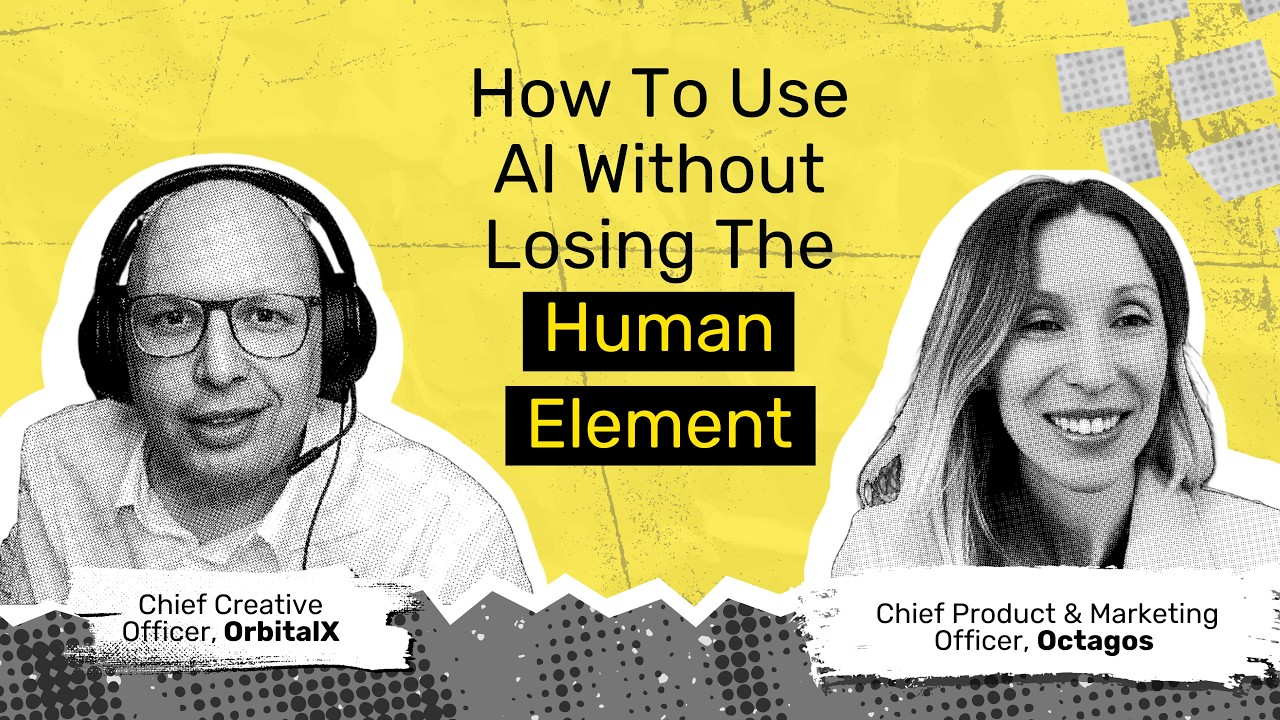
AI must survive an ordinary day
Chute’s public writing about AI returns to one word: trust. She is not using it as a soft substitute for technical detail. In her formulation, trust comes from knowing a system’s limits, designing oversight into the workflow and leaving the final decision with the clinician. The more capable the technology becomes, she argues, the more carefully that relationship must be designed.
This is a particularly sober position in clinical decision support, where a fluent answer may look more certain than it is. Chute’s test is relentlessly practical. Does the tool reduce burden? Does it fit how people already work? Can its effect be demonstrated? Does the person with responsibility remain in control? The questions drain a little theatre from AI. They also make the remaining promise more credible.
In May 2026, she carried that case to the HITLAB Innovators Summit at Microsoft’s Times Square technology center. The session concerned clinical decision-support tools that demonstrate improved care quality. Chute emphasized the verb. A claim is easy. A measurable change in the working day is harder.
That May, Octagos announced Ask Atlas, a natural-language tool designed for device clinics to query their own data. The examples were decidedly unglamorous in the best way: finding a subset of patients, checking device battery longevity by manufacturer, identifying events that qualified for billing but still needed a signature. These are not party tricks. They are questions whose answers can be buried across screens, reports and queues.
Ask Atlas also reveals the advantage of joining product and marketing. The product premise is that people should be able to interrogate data in ordinary language. The marketing premise is nearly identical: explain the benefit in ordinary language. Chute described the tool as bringing care teams closer to the answers and context they need. It is a restrained promise, built around distance removed rather than intelligence displayed.
The handwritten note still wins
Chute’s interest in trust extends beyond customers. In a recent reflection, she described a former senior leader, Teresa Prego, who would send unexpected packages: a mug, a sweatshirt, fancy Oreos, once a teddy bear for Chute’s daughter. Each arrived with a handwritten note and no occasion beyond “just because.” A decade later, the two met for lunch as C-suite peers.
The anecdote stayed with Chute because the gifts were not really about gifts. They paired exacting standards with unmistakable appreciation. She wrote that people work harder when they feel valued, and said she now tries to send her own version of those boxes. It is the same theory as customer coffee, moved inside the company: attention is not ornamental. It changes the quality of the relationship, which changes the quality of the work.
Her Octagos biography describes a life outside the office that includes skiing, travel and equestrian pursuits with her husband and three children. Those details fit the larger portrait without turning it into a slogan. Engineering, after all, is partly the study of systems under real conditions. Snow, horses, children and product launches all have ways of making tidy plans negotiate with reality.
Engineering foundation
Completes biomedical engineering at Rensselaer Polytechnic Institute.
Clinical fluency
Earns specialist credentials and contributes to peer-reviewed cardiac research.
A wider conversation
At PaceMate, leads an HRX panel on women, leadership, AI and mentorship in healthcare technology.
Product meets market
Joins Octagos as CMO, then takes a combined product-and-marketing remit.
The scarce ingredient
There will be faster models, more conversational interfaces and increasingly elaborate claims about what software can see. Chute’s work suggests that capability is only half of adoption. The other half is institutional and personal: whether the tool respects authority, whether it fits the shift, whether its makers understand the work and whether a customer believes them when they describe the limits.
Her own route is unusually suited to that problem. She began close to the science, learned the commercial craft and arrived at a role where the product and its public meaning share one desk. The through-line is translation: waveform to evidence, evidence to product, product to story, customer complaint back to roadmap.
And so the cup of coffee returns. AI can help a team summarize, search and automate. It can make answers cheaper. It cannot skip the slow accumulation of credibility between people. Chute’s wager is that the companies worth trusting will use machines to remove friction and spend the saved attention on the part that remains stubbornly human: asking a better question, hearing the inconvenient answer and doing something useful with it.