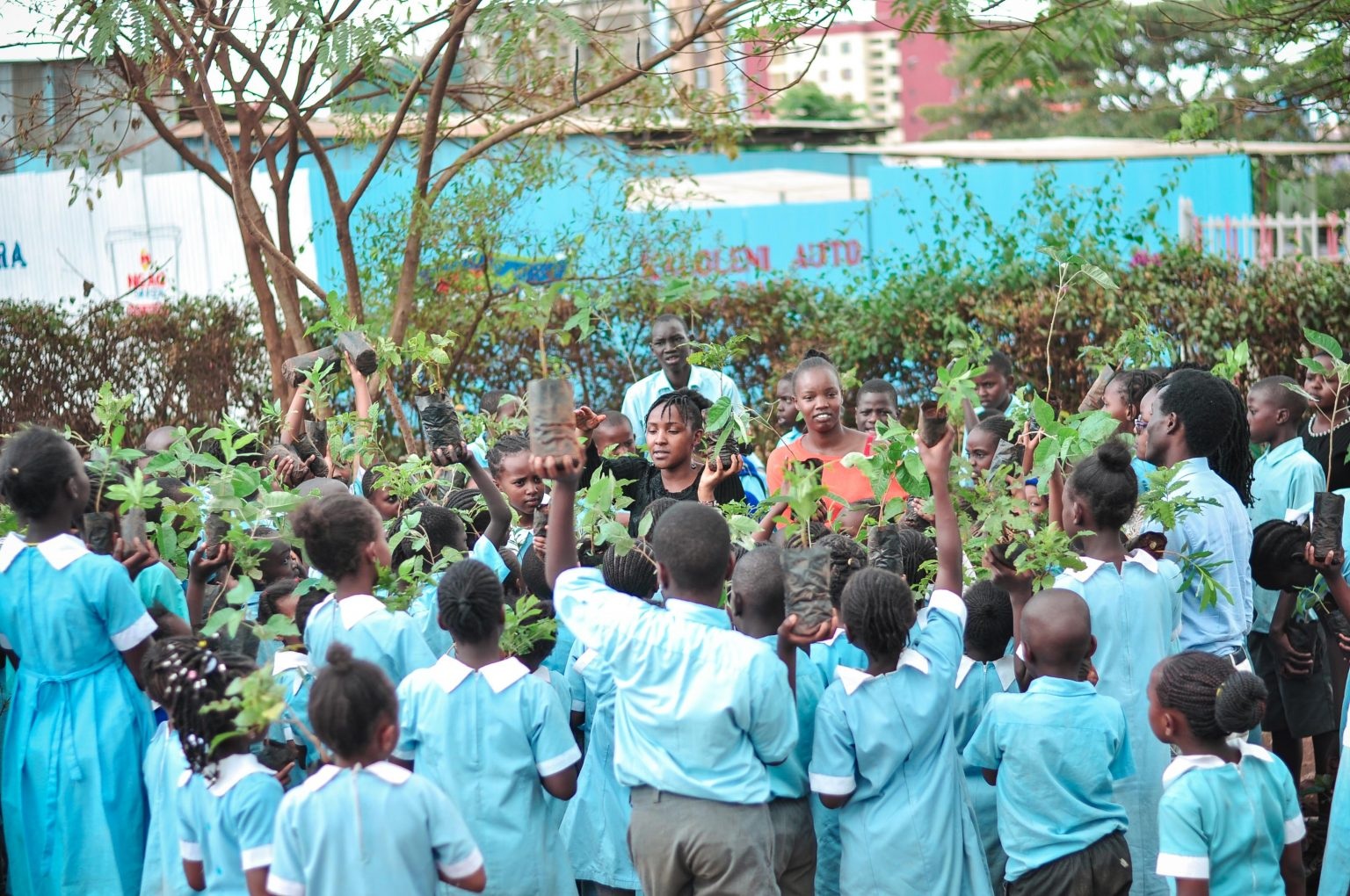
Five hundred pupils wanted to plant a tree. There were twenty seedlings. At Wendani Primary School in Kenya, Elizabeth Wathuti encountered a problem considerably less abstract than climate change: most of the children could not participate. Enthusiasm had arrived in abundance. The trees had not. GGI’s account identifies that disappointment as the moment that helped turn a student’s environmental interest into an organisation. The revealing detail is the shortage. Before a movement can change the world, somebody has to supply the materials.
- The idea: connect environmental restoration to food, learning and livelihoods.
- The working example: a school garden, food forest and poultry unit at Treeside.
- The useful measure: trees surviving after planting day, rather than photographs taken during it.
The arithmetic of twenty seedlings
Wathuti founded Green Generation Initiative in 2016 while studying at Kenyatta University. Inspired by Wangari Maathai and disturbed by environmental degradation around her home region, she began connecting well-wishers with schools needing seedlings. Volunteers could turn goodwill into something a child could actually hold.
Her early answer was educational as well as ecological. Children would adopt trees and tend them. Fruit trees made the argument unusually tangible: shade could eventually come with something to eat. By 2019, Wathuti was describing food forests and school greening in her public environmental work. The school compound became a place to practise responsibility, with consequences visible beyond an exercise book.
A chicken coop joins the curriculum
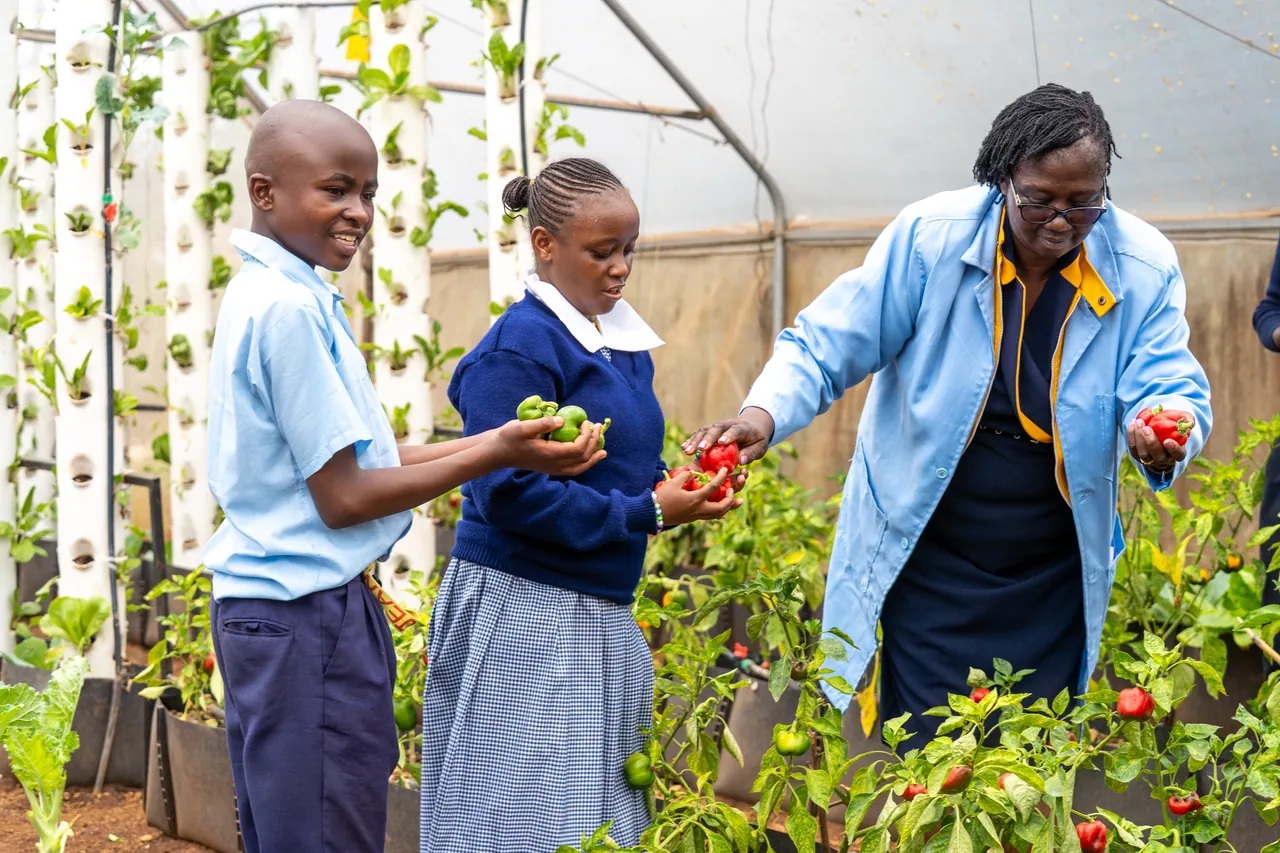
At Treeside Special School in Nairobi, that idea acquired a poultry unit. In July 2025, the school and GGI launched a permaculture feeding and learning garden combining a food forest, hydroponic cultivation and 250 chickens. More than 200 learners with special needs were expected to gain practical food-production skills. The organisation was addressing two problems that schools usually place in separate files: how to teach useful skills and how to provide nutritious meals.
At the launch, Wathuti reported more than 6,000 eggs a month. Surplus eggs were sold to help meet operating costs. GGI’s later programme description reports approximately $400 in monthly surplus-egg income. The business logic is legible: produce food for pupils, sell what remains, and return some of the proceeds to school needs.
“Meeting the nutritional needs of our learners has always been difficult due to limited funds.”Salome, Treeside head teacher, July 2025
GGI’s model also includes practical agricultural training and describes converting poultry waste into biogas for cooking. These connections matter more than any single piece of equipment. A greenhouse supplies vegetables; a coop supplies protein; both supply lessons. The school can become a demonstration site for neighbouring schools and community members. A pepper, in this setting, has an impressively crowded timetable.
The trees that survived
The less photogenic part of GGI’s story appears in a funder’s report. Fruit Trees for Schools began in May 2023, financed by the Eleven Eleven Foundation through the Kenya Community Development Foundation. By May 2024, KCDF recorded 5,750 trees planted across ten schools, ten Eco-Clubs and 600 students involved in environmental education.
It also recorded a 72.99% survival rate. Roughly twenty-seven trees in every hundred had not survived. Adverse weather and changing school schedules complicated implementation. That is useful information for anyone tempted to treat a planting ceremony as the end of a restoration project.
Reported tree survival in the Fruit Trees for Schools project.
The intervention also reached the organisation’s machinery. KCDF supported financial management, procurement, monitoring and evaluation. Conservation requires seedlings, certainly. It also requires someone who knows what was bought, where it went and what happened afterwards. A more capable back office gives a growing field programme a better chance of keeping its promises.
Who pays for the next branch?
GGI operates as a nonprofit, with donations, grants and institutional partnerships supporting its work. Its beneficiaries include schoolchildren, women, young people and farming communities. Businesses can collaborate on restoration through ESG and corporate social responsibility programmes. The people receiving the benefits and the institutions paying for delivery are often different groups.
One concrete funding commitment came in September 2025: the Scottish Government awarded £165,000 to GGI’s youth accelerator. The money supports identifying, training and mentoring 25 emerging African climate leaders through a year-long fellowship. The programme’s initial Nairobi bootcamp had brought together 21 participants from eleven countries.
The funding arrangement gives a prospective partner something concrete to consider. A leadership fellowship needs resources for training and mentoring; a school garden needs a plan for its continuing operation. Surplus sales can help, but a sales figure alone does not establish profitability. For anyone copying the Treeside idea, the sensible starting point is a budget that separates installation, routine upkeep and the income available for school use. Each has a different timetable. Fruit trees take time to produce, while pupils need meals throughout the school year. Those timelines belong in the project design.
That extension helps explain GGI’s position in the market for conservation support. A donor can support trees, but also the people expected to organise the next project. Compared with a standalone planting campaign, the organisation offers a connected programme of school learning, community stewardship and leadership development.
Rain caught in a half-moon
The portfolio now extends into forests, mangroves and water catchments. A September 2026 project page describes half-moon bunds: curved earth embankments that intercept runoff and let water soak into degraded dryland. Their purpose is practical - retain moisture, help vegetation recover and create paid restoration work.
The same page stresses controlled grazing while land recovers. Here is a condition that equipment cannot supply by itself. Catching rain helps only if the recovering vegetation gets a chance to establish. The school garden has its own version of that dependency: someone must maintain the growing systems, care for chickens and manage sales. Replication needs local responsibility alongside installation.
The part worth borrowing
Wathuti took these concerns into a UK parliamentary climate-finance hearing in March 2026, describing how drought, floods and failing crops affect communities. Her public advocacy grows out of the same question as the school work: what resources let people protect their surroundings while keeping everyday life functioning?
For a reader planning a community project, GGI offers three useful habits. Give restoration an immediate purpose people value. Build ongoing care into the arrangement. Measure what remains after the visitors leave. A school orchard still needs water, a timetable and willing hands. Lunch gives those hands another reason to return.
Follow the work
Visit, watch, or start a conversation about a school or community partnership.