Gradial raises $35M Series B led by VMG Partners T-Mobile cuts time-to-market 80%+ with Gradial agents 30x revenue growth in 2024 Founded 2023 in Seattle by four Dartmouth grads Customers include T-Mobile, Prudential, Amazon Gradial Frontier conference coming Spring 2026 Total funding ~$53M across Seed, Series A, Series B Gradial raises $35M Series B led by VMG Partners T-Mobile cuts time-to-market 80%+ with Gradial agents 30x revenue growth in 2024 Founded 2023 in Seattle by four Dartmouth grads Customers include T-Mobile, Prudential, Amazon Gradial Frontier conference coming Spring 2026 Total funding ~$53M across Seed, Series A, Series B
Seattle · Agentic AI · Est. 2023

Gradial.

The startup teaching software to do the part of marketing nobody puts on their resume.

$35MSeries B, Dec 2025
~$53MTotal raised
30xRevenue growth, 2024
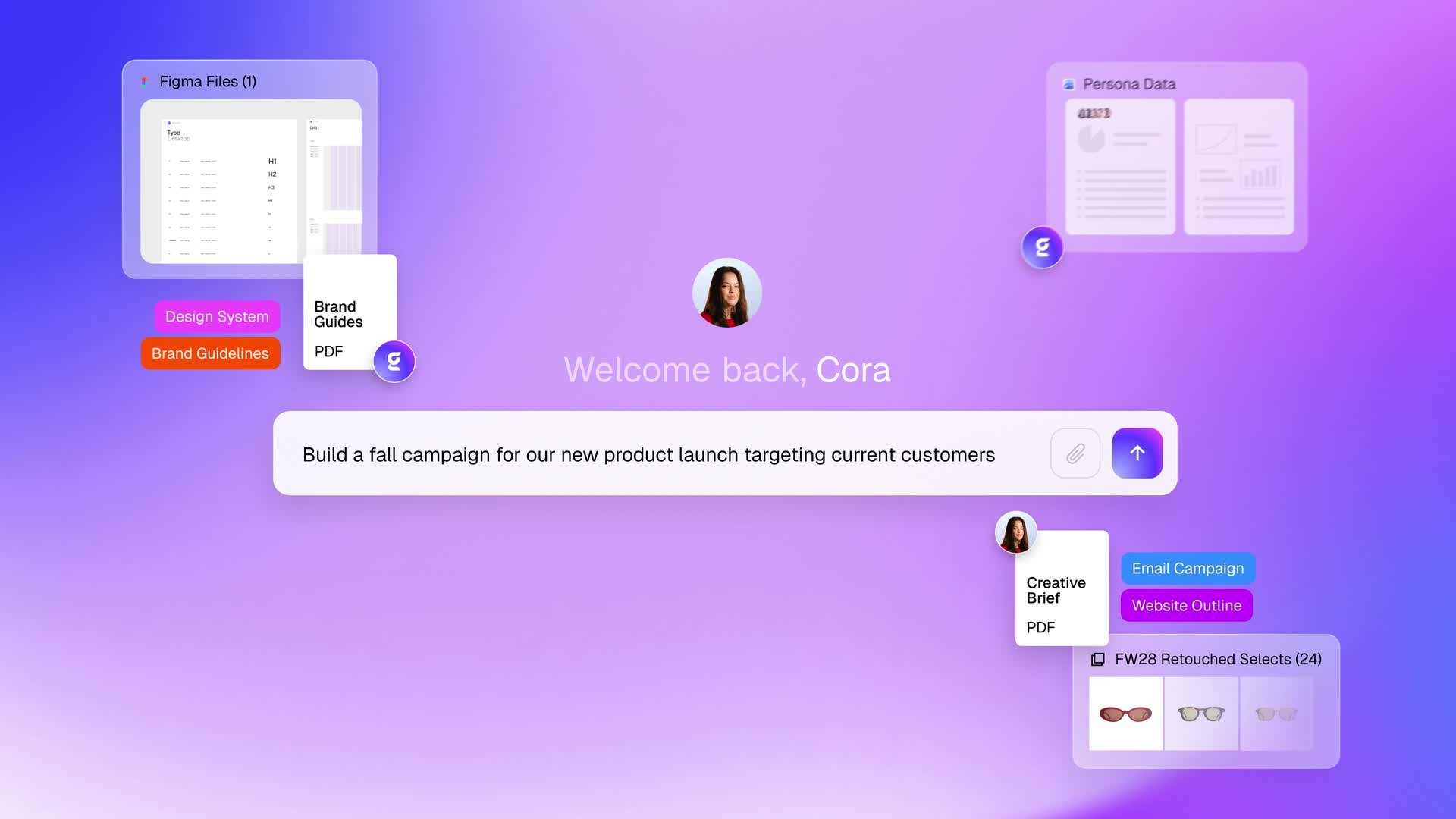
Gradial brand image

Gradial's homepage face. The agents behind it are far less photogenic and far more useful - they live inside Adobe Experience Manager, not on a billboard.

The Dispatch

Somewhere right now, a campaign is going live without a 14-person fire drill.

A marketer at a Fortune 1000 company asks for a landing page in three new languages, resized for six channels, brand-checked, tagged, and queued in the CMS. Two years ago that request kicked off a two-week relay of tickets, handoffs, and Slack messages with the word "circling" in them. Now an agent picks it up and gets most of the way there before lunch.

That agent is Gradial's. The company calls the category it invented "agentic marketing operations," which is a mouthful for a simple idea: software that does the work, not just suggests it. Gradial is based in Seattle, was founded in 2023, employs around 73 people, and in December 2025 raised a $35 million Series B. It is not trying to write your ad copy. It is trying to handle everything that happens to that copy afterward.

Gradial agents live inside the workflow and learn to do the work just like a human employee would.Doug Tallmadge, Co-Founder & CEO
The Problem They Saw

Everyone obsessed over making content. Almost nobody fixed shipping it.

The generative AI boom solved a question marketing teams were not actually losing sleep over: how to produce more stuff. The blank page was never the bottleneck. The bottleneck was the dozen unglamorous steps between a finished idea and a published experience - the resizing, the re-tagging, the QA, the compliance check, the migration, the handoff to the person who has the CMS login.

Call it the content supply chain. It is where marketing momentum quietly goes to die. A single update can require ten or more people and stretch past two weeks, not because the work is hard, but because it is fragmented across tools and humans who keep waiting on each other. Gradial's founders looked at the explosion of content-generation startups and noticed they were all crowding the easy half of the problem.

The work still needed 10+ people involved and took 2+ weeks. The content was never the hard part - the operations were.The thesis behind Gradial

It is a very modern kind of irony: the industry built machines to write a thousand things a second, then handed the output to a workflow that moved at the speed of a forwarded email.
The Founders' Bet

Four Dartmouth grads, two of them from SpaceX, decided marketing ops was an engineering problem.

Gradial's founders did not come up through martech. They came up through places where things either work or fall out of the sky. CEO Doug Tallmadge was a software engineering manager at SpaceX. CTO Deip Kumar also did time at SpaceX and Microsoft. Chief Growth Officer Anish Chadalavada ran AI strategy at Microsoft and invested at Point72 Ventures. COO Anup Chamrajnagar came from Point72. All four met at Dartmouth College.

Their bet: the messy, human-glued content supply chain is not a creative problem to be inspired through - it is a systems problem to be engineered through. If you can build agents that reason across the same tools a marketing team uses - Adobe Experience Manager, Salesforce, Jira - and learn the job the way a new hire would, you do not need the relay race at all.

DT

Doug Tallmadge

Co-Founder & CEO · ex-SpaceX software engineering manager
DK

Deip Kumar

Co-Founder & CTO · ex-SpaceX, ex-Microsoft
AC

Anish Chadalavada

Co-Founder & Chief Growth Officer · ex-Microsoft AI strategy, Point72 Ventures
AC

Anup Chamrajnagar

Co-Founder & COO · ex-Point72

Madrona Venture Group bought the thesis early, leading the seed round in February 2024. The firm described its approach as "winning the wedge" - start with one narrow, painful job, prove the ROI, then expand. Marketing execution was the wedge.

The Product

Agents that act like teammates, not chatbots that act like demos.

Gradial's platform is organized around four jobs. The distinction that matters is that the agents do not hand you a draft and wish you luck - they reason through the multi-step workflow inside your existing systems, with brand, accessibility, and compliance checks running automatically every time.

01

Content & Campaign Execution

Agents author, build, and launch content and full campaigns across enterprise systems, removing manual handoffs.

02

Asset Execution

Automated redesign, resizing, tagging, and QA of assets at scale - kept on-brand by centralized AI governance.

03

Generative Engine Optimization

Tunes content to perform across AI-driven discovery and the new generation of generative search engines.

04

Insights & Journeys

Surfaces performance insights and orchestrates personalized customer journeys across channels.

100% on-brand quality, achieved through centralized AI governance - not a hundred people remembering the style guide.Gradial platform claim
A Short History of a Short Company

From wedge to Series B in roughly 24 months.

2023

Founded in Seattle

Four Dartmouth alumni, originally incorporated as Panorama Artificial Intelligence, set out to automate marketing operations.

February 2024

Seed round, led by Madrona

Madrona backs the "winning the wedge" thesis: prove ROI on marketing execution first, expand later.

2024

30x revenue growth

Enterprise adoption accelerates; the agentic content supply chain finds real customers.

2025

Series A ($13M)

Madrona leads again, with Pruven Capital, to scale the platform and team.

December 3, 2025

$35M Series B, led by VMG Partners

Madrona and Pruven Capital return. Total funding reaches roughly $53-55M.

Spring 2026

Gradial Frontier

The company announces what it bills as the first conference dedicated to agentic marketing.

The Proof

The numbers customers actually quote back.

A platform built by ex-rocket engineers had better show its telemetry. Here is the data Gradial and its customers point to. Bars are scaled for comparison - read the labels, not the lengths.

Selected Gradial metrics
Time-to-market saved (T-Mobile)
80%+
Campaign volume (T-Mobile)
10x
Revenue growth, 2024
30x YoY
Execution time reduced
80%+
Sources: Gradial Series B announcement and AWS case study. T-Mobile reported both an 80%+ cut in time-to-market and 10x campaign capacity. The 30x figure is year-over-year revenue growth for 2024. Treat all as company-reported.
Customers and partners include T-Mobile, Prudential, Amazon, AWS, Adobe, dentsu | Merkle, EPAM, Slalom, and Infogain.Gradial's roster, late 2025
The Mission

Give marketers their week back.

Strip away the category jargon and Gradial's mission is almost old-fashioned: let people do the part of the job they were actually hired for. The strategy, the taste, the judgment - the things that do not fit in a Jira ticket. Hand the relay race to the agents.

Madrona frames it as part of a broader "reasoning revolution," where AI systems behave less like tools and more like reasoning partners that rewire how an enterprise runs. Gradial's tagline puts it plainly: "Create unstoppable marketing momentum." The unspoken half of that sentence is that most marketing momentum today is very, very stoppable - usually by a missing approval.

Intelligent, AI-driven applications will rewire the enterprise. Gradial is one of the clearest examples of it.Madrona Venture Group
Why It Matters Tomorrow

The bet is that "marketing ops" stops being a department and becomes a setting.

If Gradial is right, the content supply chain becomes invisible - the way electricity is invisible until it stops. The skeptic's question is fair: agentic AI is the loudest pitch in software right now, and not every agent that demos well survives contact with a real enterprise approval chain. Gradial's answer is to stay inside the workflow, take measurable ROI on a narrow job, and expand only after it earns trust. That is a slower, more boring story than most AI startups tell. It is also the one that tends to last.

So picture that marketer again. The one who asked for a landing page in three languages, six formats, brand-checked and queued. Two years ago that request meant fourteen people and a fortnight. Now it is a sentence, an agent, and an afternoon. The campaign goes live. Nobody circles back. That is the change Gradial is selling - not better content, but a marketing team that finally gets to spend its time on the work worth photographing.

The blank page was never the bottleneck. Everything after it was.The whole point of Gradial, in one line
Spread The Word

Share Gradial

Watch & Read