There was already a company. It had a name, a team, a product, and paying customers. Then the founders noticed a different kind of work gathering speed outside their window. Developers were beginning to use ready-made image models, and the old problem of preparing data was giving way to a new one: making those models run quickly enough for a real product. Gorkem Yurtseven and Burkay Gur spent a couple of months operating both versions of fal. The overlap was awkward. Their website described one business while the conversations increasingly concerned another. Eventually the revenue from inference was growing faster, and the two friends chose the new direction.
It is easy to call that a pivot after the fact. At the time it meant saying goodbye to customers who had trusted them with the first product. Yurtseven later admitted that he and Gur tried to make the change sound smaller to themselves. It was all cloud compute, they reasoned, only a different workload. They knew the distinction was much larger. One product helped data teams prepare information. The other would help developers turn trained models into something people could actually use.
Two engineers, one rented house
The partnership began as a friendship. Yurtseven and Gur both grew up in Turkey, came to the United States for college, and moved to San Francisco after graduation. They met socially through mutual friends in the city’s Turkish community. Their careers ran in parallel rather than together: Gur worked at Coinbase, Yurtseven at Amazon. At Amazon, Yurtseven’s engineering work included SageMaker and developer tools. He had studied computer systems engineering at the University of Pennsylvania, graduating in 2013.
During the pandemic, the friends rented a house in Palm Springs for a couple of months while San Francisco was locked down. Both still had their jobs. The stay was social, Yurtseven has said, but it gave them time to trade ideas. They agreed on a broad ambition: build for developers, in a part of machine learning likely to grow. Gur left his job first. Yurtseven followed a few months later. fal was founded in 2021.
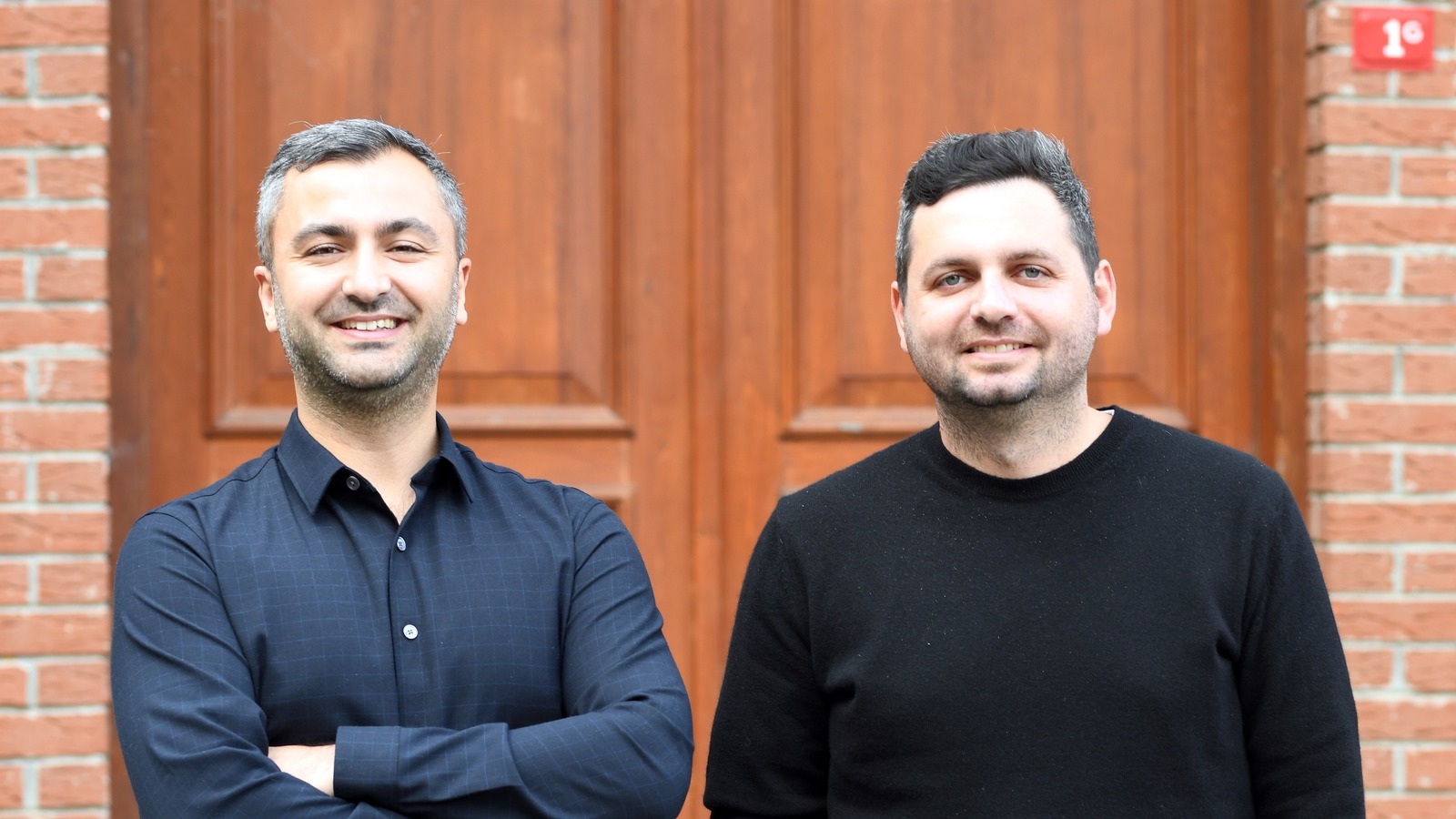
The first idea reflected what they already knew. Data scientists spent enormous time moving and transforming data, and cloud businesses such as Snowflake and Databricks had shown that compute could be a substantial business. The early fal product brought Python into data workflows. It worked well enough to win customers and a seed investment from First Round in 2022. That success made the next choice less theatrical and more painful. Abandoning a failed idea is an ordinary startup scene. Walking away while the invoice is still being paid requires a different nerve.
The face in the laptop
New models changed the calculation. Once image generation could be accessed through a trained model, far more developers could build with it. They no longer needed to train a model themselves. They did need somewhere to run it. fal chose a particular part of that job: fast inference for visual media, exposed through APIs. Rather than offer a general box of GPUs and leave each customer to assemble a workflow, the company would maintain model endpoints and optimize the common things developers wanted to do.
This choice narrowed what a customer could deploy. It also gave Yurtseven’s team control over performance from the request to the result. In an industry fond of promises about limitless possibility, this was a practical restriction. The founders understood that a developer trying to ship an image feature often wants a working endpoint more urgently than a blank canvas. The first users were making design and image generation products with Stable Diffusion. Their needs helped define the product.
In 2023, fal took a demo to First Round partner Todd Jackson. The laptop camera showed Jackson transformed into George Clooney while he moved. It looked like video, but the model was producing images frame by frame. The team had spent weeks squeezing more speed out of the process, with engineering leader Batuhan Taskaya and colleagues working on system-level optimizations. Jackson remembered the effect. Yurtseven remembered something else: the demo was impressive, and the demo itself made no money.
“We even had paying customers. We did both products for a while at the same time.”Gorkem Yurtseven on fal’s pivot
That distinction is the useful one. A fast face swap could make the engineering legible to an investor in ten seconds. A business needed hundreds of ordinary calls from developers making useful products. fal kept the speed work and applied it to image, then video and audio models. At first, investors were skeptical that image inference was a market separate from language-model infrastructure. Yurtseven said raising the Series A was difficult: the pitches sounded similar, and the visual market still looked small. The technical argument had outrun the commercial evidence.
From novelty to the billable hour
The evidence arrived unevenly. Yurtseven recalled a stretch in which fal’s usage rose while revenue hovered around $2 million in annual recurring revenue. Older image models became cheaper to run. Then the Flux image models appeared, followed by commercially accessible video models. New releases offered new reasons for developers to return, and each launch became a test of how quickly the team could bring a model onto the platform.
In a 2025 interview, Yurtseven said fal had passed $100 million in annual recurring revenue, more than two million developers, and 300 enterprise customers. Those numbers describe the company at that point, rather than a permanent measure of his work. The shift behind them is more revealing. fal had moved from a product for data teams to the plumbing used by many different creative applications. Adobe, Canva, and Shopify were among the enterprise names discussed in that interview. A single API call might sit underneath a design workflow, an advertisement, or a video experiment.
Scale did not eliminate the small decisions. Yurtseven has described a model launch as an occasion for an impromptu engineering huddle: eight or nine people join, someone shares a screen, and they work toward a release. The judgment begins before deployment. Is the new model genuinely useful? Does its promotional video reflect what it can do? Does it improve on the alternatives? A platform built around new models has to answer these questions repeatedly, often while the public conversation is still forming.
The customer conversation changed too. A solo builder may care most about reaching production today. An enterprise asks how the model was trained, what happens to inputs and outputs, and whether an annual commitment can be supported. Yurtseven says fal took those contracts seriously after investors questioned whether usage-based revenue would endure. He also describes a company with roughly 500 shared Slack channels with customer engineers, watching response times closely. The glamorous part is a five-second video. The mundane part is replying to a customer before their deadline slips.
The developer’s joke
fal’s founders learned marketing in the same direct way. Yurtseven has said that conventional campaigns can feel awkward to developers. At a conference, the team brought hats marked “GPU Rich” and “GPU Poor,” riffing on a joke circulating in the AI community. They made equal numbers. The GPU Poor hats ran out first. It is a small anecdote, but it catches the tone: the founders knew the scarcity their customers were discussing and joined the joke rather than delivering a slogan.
They also stayed close to product and brand work as the company grew. Yurtseven credits designer Adam Hall with fal’s original visual identity and says the founders trusted him to take it somewhere unusual. On the engineering side, he described a team of about 32 to 34 engineers in 2025 without a dedicated engineering-manager role: leads existed, but everyone still wrote code. He looked for recruits who loved optimization or who followed image and video models obsessively. The early network included people the founders had met at Amazon and Coinbase, along with engineers recruited through ties to Turkey.
His own interests give the portrait a little texture. A conference biography says he loves tennis and Age of Empires. The latter is a fitting game for someone who talks in the language of capacity, timing, and strategic resources, though his day job involves rather more unpredictable units than villagers and stone. It also reminds us that technical founders have lives outside the architectures drawn on a whiteboard. Yurtseven’s public story is unusually full of engineering and customer detail, and light on personal mythology.
A room with storytellers in it
By September 2026, Yurtseven was speaking at fal’s Generative Media Conference in San Francisco. He described a gathering of individual creators, startup founders, and studio executives who had once occupied separate conversations. Earlier in fal’s life, he said, it had been difficult even to talk to Hollywood. Now executives were coming to the company’s event. In a conference interview, he returned to a problem far from the first George Clooney demo: control. Filmmakers need outputs they can direct and revise, not only surprising clips that look good once.
That concern connects the newest video work to the old infrastructure bet. A model can be admired for a sample. It becomes part of a workflow when its behavior, speed, and cost are dependable enough for another person to build around. fal’s 2026 H3 Max work pushed on video speed and quality; the broader ambition is to let creators use such systems with more intention. Yurtseven has framed the meeting of technologists and storytellers as a reason to bring these communities together in person. The company’s software sits between them, translating research into a usable call.
The arc from Palm Springs to a conference room full of filmmakers is neither a straight line nor a lone inventor’s tale. Gur was there from the first conversation. Engineers made the webcam demo work. Developers revealed which endpoints mattered. Customers forced the questions that turned a fast service into a durable one. Yurtseven’s role, as CTO and co-founder, has been to keep those pieces in contact: the low-level code, the API, the person waiting for a result, and the next model about to land. The original bet on cloud compute survived. Everything around it changed.