The spreadsheet was doing its job. That was the problem. At an electronics manufacturer described in a Girikon case study, Excel let people juggle products, discounts, pricing logic, and copied line items. It offered the small freedoms that make a tool indispensable. It also made quoting difficult to standardize and prone to error. The habit that helped people finish today’s work had become an obstacle to running tomorrow’s business.
- Girikon configures Salesforce and HubSpot around real business processes.
- Its work includes migration, integrations, testing, training, and continuing support.
- Its own products bring messaging, telephony, and AI voice into CRM workflows.
Girikon’s response was specific: automate quoting on Salesforce, consolidate calculations from several spreadsheets into one view, and use product rules, price rules, discount schedules, and the Calculator API. It also built a screen for cost summaries incorporating future inflation assumptions. The interesting move was to keep the business logic people needed while changing where that logic lived.
The software is only the beginning
This is Girikon’s territory. The company sells consulting, implementation, development, and support, with Salesforce and HubSpot at the center. A buyer can hire it to configure a new CRM, connect an existing one to other systems, migrate old records, or repair an arrangement that has become cumbersome. The purchase is expertise applied to a particular organization.
That organization might be a manufacturer managing quotes, a college following student journeys, or a healthcare business coordinating leads and communications. Girikon describes customers ranging from small businesses to Fortune 500 enterprises. Its public client displays include Choice Hotels, Blackboard, TGen, and Methode. The variety matters because an account record means different things in different businesses.
The company occupies the space between platform vendors and internal business teams. Salesforce supplies the platform; Girikon helps decide how a customer should use it. Its alternatives include other implementation partners, larger systems integrators, and an organization’s own administrators and developers. The useful comparison is the proposed team’s ability to understand the workflow, migrate the data, and support the result.
Four founders. A division of labor.
The management biographies make the company unusually easy to understand. Ashok Anibha oversees technology and operations. Sachin Rathi works across business development and technology. Alankar Anibha leads delivery and service. Alok Anibha heads the Salesforce practice. All four are identified as founders and directors. The responsibilities span winning the engagement, designing the system, and delivering it.

Girikon combines teams near customers with development capacity in India, including Noida. It presents this blended model as a way to offer competitive pricing and flexible coverage. Internally, employees are called “Girikonites.” Its culture statement emphasizes training, while its Pledge 1% commitments cover profits, employee time, and services. These are the company’s stated practices, rather than a substitute for examining an actual project team.
The price tag has edges
One public offer makes the economics concrete. Girikon’s Service Cloud Quick Start webpage advertises a US$2,100 fixed-cost setup taking one to three weeks. It includes discovery, basic configuration, reports, training material, and an end-user training session. For a buyer with straightforward requirements, that is a legible starting point.
1-3 weeks · Limited configuration scope
Website offer. Complex work is priced separately.The exclusions deserve equal attention. Data extraction and cleansing, imports beyond the complimentary 2,000 records, third-party integrations, Apex or Visualforce development, and custom modules sit outside the package. A modest configuration price therefore says little about the cost of untangling a complicated estate. The boundary is useful: it shows where a small setup ends and a larger project begins.
Girikon’s broader contracts follow the same logic. Fixed price suits requirements that can be defined in advance; changed requirements can mean renegotiating price and schedule. Time and materials allows the work to evolve, with monthly billing against agreed hourly rates. Dedicated offshore teams provide another option. Buyers can copy the purchasing principle: match the contract to how much uncertainty remains.
The partner credentials also reveal where Girikon has invested. It announced HubSpot onboarding and custom-integration accreditations in August 2023, followed by data migration accreditation in January 2024. Those are distinct capabilities. Getting a team started, connecting a separate application, and moving historical records create different risks. A buyer can use that distinction to ask sharper questions about who will handle each part of a rollout.
Now connect the conversation
Alongside services, Girikon sells communication products. GirikSMS brings two-way SMS, WhatsApp, and WebChat into Salesforce, with campaign automation and AI-assisted features. GirikCTI connects telephony to Salesforce workflows. GirikVoice extends the proposition to AI voice engagement, including inbound and outbound conversations. A February 2026 announcement introduced GirikVoice as Girikon.AI’s flagship voice platform.
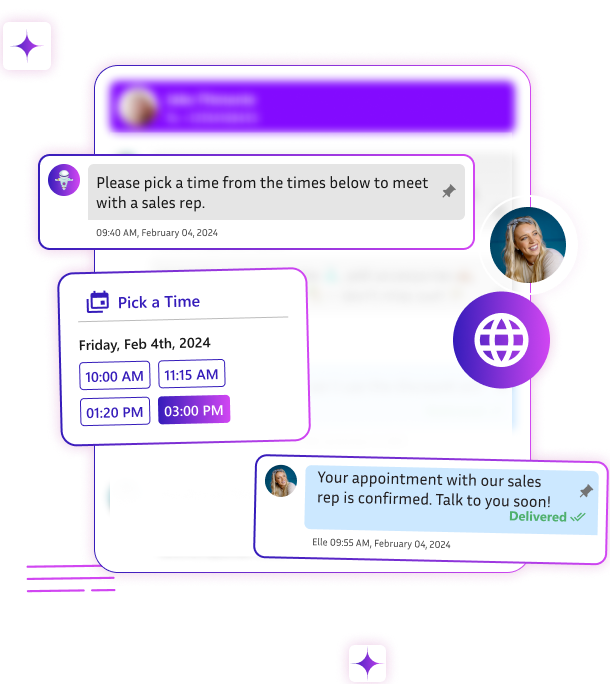
The company’s explanation for bringing these capabilities together is revealing. Its AI business says customers wanted a connected communication layer rather than separate tools for voice, messaging, CRM, and automation. That is its account of what changed the product direction. The proposed benefit is continuity: the conversation and the customer record can participate in the same workflow.
The interesting move was to keep the business logic people needed while changing where that logic lived.
Start with the stubborn habit
The manufacturing example offers a practical lesson for anyone buying enterprise software. Before removing a workaround, identify what it does well. Write down the pricing exceptions, handoffs, and permissions people depend on. Then test those requirements against the proposed system. Ask the people who prepare the quotes to try the awkward cases, including the ones that rarely appear in a polished demonstration. Girikon’s discovery, migration, configuration, and training services address those separate pieces of work.
The approach has conditions. A limited Quick Start cannot absorb extensive custom development. A fixed-price agreement becomes awkward when the requirements keep moving. Communication automation needs usable customer data and defined workflows to act on. Buying more capability does not settle those decisions. Girikon’s business begins with the details people would otherwise leave in the spreadsheet.