Gil Mandelzis once had a business with four partners, plenty of friends and an encouraging opening. It was a bar in Tel Aviv called Status. The customers came. The difficulties followed. There is a particular cruelty in discovering that a popular establishment can still be a troublesome business: everyone seems to be having a lovely time except the people responsible for it.
In the early 1990s, Mandelzis had already worked several jobs to support himself through college, including jobs in nightlife. After graduating, he began consulting and opened Status with friends. They knew how to attract a crowd. They had invested too little, and none of the five partners worked there full time. When money grew tight, they cut staffing and took the night shifts themselves.
The rescue required work less photogenic than ownership: inventory, costs, service and decisions about who was actually in charge. Mandelzis eventually gave his stake to his partners after helping steady the operation. His heart was elsewhere. The bar had supplied an education that no embossed business card could confer. An opening night is a brief occasion. Running the place is a recurring appointment.
A team before a title
He was born in Israel into an entrepreneurial family. His father, himself an entrepreneur, was killed in a war when Gil was young. His mother carried the household, went through business school and made hard work, family and concern for other people part of the upbringing she gave her two sons. Those details give his later talk about responsibility a personal history.
Basketball mattered, too. Mandelzis played at high junior levels in Israel and has described himself as competitive and drawn to strong teams. The attraction makes sense alongside his eventual career: individual ambition, exercised in circumstances where the other players matter enormously. A founder can possess the ball and still require someone else to make the next pass.
His formal education combined management and sociology at Tel Aviv University, where he graduated magna cum laude, followed by an MBA with distinction at INSEAD in France. Before Traiana, he worked in mergers and acquisitions at Deutsche Bank Alex Brown, formerly BT Wolfensohn, in New York, advising financial and technology businesses. He had seen companies from the side of the transaction table. He would soon have one of his own to explain.
The uncomfortable business of starting again
Traiana began in April 2000. Its eventual place in foreign exchange infrastructure can make the early years look inevitable. They were considerably less obliging. A business-school case about Mandelzis describes repeated reversals, with progress interrupted by events outside the company’s control. The finished result conceals the discarded versions.
One decision was particularly severe. He abandoned a plan that had built a $10 million company, cut 40 percent of the workforce and changed direction. These are the sorts of figures that sit tidily in a classroom discussion and very untidily in the lives of the people involved. Reinvention has an administrative vocabulary and a human bill.
Traiana developed into a provider of post-trade services for financial institutions in foreign exchange prime brokerage. The work concerned what happens around and after trading, a realm with fewer public admirers than trading itself. Yet a market needs its transactions processed, its systems connected and its operational machinery to keep up with the activity it permits.
The case places management before a $164 million purchase offer and asks whether to accept, refuse or find another buyer. The eventual historical outcome was ICAP’s acquisition in 2007, widely reported at about $250 million. The distance between the offer in the classroom and the completed deal is a useful reminder that a valuation is a proposal made at a particular moment.
Different seats. The same financial system.
- 2000Co-founds Traiana
- 2007ICAP acquires Traiana
- 2012Takes charge of EBS
- 2017Co-founds Capitolis
An entrepreneur inside the institution
Mandelzis stayed after the acquisition and moved into the larger organisation. In 2012, he became chief executive of EBS, the electronic foreign exchange marketplace. In December 2014, the combination of EBS and the fixed-income platform BrokerTec put him in charge of EBS BrokerTec. His work now included running established market infrastructure inside ICAP.
That chapter matters because his experience spans both the outsider asking institutions to change and the executive responsible for an institution’s operations. At EBS, he described a shift toward offering several products and trading approaches. He also served on ICAP’s Global Executive Management Group. Building a company and changing an existing one supplied different views of the same industry.
His public responsibilities extended to foreign exchange committees associated with the Federal Reserve Bank of New York, the Bank of England and the Bank of Canada. By 2015, Institutional Investor had included him in its Trading Technology 40. This was a career becoming closely acquainted with the people who build markets, run them and worry about their behaviour.
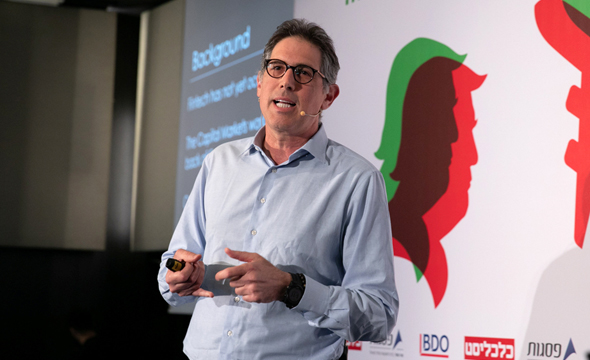
Finding room on the balance sheet
In 2017, Mandelzis co-founded Capitolis with former Thomson Reuters chief executive Tom Glocer and technology executive Igor Teleshevsky, a former Traiana colleague. The new company addressed a constraint familiar to banks: financial activity uses capital and balance-sheet capacity, and those resources have limits. An institution can have willing customers and still face restrictions on how much business it can accommodate.
Capitolis developed two related businesses. Portfolio Optimization helps institutions reduce unnecessary exposures and resource consumption within trading portfolios. Capital Marketplace connects banks with institutional capital providers. Put plainly, the company looks for ways to make financial resources go further and to connect activity with capital willing to support it.
The distinction gives the ambition some texture. One part examines an existing book of business for opportunities to simplify it; the other brings together participants with complementary needs. Both depend on institutions agreeing to work through a shared arrangement. A clever calculation has to survive the journey into an actual transaction.
Mandelzis has said it took three years to launch the first structure. Some ideas advanced toward launch, stopped and had to be reconsidered. He also treats regulators as participants whose perspectives belong in the design. In a system where errors travel beyond the company making them, patience becomes part of the product. The glamour department may object. The operations department is unlikely to complain.
Optimize the portfolio
Identify opportunities to reduce unnecessary exposures and financial resource use.
Connect with capital
Bring banks together with institutional capital providers through Capital Marketplace.
A simplified explanation of the two businesses, rather than a transaction model.
Choosing the people who get a vote
His approach to investors is deliberately personal. He discussed the underlying opportunity with Sequoia founder Don Valentine, whom he has described as a mentor. Sequoia Capital Israel’s Haim Sadger had backed him before. Index Ventures partner Jan Hammer spent time getting to know the business before its Series A. These relationships developed over conversations, visits and observation.
“Investors are a bigger decision than marriage,” Mandelzis has said. It is a line with the advantage of being funny and the inconvenience of being meant seriously. Once someone has a lasting voice in a company, enthusiasm at the first meeting is a rather slender basis for the arrangement.
The banking customers would also become investors. That made Capitolis a company trying to improve an industry with financial support from participants in that industry. The arrangement asks something quite practical of its founder: he must understand the institutions well enough to solve their problems and persuade them that the solution deserves a place in their own future.
“Investors are a bigger decision than marriage.”
Gil Mandelzis, 2025
Talent, with terms attached
Mandelzis has a favourite hiring story from Traiana. A developer named Pavel solved a trade-processing queue problem in a single evening with roughly 13 lines of code. Later, during discussions with a potential acquirer, Mandelzis learned that the other organisation had assigned a much larger team to the same problem. He tells the anecdote as an argument for the difference a skilled individual can make.
He also sets behavioural conditions on ability. His description of the people he wants is “super-smart people who are badass and good humans.” That last requirement gives the sentence its consequence. Competence alone does not complete the job specification. Nor, in his account of leadership, does a collection of agreeable people remove the need for difficult decisions.
He has described the chief executive’s position as one in which decisions arrive without certainty. Advice is available; responsibility remains. His earlier bar partners might recognise the problem. The setting has changed, along with the size of the numbers, but a room full of opinions still needs someone to decide when discussion has done its work.
The next table is larger
By autumn 2026, Capitolis was extending its reach again. On September 29, it announced an agreement to acquire securities-lending business eSecLending for $200 million in cash. The proposed deal would add relationships with institutional asset owners, including pension funds, insurers and asset managers, alongside securities-lending capabilities.
The announcement described the purchase as Capitolis’s fourth strategic acquisition in five years. It also specified regulatory approvals and antitrust clearance among the closing conditions. For Mandelzis, the proposed combination would bring another set of clients and financial activities into the company’s network. More participants mean more relationships to manage, as well as more possibilities to explore.
On October 6, Capitolis announced $220 million in financing, including a $120 million Series E equity round at a $1.9 billion valuation, alongside debt. Citi led the equity financing. New strategic investors included Bank of America, Nomura and Tradeweb, joining existing bank investors. The company said the financing would support the eSecLending acquisition.
Eight days later, Goldman Sachs recognised Mandelzis at its Builders and Innovators Summit for a second consecutive year. He responded with an unusually theatrical description for someone whose work involves so much financial infrastructure: “Entrepreneurship is the closest thing I know to alchemy.” It is a revealing word. He remains interested in turning an arrangement of people, ideas and resources into something with a different value.
Status, Traiana, EBS and Capitolis belong to different worlds of scale and formality. Across them runs an enduring practical question: can the organisation keep delivering after the initial excitement subsides? Mandelzis has experienced the awkward work that follows a promising beginning. His next chapter brings fresh capital, a proposed acquisition and a larger collection of people to satisfy. The party has guests. Someone still has to run the place.
Series E valuation: $1.9 billion. Financing supports the proposed eSecLending acquisition.
Continue the conversation
Interviews, writing and the next chapter.