Halfway through a job for MenuPages, Gigwalk had a problem that no amount of enthusiasm could bring into focus. The restaurant directory wanted information from 300 Los Angeles restaurants. Some menu photographs arrived blurry; others cut off the food listings. A photograph of a menu is a wonderfully efficient piece of research, provided you can read the menu.
- The job: send people to check shelves, signs, locations, and customer experiences.
- The machinery: a mobile worker marketplace plus software for a company’s own field teams.
- The useful lesson: specify the evidence before paying to collect it.
The menu nobody could read
Gigwalk traced the poor photographs to older iPhones and required the iPhone 4 for the remaining menu work. MenuPages then ordered assignments in four more cities. Co-founder Ariel Seidman’s verdict was admirably brief: “They made us better. They made the product better.” The 2011 account also describes pilots of 30 to 50 gigs before larger assignments.
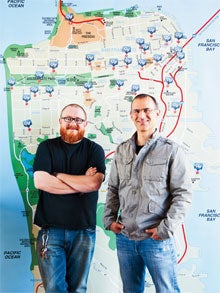
Seidman, technologist Matt Crampton, and designer David Watanabe had come from Yahoo. Their proposition was that businesses could buy small pieces of local observation from people already carrying smartphones. TomTom and MenuPages were customers before the public launch. The important discovery was that access to willing people still required a specification precise enough to produce something usable.
The shelf has its own version of events
Consider a familiar retail situation. A brand pays for a promotion, arranges a display, and prepares a forecast. At headquarters, the campaign is ready. In an individual shop, the sign might be missing or the product might be out of stock. These are illustrative possibilities, but they explain the questions Gigwalk’s retail audit service is built to answer.
A Gig can ask someone to photograph a display, check a price, scan a barcode, or report availability. Mystery shopping adds another kind of observation: what does the associate say when asked about the product? The company offers GPS-, time-, and date-verified work, photo analysis, dashboards, and field messaging. The buyer receives evidence attached to a place and an assignment.
Whirlpool’s Swash clothing-care rollout supplied a concrete use case. Whirlpool wanted to check showroom placement, promotional material, and product demonstrations, and used Gigwalk to manage the field effort. A successful shipment had left it with a second problem: establishing whether the launch looked right where customers encountered it.
“We match them to jobs where they’re most likely to succeed.”Matt Crampton, in Reuters reporting, 2013
Gigwalk’s place in the market sits between research, retail execution, and workforce software. Field Agent offers a comparable mobile route to retail checks. A merchandising agency or an internal field team can also supply observation. Gigwalk’s appeal is the combination of a worker network with assignment and reporting tools. Which approach fits depends on coverage, access, and how much expertise the work demands.
Bring your own crowd
The most revealing development came in October 2014, when Gigwalk Enterprise launched. Companies could use the software with their own field teams. Assignment, messaging, analytics, and location-based reporting became useful even when Gigwalk supplied none of the people.
That change widened the business from arranging little jobs to coordinating distributed work. A brand with employees already visiting shops still needed a consistent way to ask questions and inspect the answers. A mobile workflow could replace scattered clipboards and messages. The crowd had helped develop a system that a private workforce could use.
- 01CreateDefine the task
- 02MatchFind nearby people
- 03ExecuteSubmit the evidence
- 04AnalyzeDecide what follows
The later partnerships followed that logic. In 2015, IRI and Gigwalk announced an alliance joining syndicated analytics with crowdsourced retail execution data. Sales information could be considered alongside observations of what happened in stores. In 2016, Randstad Japan selected Gigwalk technology for a mobile staffing application, intended to reduce phone, email, fax, and paper-timesheet administration.
The financing was substantial for a business built around small assignments: $1.7 million at launch, $6 million in 2012, and a $10 million Series B announcement in March 2014. The last round was led by Nokia Growth Partners, with Randstad and existing investors participating. These are historical investments, rather than a statement about the company’s finances today.
A gig is a fee, not a salary
For a worker, the process is straightforward. Download the iOS or Android app, register, connect PayPal, and apply for nearby assignments. Once accepted, follow the instructions and submit the work through the app. Gigwalk’s worker page describes tasks ranging from five minutes to several hours, paying $3 to $100 or more. Those are advertised ranges, not a prediction of anyone’s earnings.
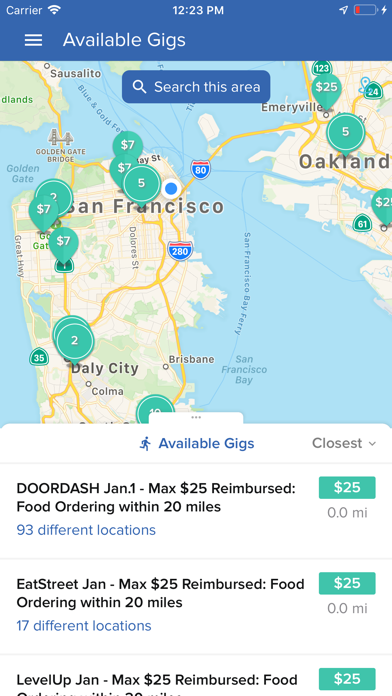
The public user agreement adds the consequential details. Fees depend on accepted deliverables. It specifies a $35 accumulated payment minimum and remittance through PayPal within seven days after customer acceptance, subject to its conditions. Workers bear their expenses. Time spent is not the basis of the fee.
Travel therefore belongs in the calculation. In 2013, Salon interviewed a Kansas City Gigwalker who said work arrived in waves. On one occasion she drove to Omaha and estimated that she cleared $50 after gas. It is an old example of a durable geographic problem: an assignment can be profitable to complete and expensive to reach.
For buyers, the business combines paid data-collection services with SaaS for field operations. For workers, it offers choices among discrete assignments. The same flexibility that makes a nearby task attractive makes steady income harder to infer from the existence of a large network.
The burrito and the training set
Gigwalk’s current services stretch beyond the shop floor. Its digital testing offer covers apps, websites, and journeys that cross between online and physical operations. A buy-online, pick-up-in-store experience is an obvious example: the checkout may work while the collection desk does something quite different.
The company’s testing page even mentions a soggy burrito. That is a useful distinction. Software performance and delivery performance both shape the customer’s experience, but only one is likely to appear in a conventional bug report. A human tester can follow the journey far enough to meet lunch.
For software and AI companies, Gigwalk offers image and video collection and annotation, plus point-of-interest data. Customers can specify the attributes they need and retrieve data through API and webhook infrastructure. Restaurant menu collection and property inspections occupy other corners of the service list. Across them, the recurring expertise is organizing people to return specified evidence.
Start with a question small enough to photograph
The practical method to copy is modest. Choose one decision, define the proof that would inform it, and run a small batch. Review the submissions for ambiguity before expanding. Decide who will act when a check finds a problem. A photograph can establish that a sign is missing; someone still needs the authority to replace it.
This approach suits repeatable observations with clear acceptance criteria and reachable locations. It becomes less dependable when the task requires specialist judgment, access a visitor cannot obtain, or a reliable supply of workers in a sparsely covered area. GPS establishes location; it does not settle every question about accuracy or interpretation. Those are limits of the method, not problems a bigger registration count automatically cures.
Gigwalk’s early menu photographs remain a good test of the whole proposition. Getting someone to the restaurant was only part of the job. The customer needed an answer it could use. Every task brief, verification step, and reporting tool is an attempt to make that distinction less expensive to learn.
Gigwalk website ↗ · Product walkthrough ↗ · Company explainer video ↗