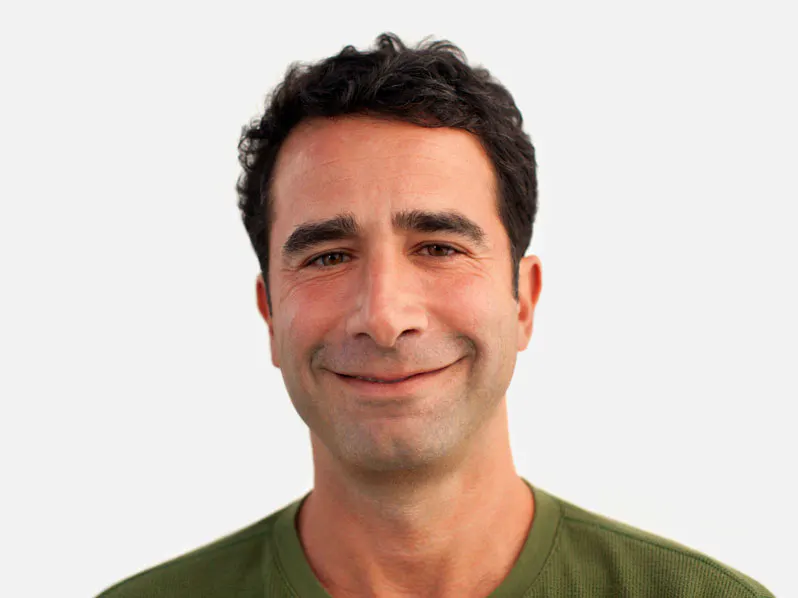
The Pre-VC Years No One Mentions
Most VC profiles skip the career chapters before the fund. George Zachary's are the most interesting part. He graduated MIT with degrees in computer science and management science in 1987 - dual interests that would define everything he did next. Before finding his way to venture capital, he helped build virtual reality hardware at VPL Research (one of the companies that coined the term), managed the Nintendo 64 business development at Silicon Graphics alongside future Netscape co-founder Jim Clark, and co-founded an enterprise derivatives trading platform that got acquired by SunGard. That's four industries in eight years, each one completely different from the last.
He joined Mohr Davidow Ventures in 1995, achieved the highest IRR in the firm's history, co-founded Shutterfly partly because he wanted to share photos with family back in Greece, and passed on Google - a decision he has been publicly and self-critically candid about on multiple podcasts. "A formative lesson" is how he describes it. He then joined CRV in 2004.
Twitter, Before Anyone Knew What Twitter Was
When Noah Glass first showed him the Twitter concept during Odeo's pivot period in 2005, Zachary stared blankly. He privately wondered why anyone would want to broadcast their whereabouts to friends who were, in many cases, sitting right there. His reaction was confusion. His decision was yes.
He got past his initial confusion by focusing not on the product but on the founders. They wanted to do something ambitious. Something big. That met his primary criterion - and CRV led the seed at approximately a $10M valuation. The estimated return on that bet is roughly 1,416 times the initial investment. Twitter went public in 2013 on the NYSE under the ticker TWTR.
Yammer: The $1.2 Billion That Took Three Years
His investment in Yammer as an enterprise social network was less counterintuitive than Twitter but required the same core conviction: backing people who needed to build, not just wanted to. CRV was the original and largest institutional investor. When Microsoft acquired Yammer for $1.2 billion in June 2012, Zachary gave a direct public statement about the deal - unusual for a VC - noting that the company had found a path that made sense for its founders and employees.
The same year brought the Millennial Media IPO. 2012 was, by any measure, a good year for George Zachary's portfolio.
The Bioengineering Bet
The pivot to bioengineering is not what it looks like from the outside. It would be easy to read it as a post-cancer-scare emotional reaction - a man frightened by his own mortality turning toward medicine. The truth is more calculated than that. Zachary has articulated a coherent thesis: machine learning applied to biology has reached an inflection point where it can generate diagnostic and therapeutic insights that would have been impossible a decade ago. Companies like Freenome (early cancer detection via cell-free DNA analysis) and Glympse Bio (biomarker diagnostics) represent specific bets on that thesis.
His broader investment philosophy - "taking power away from governments and corporations and giving power to individuals" - maps directly onto both his consumer internet era and his bioengineering era. Twitter gave individuals a global voice. PillPack gave them better control over their medications. Freenome could give them earlier access to cancer detection that was previously gatekept by expensive hospital systems.
The Immigrant Thesis
The most personal element of his investment approach is the conviction about founders from immigrant or economically unstable backgrounds. He articulates this not as charity or affinity-group investing but as pattern recognition: people who grew up navigating chaos develop a specific capability for managing it at scale. His own background - the son of Greek immigrants, no family wealth, MIT on merit, Silicon Valley via an oil company in Canada - makes this autobiographical.
He doesn't screen by credential. He has been explicit about not being impressed by the Stanford valedictorian or the Google veteran on their own. What he looks for is the quality of need. Urgency over pedigree. The founder who would be lost without this company, not the founder for whom this company is an interesting professional option.
The Money Question
He has been unusually candid about what it felt like when his early investments made him genuinely wealthy. The shift in how people treated him - no longer as a person but as a form of power and access - unsettled him. He has framed his current relationship with money in terms of future deployment: he's making it because he plans to give it away. That's not posturing. The Foundation trilogy by Isaac Asimov - his favorite books - is, at its core, a story about using accumulated knowledge and capital to shorten dark ages. The analogy is not accidental.