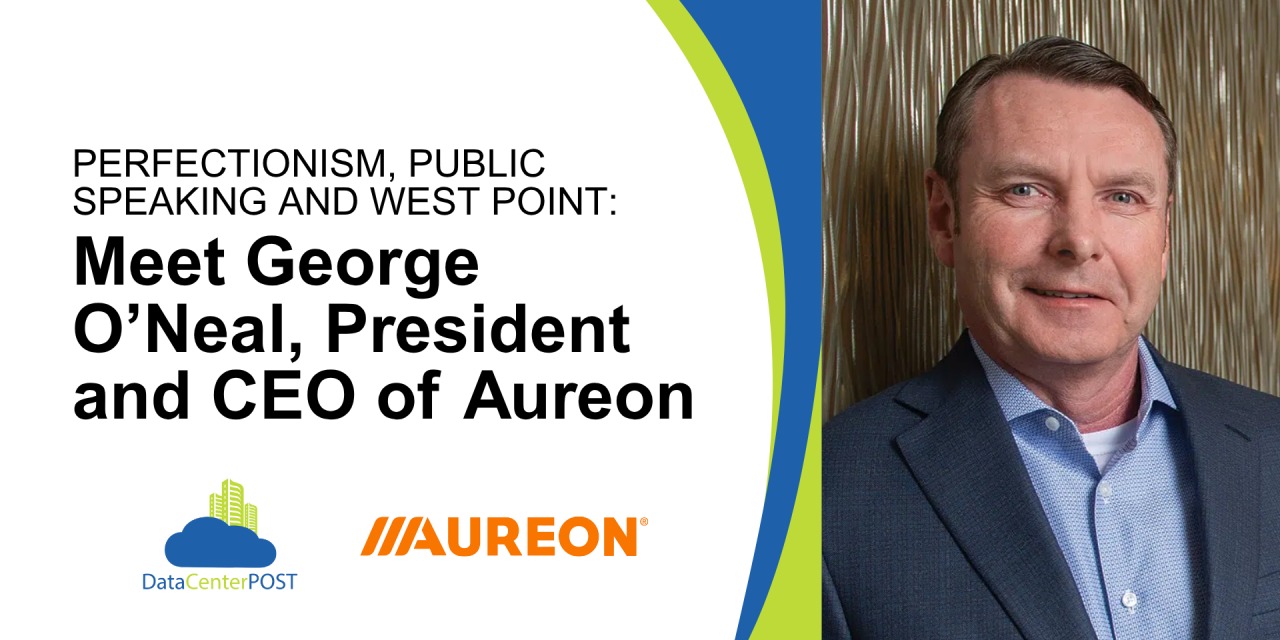
George O'Neal knew answers and kept them to himself. In school, he has recalled, even certainty was not quite enough to raise his hand. A correct answer offered a modest reward. A wrong one carried the possibility of embarrassment, which felt much larger. It is a small confession with a long shadow: the future telecommunications executive began as a boy performing a private calculation of risk and choosing silence.
West Point spoiled that arrangement. The United States Military Academy could make eating, walking and managing a calendar difficult, as O'Neal later put it. It could also make speaking mandatory. Cadets stood before classmates even in calculus. The room would not wait for his confidence to arrive, so he had to go first.
The freedom inside an unfinished answer
During his senior year, an officer diagnosed the fear. A speaker worries that a question will expose the edge of his knowledge. Preparation helps, the officer told him, but omniscience is unavailable. The useful response was ordinary and honest: acknowledge the good question, then promise to return with an answer. O'Neal suddenly had somewhere to stand.
“I like unique challenges and this is definitely one.”George O'Neal, on joining Aureon
He did not become reckless. He became prepared. In working life, he stopped avoiding chances to speak and began treating a presentation as a story rather than an information transfer. What does the audience need to understand? Which number advances the plot? Where might a little humor let everyone breathe? Once fear lost its veto, he found public speaking could be fun.
The degree on his résumé was mechanical engineering. His civilian subject became the machinery of connection. After West Point, O'Neal served in the U.S. Army as a second lieutenant. He entered SBC Communications in 1995 and its leadership-development program, moved through network-management jobs at Alltel, and in 2006 joined GVTC Communications in Texas. He would stay 18 years.
Replacing the old nerves
Telecom has its own fear of being wrong. A network is a public promise made in buried conduit, poles, switches and maintenance windows. The answer cannot be massaged after the fact. It connects, or it does not.
At GVTC, O'Neal was responsible for planning, engineering and operating broadband, phone and cable networks. An early fiber-to-the-business project reached 95 percent of businesses in Boerne, Texas, between August 2006 and August 2007. The larger assignment was more audacious: move a legacy footprint away from copper and toward fiber.
His team built fiber to more than 80,000 rooftops. A brownfield overbuild alone replaced copper across more than 40,000. O'Neal also oversaw more than $350 million in capital spending and started a program that put the provider's own Wi-Fi system first, aiming to reduce repair trouble and improve the experience inside the home. The distinction matters. A fast line to the premises can still disappoint in the room where someone is trying to work.
In March 2020, just before offices emptied, the network the team had built ranked first in the United States and third worldwide on Netflix's ISP Speed Index. GVTC had about 230 employees. The comparison placed it ahead of much larger names. O'Neal calls it his most important technological accomplishment so far, then quickly adds the hopeful qualifier. He wants the next accomplishment to happen at Aureon.
A network is only half a business
O'Neal served as a director and treasurer of the Fiber Broadband Association, formerly the Fiber-to-the-Home Council. Construction standards mattered there: how to hang fiber, how to bury it, how to operate it. He kept pressing on a less photogenic question. How does the owner make the network economically useful?
Fiber does not market itself. It needs products, pricing, installation and repair practices. It needs an experience that makes a customer feel the company has removed a difficulty rather than installed a device. O'Neal's model for turning an idea into reality has three legs, and none can be borrowed from the warehouse.
That logic brought him to West Des Moines. Aureon was created in the 1980s by independent Iowa telephone companies. By the time O'Neal considered its chief executive job, it combined network connectivity, managed IT, consulting and contact-center work. He liked the unusual bundle. Plenty of companies did one of those things. Few tried to make all of them legible together.
The four-company problem
O'Neal became president and CEO on January 13, 2025, succeeding Scott Behn. His early diagnosis was blunt. To a customer, Aureon could look fragmented, as if its product families were separate companies sharing a driveway. He named the remedy “One Aureon.”
A slogan is inexpensive; reporting lines are not. In June 2025, he reorganized the leadership team around three broad responsibilities. Operations came under Chris Burns. Transformation, including strategy, products and major projects, went to Holly Veeder. Revenue, sales and marketing came under Aric Birchmier. The arrangement was meant to reduce the number of seams a customer could feel.
O'Neal describes himself as relational. West Point had supplied dozens of close-range leadership examples as cadet leaders rotated each semester. Some habits he mentally kept. Others went into a file marked never. His preferred adult version is less command than common purpose: know employees, form real relationships, make the destination shared.
People remember the impression left behind. For O'Neal, service is not only what arrives. It is how the company behaves while delivering it.
This makes One Aureon a cultural project disguised as an org chart. Connectivity cannot toss a customer to managed services. Consulting cannot act like an unrelated cousin. The contact center cannot merely receive the consequences of decisions made elsewhere. One company means a problem is not complete until the customer experiences the solution as complete.
Big glass, practical ambition
O'Neal arrived with an interesting view of Iowa. Rural connectivity, he argued in 2025, was stronger than outsiders might assume because independent local providers had invested in fiber. Some of the clearer opportunity sat in metro areas where large traditional carriers had moved more slowly on fiber to the home. Aureon's role included wholesale internet access, but also better business solutions in Des Moines, Cedar Rapids and other cities.
In May 2026, Aureon and three partners announced a long-haul route from Ellendale, North Dakota, to Chicago. It was engineered for 100 terabits of capacity and designed to scale to 400. The stated demand came from large AI and cloud deployments. The unglamorous achievement was coordination: different networks, vendors and timelines behaving like one route. It sounded rather like the company O'Neal was trying to build.
The scale invites grand language, but O'Neal's recurring interest is practical. How will customers use the capacity? Who maintains it? What happens when the handoff is imperfect? His technical career has been a sequence of projects in which glass becomes valuable only after engineering, operations and human expectations agree.
The perfectionist chooses
He still calls himself a perfectionist, though less of one than he was. Raising three children helped. Perfection consumes time indiscriminately; family life makes discrimination unavoidable. The mature question is not whether a detail can be improved. It is whether that detail deserves the hour.
There is an engineer's usefulness in this compromise. Networks need exact tolerances. Companies need priorities. O'Neal can care about a 100-terabit route and a customer's first call, but he cannot personally polish every joint between them. Leadership is deciding which standards are sacred, which decisions can be delegated, and which unknown answer can responsibly wait until tomorrow.
His public work in Iowa now stretches beyond the network. In 2025, an Aureon golf event gathered more than 500 technology and broadband professionals and raised $19,000 for an Iowa nonprofit. In May 2026, the company awarded $12,000 to nine Iowa students pursuing fields that included computer engineering, cybersecurity, business analytics and software development. O'Neal framed the scholarships as an investment in the people who will power the state's technology future.
That future will produce questions he cannot yet answer. Artificial intelligence raises both efficiency and security possibilities. Customers want fewer providers, simpler systems and greater reliability. Fiber capacity keeps climbing while the work of trust remains stubbornly analog.
The boy in the classroom believed an uncertain answer might diminish him. The executive has built a career around systems that expose uncertainty every day: outages, construction surprises, new demand, unfamiliar technology. His advantage is no longer knowing everything. It is knowing what to do next. Prepare. Tell the truth. Bring the right people into the room. Return with the answer.