Rachel Chalmers was sitting in her garden with a laptop, frightened of a call with someone she already knew. Mark Templeton, the former Citrix chief executive, had been a mentor and friend. Friendship, though, would not oblige him to invest in her new fund. She made the pitch. He agreed. For Chalmers, the significance was precise: a demanding investor could finally see the business she was trying to describe.
- Early money for technical women building AI infrastructure.
- A $2.7 million debut fund, above its $2.5 million target.
- Technical judgment, operator help and introductions alongside the check.
That business is Generationship, founded with Michelle Yi in 2024. Its premise is that venture investors repeatedly overlook capable technical women, leaving attractive companies underpriced. The partners buy in early, before financial metrics make the opportunity comfortable for everybody else. This is a claim about how markets misjudge people, expressed through an investment portfolio.
A garden, a laptop, a yes
The pitch had taken work. Chalmers describes collecting rejections while narrowing the fund’s thesis. Templeton’s commitment became a turning point, rather than the end of the refusals. Her advice to founders now is to collect 100 rejections: objections can reveal the boundaries of an idea. The useful question becomes what a refusal teaches you to change, clarify or defend.
“We are not a charity. We are a financial fund.”
Rachel Chalmers
For a founder, this is a useful distinction. Generationship is looking for a business capable of substantial growth. A worthy mission alone does not answer whether customers need the product, whether they will pay, or whether outside capital can help the company meet demand. Its chosen hunting ground is where the partners believe technical ability and investor recognition have drifted apart.
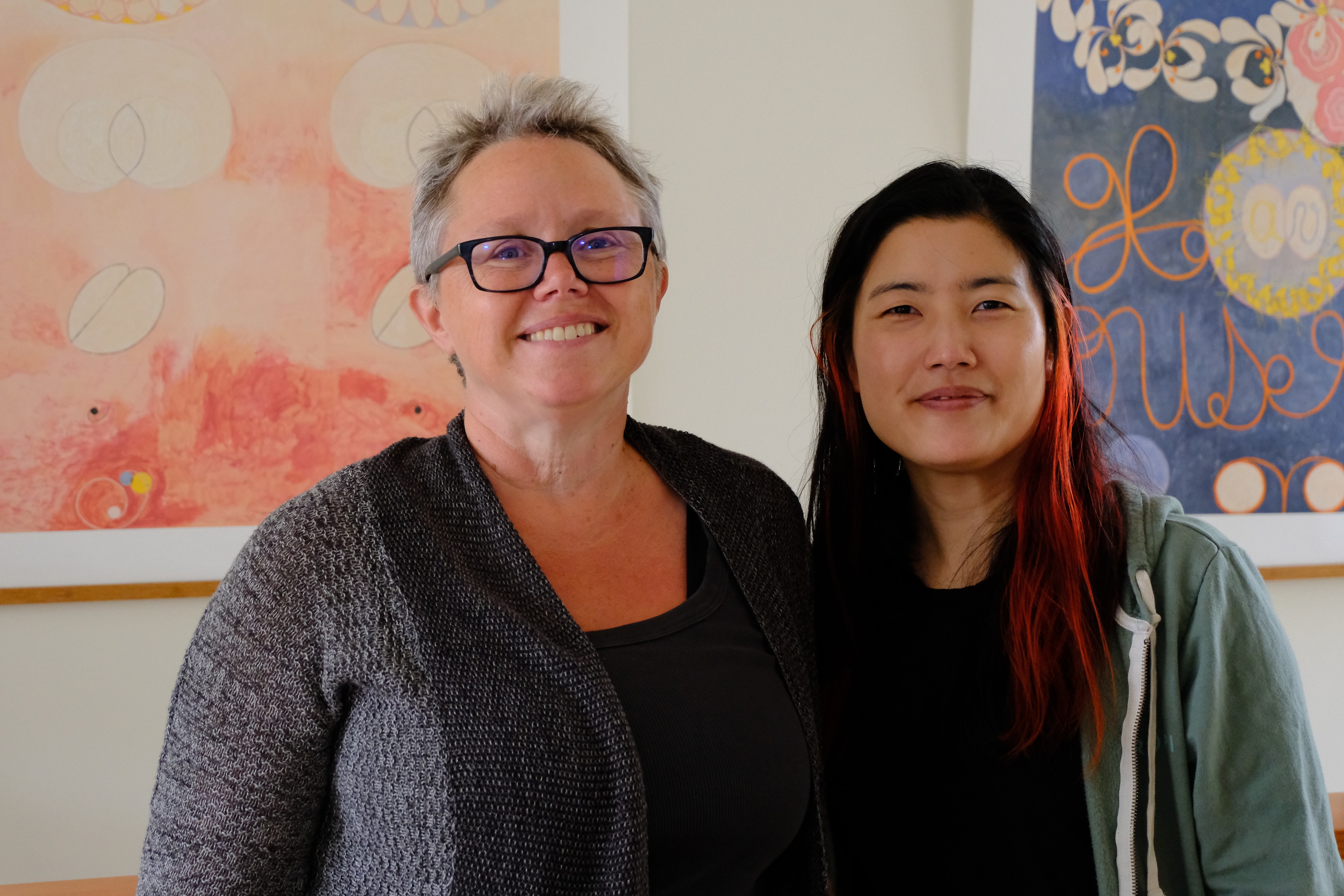
The people beneath the pitch
The partnership joins two kinds of experience. Chalmers has worked in infrastructure investing and company acceleration, including roles at Heavybit, Alchemist Accelerator and Merian Ventures. Her early company involvement includes Honeycomb, Docker, Aviatrix and LaunchDarkly. These relationships give the fund a route into developer communities where new businesses often appear before they acquire polished fundraising stories.
Yi brings two decades of AI and cloud experience. She contributed to IBM Watson, the system that competed on Jeopardy, and has worked on applied AI in enterprise and social-impact settings. She also serves on the board of Women in Data. Understanding an engineer’s explanation is part of the offering; so is knowing which follow-up question exposes a weak assumption.
The two met through a group assembled by technology executive Sam Ramji while he was considering his next company. They chose to work together. Chalmers has described taking the lead on investor outreach and deal flow, with Yi particularly effective at diligence and portfolio engagement. Their shared interests include public libraries and science. Neither sounds especially interested in making the room louder.
A fund for the plumbing
Look at the companies, and the investment thesis becomes tangible. Edera works on workload isolation for Kubernetes and AI environments. Containers sharing an underlying kernel create security concerns; Edera’s approach puts isolation deeper into the architecture. Generationship participated in its $5 million seed round, publicly announced in September 2024.
Coval addresses a different production problem: a voice agent can produce different responses to the same input. Founder Brooke Hopkins brought experience from testing autonomous-driving systems at Waymo. Her company applies simulation and evaluation to conversational agents, including the messy variations that real callers introduce. A convincing demonstration provides only a small sample of possible behavior.
Workload security
Agent evaluation
Shell history
Atuin, another investment, replaces shell history with a database and supports encrypted synchronization between machines. The portfolio also includes data platforms, agent tooling and Quint’s executable specifications for reliable systems. These are distinct products serving developers and enterprise teams. Their common thread is the work needed to make increasingly complicated software dependable enough to use.
What $2.7 million buys
Fund I closed in June 2026 at $2.7 million, exceeding a $2.5 million target. The announcement counted 13 portfolio companies. Decile Group reported 62 limited partners, many drawn from infrastructure, AI and developer tooling. That figure describes the capital base and its contributors; it does not describe the management company’s operating budget.
8% above target. A deliberately small first fund.
The model is conventional venture investing applied to a specific market gap: limited partners supply capital, and the fund invests in young companies. Generalist seed funds, specialist infrastructure investors and angels are alternatives for founders. Generationship’s proposition combines a narrow sourcing thesis with people who can evaluate the underlying technology and help the business develop.
The company after the check
One practical example is Edera. Its February 2025 announcement disclosed a $15 million Series A led by Microsoft’s M12. Edera CEO Emily Long has credited Generationship with an introduction to M12 and with understanding the technical problem. Generationship subsequently reported a fourfold markup on its investment. That is an interim valuation increase, rather than cash distributed to investors.
The support network extends beyond financing. Its faculty includes marketing operator Deirdre Mahon, developer-business adviser Adam Frankl, community specialist Jono Bacon and engineering leader Melody Meckfessel. Decile describes monthly meetings between limited partners and founders, alongside recruiting referrals and customer introductions. For a technically strong founder, translating an invention into a buying decision can be the next difficult engineering problem.
An experiment with a long clock
The approach depends on more than recognizing overlooked talent. The companies still need paying customers, technical execution and access to later financing. Early valuation gains cannot settle whether the fund will deliver attractive returns. The partners’ sector experience and relationships are also difficult to reproduce by simply copying their investment filter.
What a reader can copy is the discipline: choose a problem you understand, learn from refusals, and make introductions useful to the person receiving them. Generationship is testing whether that discipline, directed at founders other investors misread, produces a durable financial advantage. The check buys time to find out.
Meet the builders
Explore Generationship, its portfolio and LinkedIn updates. Read the fund’s blog or listen to the Generationship podcast.
↗ Watch: Rachel Chalmers on founders and AIRachel Chalmers · Michelle Yi · Brooke Hopkins on testing AI