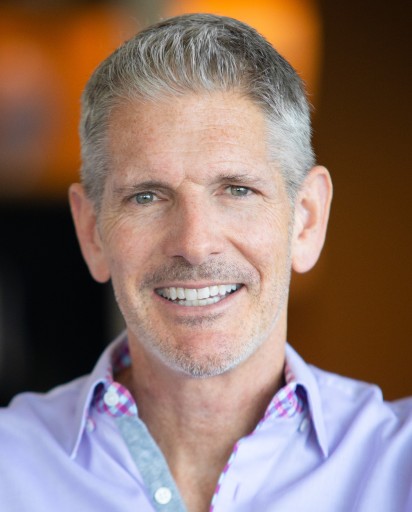
GENE FRANTZ | GENERAL PARTNER, CAPITALG $125B+ IN PORTFOLIO VALUE | 9 MAJOR EXITS INCLUDING 4 IPOS EARLY BACKER: CROWDSTRIKE + ZSCALER + FRESHWORKS FOUNDING PARTNER AT CAPITALG SINCE 2013 UC BERKELEY | STANFORD MBA | 13 YEARS AT TPG CAPITAL SPECIALIZING IN CYBERSECURITY & ENTERPRISE TECH GENE FRANTZ | GENERAL PARTNER, CAPITALG $125B+ IN PORTFOLIO VALUE | 9 MAJOR EXITS INCLUDING 4 IPOS EARLY BACKER: CROWDSTRIKE + ZSCALER + FRESHWORKS FOUNDING PARTNER AT CAPITALG SINCE 2013 UC BERKELEY | STANFORD MBA | 13 YEARS AT TPG CAPITAL SPECIALIZING IN CYBERSECURITY & ENTERPRISE TECH
Gene Frantz, General Partner at CapitalG
General Partner  /  Alphabet's Growth Fund

Gene
Frantz

CapitalG  •  San Francisco, CA

The investor who looked at the cybersecurity threat landscape and called it the most interesting problem in tech - then backed CrowdStrike, Zscaler, and Freshworks before their IPOs. His portfolio at CapitalG now exceeds $125 billion in collective value.

$125B+
Portfolio Value
9
Major Exits
4
IPOs
12+
Years at CapitalG
2013
CapitalG Founded
13
Years at TPG Capital
100K+
Alphabet Experts Available
#1
Focus: Cybersecurity
Profile

Betting on the Threat That Never Sleeps

There is a moment in every venture career when a thesis crystallizes. For Gene Frantz, it happened in cybersecurity - not as a hunch, but as a logical conclusion. If the threat landscape perpetually evolves, then by definition, the solutions need to evolve too. That's not a market that saturates. That's a permanent arms race, and Frantz decided to fund the people winning it.

He is a founding General Partner at CapitalG, Alphabet's independent growth equity fund, and has been since the firm opened its doors in 2013. In the years since, he backed CrowdStrike, Zscaler, and Freshworks - all before their public market debuts. Those three companies alone reshaped how enterprises think about endpoint security, cloud access, and customer service software. Together with the rest of his portfolio, the investments collectively surpassed $125 billion in value, across nine major exits including four IPOs.

What separates Frantz from the typical growth investor is what he brings beyond capital. CapitalG operates inside the Alphabet ecosystem - which means portfolio companies get access to more than 100,000 Google professionals, each an expert in their specific domain. For a cybersecurity startup trying to harden its cloud infrastructure or accelerate enterprise sales, that network is not a perk. It is a structural advantage that no other fund can replicate.

"We have in Alphabet a population of more than 100,000 professionals who are individually skilled experts in their specific areas."

- Gene Frantz, on CapitalG's edge

His investment model is deliberate by design. CapitalG makes only a handful of new investments each year, keeping the portfolio concentrated so that each company can actually receive the operational depth the firm promises. Spray-and-pray this is not. The tradeoff is that Frantz has to be right - and has to say no to a lot of inspiring entrepreneurs, which he has described as the hardest part of the job.

Before Alphabet called, Frantz spent 13 years at TPG Capital, the global private equity firm, leading technology and telecom investments and sitting on the boards of multiple public and private companies. Private equity sharpens a particular discipline - you learn to think about capital structure, operational leverage, and management quality in ways that pure venture rarely demands. Frantz carried that rigor into growth investing.

Before TPG, he built his early career in corporate finance at Morgan Stanley and then moved into venture capital through Oracle Corporation's VC group, where he ran technology and telecom investments. The arc is uncommon: investment banking to corporate VC to private equity to corporate venture at massive scale. Each stop added a different lens to the same underlying question - what makes a technology company durable?

He holds a B.S. from UC Berkeley and an MBA from Stanford University - two institutions that between them have produced a significant fraction of Silicon Valley's institutional infrastructure.

"We make a handful of new investments each year and have a relatively concentrated portfolio so that we can bring Google and Alphabet resources to bear in a way that's compelling and well-suited for each individual company."

- Gene Frantz

Outside of work, Frantz gravitates toward outdoor activities and reads historical nonfiction alongside self-help - a combination that suggests someone who wants to understand both the sweep of events and the mechanics of improvement. It is not an accidental pairing for an investor who thinks in long arcs and judges management teams on their capacity to grow.

Investment Thesis

When the Problem Never Stops Evolving

Frantz articulated his cybersecurity thesis with unusual clarity: "It's a very interesting and complicated landscape, and the problem is perpetually evolving; hence the solution needs to evolve constantly." That sentence is not a cliche. It is a market structure argument. When the threat never stops changing, the incumbent solution is always partially obsolete. That creates a permanent runway for new entrants, provided they are solving the right version of the current problem.

Google's position in the security world gave CapitalG a research advantage that compounds. As Frantz noted, Google is "an employer of some of the most profound security talent in the world" - which makes it "a wonderful fellow traveler for most security companies trying to address important problems." When evaluating a new security approach, CapitalG can pull in people who have literally defended one of the world's most attacked infrastructures.

That context shaped his bet on CrowdStrike - an investment that gained unexpected national attention when CrowdStrike was retained to investigate the 2016 DNC hack. Endpoint security had been underinvested relative to perimeter defense; CrowdStrike's cloud-native approach addressed the actual battlefield where attacks were happening. The IPO in 2019 validated what Frantz saw years earlier.

Pre-2013
VP at Morgan Stanley. Then Oracle's VC group. Then 13 years running tech/telecom PE at TPG Capital.
2013
Joins CapitalG (then Google Capital) as a founding General Partner the day the fund launches.
2015
Leads CapitalG's investment in Zscaler - cloud-native security architecture before "cloud-native" was a standard phrase.
2017
Backs CrowdStrike. The company is simultaneously investigating the DNC hack - putting Frantz's thesis on the front page.
2019
CrowdStrike and Zscaler both IPO. Two of Frantz's bets hit public markets in the same year.
2020
Looker acquired by Google. Leads Expel Series D investment.
2021
Freshworks IPO on NASDAQ. Orca Security investment announced.
2024
Celebrates CrowdStrike's continued milestones publicly on LinkedIn. The bet keeps compounding.
Portfolio Companies

The Bets That Paid Off

CrowdStrike
Endpoint Security
IPO: CRWD
Zscaler
Cloud Security
IPO: ZS
Freshworks
Customer Software
IPO: FRSH
InnoLight
Optical Networking
IPO
Looker
Business Intelligence
Acq. by Google
Armis
Asset Intelligence
Acquired
Orca Security
Cloud Security
Active
Expel
Managed Security
Active
Monzo
Digital Banking
Active
Pindrop
Voice Security
Active
Applied Systems
Insurance Tech
Active
FanDuel
Sports Betting
Acquired
Operational Model

Capital Is Table Stakes. The Network Is the Edge.

Growth equity is a crowded space. Dozens of firms write checks to companies between Series B and IPO, all offering roughly the same thing: capital, board seats, and a Rolodex. Frantz and CapitalG made a different bet when they launched in 2013. The fund's structural advantage - sitting inside Alphabet - could be operationalized in ways that no independent VC could replicate.

The pitch to portfolio companies is specific. Need help thinking through cloud migration? Google has thousands of engineers who have done exactly that, at a scale that would break most companies. Working on enterprise sales co-selling? Alphabet runs one of the largest enterprise sales organizations in the world. Trying to harden your security posture before an IPO? There is arguably no better-positioned partner than a company that defends infrastructure used by billions of people daily.

Frantz has described this as bringing Google and Alphabet resources "in a way that's compelling and well-suited for each individual company." The tailoring matters. A company needs the right expert, at the right moment, with context about what they are actually building - not a generic workshop on best practices.

Support Area
Security
Security reviews, vulnerability assessments, hardening practices from Google's own security teams.
Support Area
Enterprise Sales
Co-selling opportunities, enterprise pipeline development, and Google Cloud partnership introductions.
Support Area
Talent
Executive recruiting, leadership coaching, and access to Alphabet's talent development resources.
Support Area
Engineering
Technical training, AI/ML integration strategies, and engineering productivity guidance.
In His Words

On Investing, Security, and Saying No

"It's a very interesting and complicated landscape, and the problem is perpetually evolving; hence the solution needs to evolve constantly."

On cybersecurity as an investment category

"Saying no to inspiring entrepreneurs is hard."

On the reality of a concentrated portfolio strategy

"Successful investments balance both head and heart."

On investment decision-making

"As an employer of some of the most profound security talent in the world, Google is a wonderful fellow traveler for most security companies trying to address important problems."

On CapitalG's structural advantage in cybersecurity

"Expel transforms enterprises' capacity to protect themselves from the constant threat of cyber attacks."

On the Expel investment thesis

"We make a handful of new investments each year... so that we can bring Google and Alphabet resources to bear in a way that's compelling and well-suited for each individual company."

On CapitalG's concentrated model
Context

When a Portfolio Company Ended Up on the Front Page

In 2016, when the Democratic National Committee discovered its systems had been breached, they hired CrowdStrike to investigate. The cybersecurity firm that Frantz and CapitalG had backed was suddenly at the center of one of the most consequential political news stories in a generation.

For an investor, this kind of moment is clarifying. The company you backed either performs under pressure or it does not. CrowdStrike performed - and its public profile grew accordingly, accelerating the path to the 2019 IPO. Frantz's thesis, that endpoint security was critically underinvested, was validated in the most public way possible.

It also led Frantz to think publicly about election security more broadly. In a 2020 NBC Bay Area podcast appearance, he outlined four specific cybersecurity priorities around elections: political party IT infrastructure, voting machine security, mail-in ballot protection, and combating misinformation campaigns. The investor had become, inadvertently, a voice on digital infrastructure's role in democratic processes.

The CrowdStrike story is a useful lens on how Frantz evaluates risk. He backed a company solving a real problem in a large market, with strong technical differentiation and a management team he trusted. The fact that the company would later become nationally newsworthy was not part of the thesis - but it is consistent with backing companies that matter.

The same pattern holds for Zscaler, which Frantz backed when cloud-native security was a minority view. Traditional security architectures assumed a defined perimeter - office buildings, on-premise servers, a network edge that could be defended. Zscaler's insight was that perimeters were dissolving and that security needed to follow the user, not the network. That was a contrarian view in 2015. By 2019 it was conventional wisdom, and the IPO reflected it.

"CrowdStrike addresses the critically important endpoint security market - servers, desktops, laptops - with a cloud-delivered approach that identifies and stops threats at the endpoint itself."

- Gene Frantz
Facts Worth Knowing

Five Things About Gene Frantz

01
He has been a CapitalG General Partner from day one - 2013 - making him one of the original architects of Alphabet's growth investing strategy.
02
His CrowdStrike investment gained national attention when the company was hired to investigate the 2016 DNC hack - turning a portfolio company into a front-page story.
03
He reads historical nonfiction and self-help books - a pairing that maps onto the two things investors actually do: study long arcs and optimize performance.
04
Before VC, he spent 13 years in private equity at TPG - long enough to see multiple cycles and develop the discipline to hold through them.
05
CapitalG's concentrated portfolio model means Frantz makes only a handful of new investments per year - each one chosen to support with genuine operational depth, not just capital.
Topics
Venture Capital Growth Equity Cybersecurity Enterprise Software CapitalG Alphabet CrowdStrike Zscaler Freshworks Corporate VC San Francisco Stanford MBA UC Berkeley TPG Capital B2B Investing Fintech Enterprise Tech Google Cloud IPO Private Equity
Share This Profile
Copied!
Find Gene Frantz

Links & Profiles