Gary Larson was watching television when a school-board meeting became a reason to leave the house. Parents were asking to keep their children’s school open. He lived six blocks from the district’s headquarters. The distance was short enough to cover on foot; the argument would occupy much of his working life.
In Larson’s recollection, he went down to the meeting, used his minute of public comment and was approached afterwards by parents who wanted help. He volunteered. The school-revocation campaign dates to 2000. It supplied an unusual entrance into a profession ordinarily associated with polished introductions: a stranger heard a dispute, walked towards it and acquired a cause.
Today he is the founder, president and CEO of Larson Communications, an agency specializing in public education reform. The intervening years include association work, research communications and advice to school leaders across the country. Yet that first short journey remains a useful way into his career. Public relations, in his version, begins when someone decides an audience needs to hear more.
A minute at the microphone
Larson’s early campaign became a bridge into California’s charter-school association world. He helped parents organize and prepare to speak publicly. He later recalled a campaign lasting four months and a march involving 700 families. Those numbers belong to his account of the episode. Its personal consequence is plain: volunteering became a professional direction.
There is a practical distinction between being angry about a decision and helping other people make their case. The second requires listening, choosing what matters and being willing to let someone else speak. Larson’s first school fight contained all three. The people with the most at stake were the parents; his contribution was helping their concern reach beyond the meeting room.
School disputes have a peculiar scale. A hearing can be intensely local, down to a building or a bus route, while the vocabulary comes from national politics. For a communicator, that creates two simultaneous jobs: explain the particular decision and keep the people affected from disappearing inside the larger argument. Larson’s career has repeatedly occupied that uncomfortable middle ground.
“These are their children. This is their choice.”
Gary Larson, recalling his first school-board intervention
The education of a spokesman
By July 2002, Larson was publicly identified as communications director for the California Network of Educational Charters. In a contemporary report about an American Federation of Teachers study, he challenged its California figures, including the number of schools and closures. The exchange offers a small, concrete view of the job: advocacy can turn on which numbers make it into the next paragraph.
That is less glamorous than the popular picture of public relations, and considerably more revealing. A spokesman needs a position, but also the detail with which to defend it. When the subject is public education, a disputed denominator can carry as much political weight as a rousing speech. Someone still has to check the denominator.
Larson subsequently worked at the California Charter Schools Association, where he served as vice president of communications. His academic preparation included undergraduate study in communications and political science and a master’s degree in public administration at the University of Southern California. Language, politics and administration are a sensible collection of subjects for a career spent explaining schools to people who can decide their future.
He founded Larson Communications in 2007. Starting an agency gave that specialty an organizational home. Its work now includes strategic positioning, media relations, public advocacy, crisis planning and digital recruitment. The clients extend across school systems, charter networks, education nonprofits, research groups and higher education. A focus on one field can still leave a communicator with quite a few audiences to satisfy.
When the evidence needs an audience
In February 2008, the National Alliance for Public Charter Schools published an issue brief by Larson examining public familiarity and approval. He was identified as principal of Larson Communications. The brief considered national and state polling and the relationship between growing awareness and support. Within a year of founding his business, he was already writing about the question that runs through it: what happens when more people understand the institution?
Polling is an interesting instrument for someone in his line of work. It can expose the distance between what an organization believes everyone knows and what an audience has actually absorbed. That distance is where a communications strategy earns its keep. An explanation delivered once may be perfectly clear to its author and almost invisible to everyone else.
Research has also put Larson behind the scenes. A January 2010 Stanford CREDO announcement listed him and colleague Chris Bertelli as media contacts for a report on New York City charter schools. Years later, a charter-school funding study acknowledged Larson and teammates for project management and communications support. These are working credits, the sort of lines readers pass on their way to the findings.
They describe a substantial part of the trade. A study needs to be organized, explained and made accessible to reporters who were not present when it was designed. The communications team helps the work meet its public. The distinction between producing research and explaining it matters; Larson’s credits place him on the explanation side of that division.
The boardroom version of the story
In 2019, a National Charter Schools Conference announcement paired Larson with Raj Thakkar of CSBM and Ted Fujimoto of Landmark Consulting Group. Their proposed session addressed navigating a difficult charter climate through three areas of focus. It was designed as an interactive work session for school teams, with attention to changing risks, decisions within their control and practical board leadership.
That company is instructive. Communications advice was being offered alongside finance and organizational judgment. A school cannot advertise its way out of every difficulty. Leaders have to understand the decision they face before they can explain it convincingly. The session placed Larson’s specialty where it belongs in an operating organization: close enough to the decisions to affect how they are made public.
Navigator Schools’ August 2023 board minutes provide a more ordinary, and therefore useful, scene. Caprice Young introduced Larson and Heather Vega. The discussion covered website optimization, internal and parent communications, and public relations for staff recruitment. Board members also raised fundraising and parent outreach before approving the proposal.
There is a whole profession tucked into that agenda item. A family needs usable information. A prospective employee needs a reason to apply. A board needs to understand the contract. Each exchange has a different purpose, even when everyone is talking about the same school. The work becomes tangible in those modest transactions. Public trust has paperwork.
His advice has become more impatient
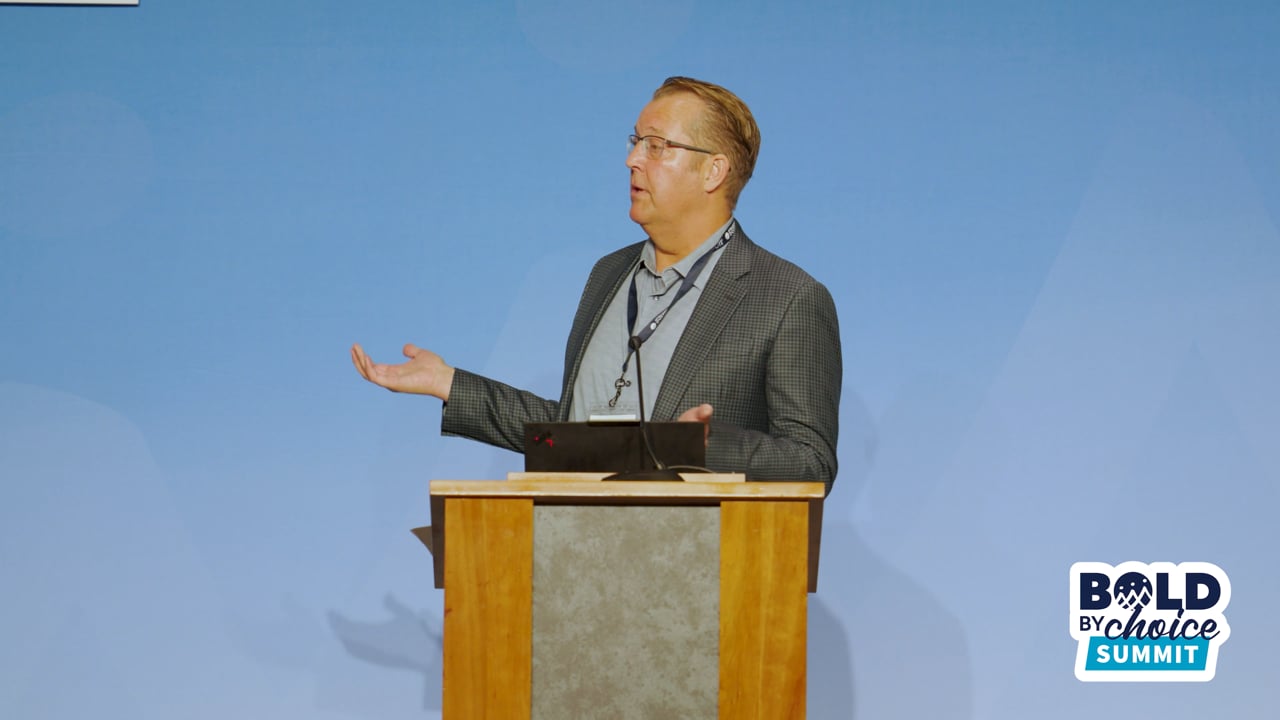
Larson’s April 28, 2026 Bold by Choice talk carried the title Don’t Make Them Wait: Break the Playbook. His 2026 California conference listing included a session on proactively overcoming political obstacles. The titles suit a communicator whose public argument increasingly concerns what leaders do before the difficult phone call arrives.
In June, he published two linked essays on communicating within the charter movement. One addressed individual schools; the other widened the lens to movement leadership. He argued that strategy, political choices and communications need to point towards a shared purpose. A better phrase cannot do all the work when the underlying decisions are pulling apart.
He also challenged advocates to explain the public benefit of their work and keep telling their story over time. His practical example was an annual report: separate its material into a sequence of stories, then let the finished report gather them together. It is a pleasingly concrete recommendation. A year’s worth of work deserves more than one afternoon in an inbox.
“Features explain what we are. Benefits explain why we matter.”
Gary Larson
The advice asks something of the adviser, too. Consistency requires patience. Organizational alignment requires conversations beyond the press office. Persuasion requires understanding the person who has yet to be persuaded. In Larson’s work, the communications question keeps expanding into a leadership question: what, exactly, are you asking the public to support?
A teacher’s son, still making the case
The public biography has a few lighter details. Larson is the third of four brothers and the son of a second-grade public-school teacher. He swam and played water polo in college. Away from work, his interests include swimming, Bay Area hiking and red wine. His volunteering has included the San Francisco Guardsmen, which supports summer-camp opportunities and educational scholarships for young people.
Those details give the professional record some welcome texture. The classroom was part of his family life before education became his business. Swimming and water polo put him in a different sort of team environment. Neither fact needs to be dressed up as the secret behind a company. People are allowed hobbies without turning them into management parables.
His stated ambition is to help access to quality schools encourage improvement across the wider education system. That is a political and professional commitment, and he makes it openly. The agencies he advises must still explain their own results, choices and responsibilities. His belief supplies a direction; the work consists of making the case in particular places, to particular people.
There is a continuity here that survives the titles and conference programs. In 2000, a group of parents needed help being heard. In 2023, a board discussed how to reach families and recruit staff. In 2026, Larson was urging leaders to connect their communications to their purpose. The setting changes. The next audience still needs a reason to listen.
Keep the conversation going
- Larson Communications · About the firm ↗
- Gary Larson · LinkedIn ↗
- Gary Larson · X / Twitter ↗
- Watch · Bold by Choice, April 2026 ↗
- Read · Define Yourselves Before You’re Defined ↗
- Read · Persuade as a Movement ↗
- Research · Familiarity and public approval, 2008 ↗
- Public record · Navigator Schools, August 2023 ↗
- News archive · California charter debate, 2002 ↗
- Conference · Larson, Thakkar and Fujimoto, 2019 ↗
- Research announcement · Stanford CREDO, 2010 ↗
- Research · Charter-school funding acknowledgments ↗