Andrew Freeman had moved to San Francisco, but his belongings had not quite made the commitment. They were in storage. He was in a furnished rental, imagining a year on the West Coast followed by a return to New York. Then his boss, Niki Leondakis, invited him to dinner at her North Beach apartment. There was roast lamb, conversation, and a communications coach named Ward, who had the misfortune of sitting beside a newcomer with several complaints about his new city.
Freeman remembers objecting to its pace, its confusing streets, even its position three hours behind New York. Ward offered a more useful subject for discussion: Freeman’s own reluctance to settle. Get an apartment. Get involved. Give San Francisco a chance to become home.
He followed the advice. An apartment, volunteering, friendships, and a role in starting Dress for Success San Francisco followed. Decades later, the founder of hospitality marketing agency af&co. still tells the dinner story. A professional invitation had brought him west. A personal invitation helped persuade him to stay.
It is an apt beginning for someone whose work concerns the reasons people gather. Before there was an agency bearing his initials, there was a table at which somebody helped him feel he belonged. The lamb was doing rather more than dinner usually gets credit for.
Broadway, with a side of marketing
Freeman grew up in New Jersey, identifying the location with a detail recognizable to fellow natives: exit 153A. He graduated from Montclair State University in 1984 with a marketing degree. To help pay for school, he worked at a travel agency. He also performed in community theatre musicals, building a repertoire that remains a point of personal pride.
“Name a show and I will sing the score for you.”
Andrew Freeman, on his community theatre years
Broadway was the ambition. Waiting tables was a way to support it. He even worked as a singing waiter, an occupation that allows two demanding audiences to express themselves during the same shift.
The connection between those jobs interested him. Restaurant work offered the bustle of a backstage area, the timing of a performance, and the direct response of people who had paid for an evening out. He was learning to read a room while hoping to appear on another kind of stage.
Marketing was already part of that education. The degree, travel work, performances, and restaurant shifts brought together interests that could easily have remained separate. A prospective actor was acquiring experience with customers, destinations, and the small decisions that shape an occasion.
An education in making an entrance
Advertising-agency work came before a position as director of marketing at the French Culinary Institute. Freeman describes that appointment as a turning point: food, restaurants, and marketing could become one career. He no longer had to keep every interest in a separate compartment.
His New York experience included the Russian Tea Room, where he opened the Cabaret; the Rainbow Room, where he spent six years as vice president of public relations; and Windows on the World, where he led public relations and marketing. These were places where the setting, the occasion, and the name on the door were part of what people came to experience.
At the Rainbow Room, he worked with restaurateur Joe Baum. Freeman identifies Baum as an early mentor who showed him how his enthusiasm for show business could fit the restaurant business. A dining room could offer its own kind of production, with the guest participating rather than sitting quietly in the dark.
The lesson had practical weight. In a restaurant, publicity must eventually meet a reservation, an arrival, a meal. The promised evening has to happen. Freeman’s early workplaces gave him an education in the distance between describing an experience and delivering one.
A career told through its rooms
- New JerseyMarketing classes, travel work, community theatre
- New YorkCulinary education and restaurant PR
- San Francisco · 1997A move west to join Kimpton
- A living room · 2005The beginning of af&co.
A welcome with consequences
Leondakis’s call about Kimpton came before Freeman had ever visited San Francisco. He moved in March 1997. For all his initial hesitation about the city, he stayed to build a substantial part of his career there. He spent approximately a decade with Kimpton Hotels & Restaurants, ultimately as vice president of public relations and strategic partnerships.
That work included helping launch more than forty hotels and restaurants. A hotel opening broadens the marketer’s brief: guests may be coming for a neighborhood, a trip, a celebration, or a meal downstairs. The invitation has to make sense across several versions of the same address.
Freeman also spearheaded Kimpton’s LGBTQ+ travel program. It made welcome a matter of who the business actively sought to serve. For an openly gay executive who has spoken about San Francisco’s acceptance of individuality, that work carried a personal connection as well as a commercial purpose.
His career had moved from the concentrated spectacle of New York dining rooms to a hotel company with multiple locations. The setting was changing, while the underlying question kept returning: what would make a person choose to walk through this particular door?
A living room becomes an agency
In 2005, Freeman founded af&co. in his San Francisco living room. The firm worked with hospitality businesses on marketing and public relations. Its anniversary account describes a wish to collaborate closely with clients, with an uncomplicated commercial aim: fill restaurant seats and hotel beds.
There is a pleasing modesty to the original office. Someone who had worked in dining rooms associated with grand occasions began his own business in the room where he lived. Plenty of people dream about running an agency. Initially, his had to share the apartment.
The work grew to include restaurants, hotels, wine, spirits, destinations, and culinary events. With longtime colleague Candace MacDonald, he also co-founded Carbonate, a separate creative agency whose work includes strategy, identity, design, and positioning. The two businesses approach related parts of a hospitality client’s needs.
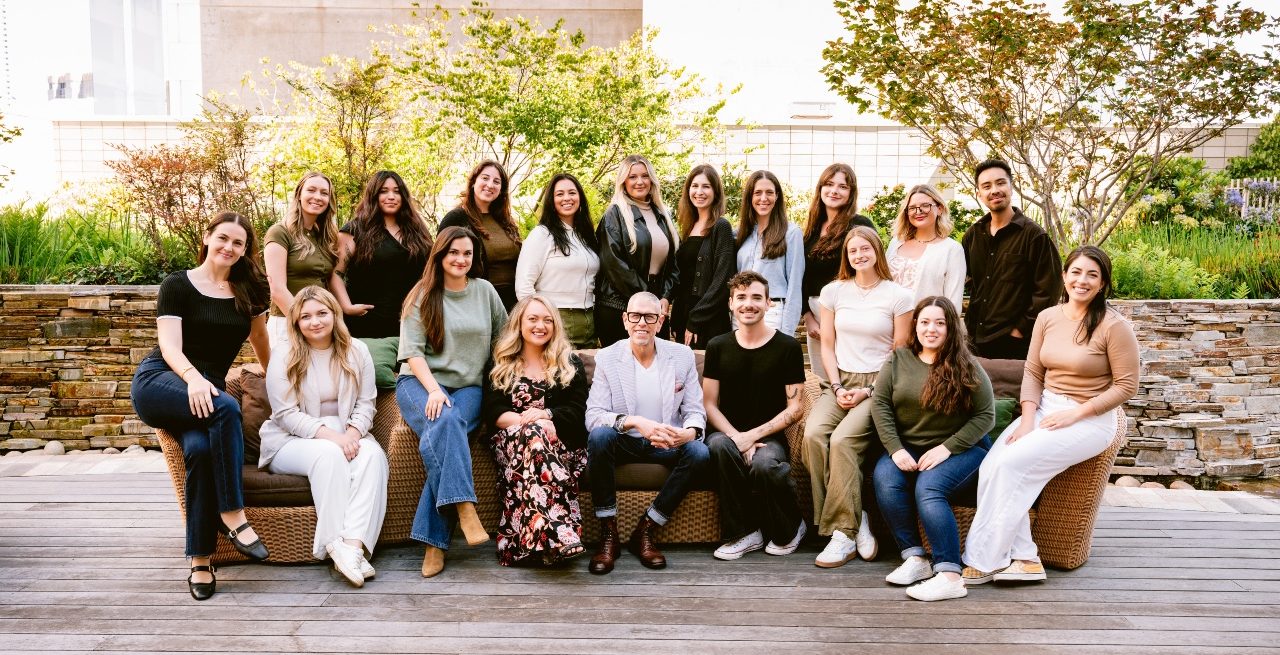
Af&co. marked its twentieth anniversary in December 2025. By then it had expanded into Southern California. The years had brought changes in how publicity travels, which people influence a booking, and how a restaurant presents itself before anyone tastes the food. An agency built around hospitality had to keep learning how its guests were making decisions.
The trend forecaster who asks for restraint
One continuing part of Freeman’s work is the annual hospitality trends report published by af&co. and Carbonate. The 2026 report was its eighteenth edition. It ranges across food, beverages, travel, and marketing, translating observations into ideas that operators can consider for their own businesses.
of the hospitality trends report
2026 edition · af&co. + Carbonate
Freeman’s shorthand for that edition was simple: “Value is the story this year.” The examples included prix-fixe offerings and ways to make an occasion feel worth the expense. The report also made a considerably stickier prediction: cinnamon rolls as dessert of the year. Even forecasting needs a little icing.
For a person whose business involves paying attention to trends, Freeman has spent years urging restaurants to understand their own concept. In his 2016 advice column, he addressed the difficulty of separating a passing fad from an idea worth adopting. Changes in design or service could raise a more fundamental problem: whether the restaurant still knew what it was offering.
The tension is useful. A business needs to notice changes in guests’ behavior, but each new idea comes into a room with an existing menu, staff, budget, and identity. Being informed does not remove the need to choose. The interesting work begins when a trend meets a specific restaurant.
Notes from the working brief
Know the conceptKeep the restaurant’s identity clear as tastes change.
Make the occasion worthwhileThe 2026 forecast puts value across price points.
Begin with the neighborhoodCommunity partnerships need a reason to belong.
That same concern appears in his comments about community partnerships. He has urged restaurateurs to begin with what they care about and the neighborhood where they operate. A charitable tie should have a real connection to the people and place involved. Otherwise, a restaurant risks treating its surroundings as another promotional surface.
It is a local way of thinking for someone whose clients extend across the country. A campaign can travel widely. A restaurant still opens its doors on a particular street, and its relationships there can matter long after an announcement has passed.
More seats at the table
Freeman credits his mother with teaching him to give back. His involvement has included Dress for Success San Francisco, Foodwise, SF Travel, and the Golden Gate Restaurant Association. The organizations connect his professional world with questions of opportunity, food, and the city that supports the dining room.
In Oakland, he co-founded the Oakland Restaurant Collective alongside restaurateurs and other food-business owners, including Nelson German, Luigi Di Ruocco, and Paul Iglesias. The group’s marketing efforts brought together businesses with a shared interest in encouraging people to visit and eat in the city.
That is a different scale of assignment from promoting a single opening. A neighborhood’s restaurants depend partly on the willingness of people to make the trip at all. Organizing together recognizes that the invitation can begin before a diner chooses an individual menu.
On March 3, 2026, San Francisco Supervisor Matt Dorsey presented Freeman with a Certificate of Honor recognizing his sales and marketing work. Later that month, Freeman spoke about what he wanted for af&co.’s future: continuation beyond his own time leading it, with people who care about the industry carrying the business forward.
“Bringing people’s dreams to life is what got me into this industry.”
Andrew Freeman, reflecting on twenty years of af&co.
Outside the agency, Broadway remains a favorite, and his dog Dolly carries the name of Dolly Parton. The aspiring performer is still easy to find in the hospitality executive. He simply has more ways to arrange an evening.
The North Beach dinner now looks like a useful introduction to the rest of his San Francisco life. Someone invited him in, listened to him complain, and suggested he take part. He did. The belongings came out of storage. There were other dinners to get to.
Pull up a chair
- Meet Andrew at af&co. ↗
- Carbonate: branding, strategy, and creative work ↗
- Andrew on LinkedIn ↗
- Instagram: @bossmanafco ↗
- Andrew on Facebook ↗
More conversations