In 1990, Oregon put a question to its voters: should adults be required to wear seat belts? The proposal was expected to fail. This is an important detail, because most stories about persuasion begin after somebody has already decided the audience is persuadable. Gard Communications had spent six years helping the state talk about safe driving. Then the measure passed. The firm says the resulting law has since been credited with saving more than 300 lives every year.
It is difficult to imagine a less fashionable origin story for a creative agency. There is no garage, no venture round, no viral launch. There is a ballot measure, a stubborn public and the unphotogenic business of changing a habit. Yet that episode explains Gard better than any reel of handsome websites could. The company works where language meets consequence.
The unfashionable advantage
Brian Gard had taught English literature, helped rescue a struggling student newspaper and worked in television at Portland's KGW before starting Brian Gard Advertising Production Services. Early clients included the Northwest Pulp and Paper Association and Georgia-Pacific. The assignments were complicated, sometimes controversial and often headed toward crisis.
Gard did not set out with a category thesis. He noticed that he liked the difficult work - and that established firms avoided it. That absence became an opening. Regulated industries such as utilities, health care and natural resources needed more than publicity. They needed people who could understand the issue, anticipate the objection and remain calm when a microphone arrived.
“I didn't plan to focus on crisis communications, I just liked the work. And since most of the established firms avoided that work in those days, it gave us an edge.”Brian Gard, founder
The modern Gard is broader than the old crisis shop. It sells public relations, public affairs, branding, advertising, research, social media, video, print design and enterprise WordPress development. But the original instinct remains. Its best projects take something dense - a policy dispute, a health system, a government website - and make it usable without making it dumb.

Five websites walk into one URL
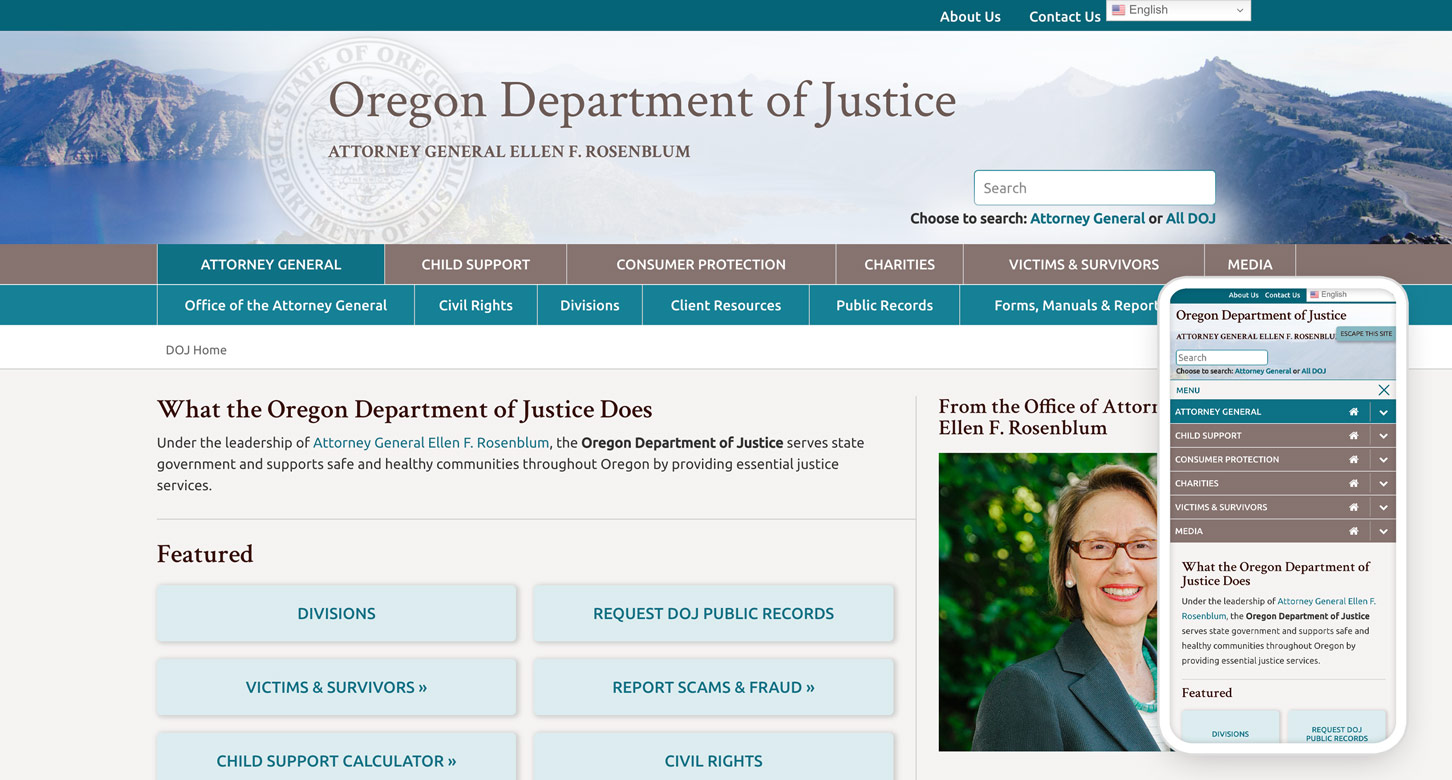
Consider the Oregon Department of Justice. Five divisions had separate SharePoint websites: Consumer Protection, Child Support, Crime Victims, Charitable Activities and the Attorney General's office. Gard's job was not to give each one a prettier front porch. It was to turn five houses into one navigable public building.
The team used content strategy, information architecture, usability testing, user research, UX and UI design, copywriting and WordPress development. The old division sites, a DOJ director later said, were ineffective. The consolidated site won a 2018 Silver w3 award and a WAGGY for Best Overall. The useful lesson is almost anti-creative: before adding a flourish, remove a hallway.
The product is continuity
Gard began working with AAA Oregon/Idaho in 2000 to move the club beyond its roadside-assistance identity. Membership has since grown more than 50 percent. Years later, Gard created “Keep Life Going,” a brand platform meant to express the less mechanical promise behind the tow truck: members get to continue with their lives.
The case does not prove that one slogan produced 25 years of growth. It proves something more useful about the business model. Gard is a privately held professional-services firm, paid through projects and continuing engagements. Its public portfolio contains many such extended relationships. In this market, continuity is not sentiment. It lowers the cost of re-learning the institution every time something changes.
The same breadth lets a client bring one awkward problem instead of choosing an agency category. NW Natural needed senior leaders prepared for the press; Gard ran an immersive workshop with filmed mock interviews and real-time feedback. Oregon Beverage Recycling Cooperative needed annual reports that made every ten-cent deposit intelligible; Gard supplied the copy, design, infographics and storytelling, collecting three consecutive Summit Creative Awards. The Confederated Tribes of Grand Ronde needed public attention on a restrictive hunting-and-fishing consent decree; Gard developed policy messaging, earned media, op-eds and filmed tribal voices.
Where Gard sits: between a specialist public-affairs consultancy and an integrated creative agency. The former may know the committee room; the latter may know the camera. Gard's proposition is that consequential organizations often need both in the same week.
A succession measured in years, not headlines
Liz Fuller joined Gard as an account manager in 2010. Before agency life she had been a professional ballet dancer, then a political and nonprofit consultant. Brian Gard saw leadership potential before she did. Fuller later described her response as surprise: ownership had not been on her radar.
The handoff occurred in three layers - mentorship in consulting, business development and operations; internal and client-facing leadership; then ownership. Fuller became president and minority owner in 2017, CEO and full owner in 2020. She estimates the whole transition took five to eight years. The purchase price was not disclosed, which is less interesting than what the timetable reveals. A relationship business cannot transfer trust with a signature alone.
“Leadership allows you to guide the work, but ownership gives you full agency.”Liz Fuller, president and CEO
Under Fuller, Gard became certified woman-owned in 2024. The firm says four of six directors were women when it announced the certification. Its cross-level diversity committee meets every other week; it has hosted paid interns through The Script, which expands access for students from underrepresented backgrounds. The culture copy includes humility, reliability, good coffee and a promise never to miss bowling night - a useful reminder that values survive better when attached to calendars.
What the reader can actually copy
The tempting lesson is “take the hard jobs.” That is incomplete. Gard's version works because the company pairs appetite with fluency. It learns the policy, the stakeholder map and the medium; it can then move from a private rehearsal to a public campaign without changing teams. A smaller shop can borrow the sequence: choose one neglected class of consequential problem, build the adjacent production skills it repeatedly requires, and retain enough institutional memory to recognize the next version of it.
There are conditions. This approach is poorly suited to clients seeking a quick burst of attention without access to decision-makers, or to agencies unwilling to say that a message is unclear. Public-interest work also brings scrutiny: claims must survive reporters, regulators, voters and the people affected by them. Patience is an operating requirement, not a brand adjective.
In 2026, Fuller became chair of the Portland Metro Chamber board. Gard, meanwhile, remains in the same peculiar business it discovered decades ago. It makes annual reports, websites, videos and campaigns. But those are containers. The valuable thing inside is judgment - knowing what to say, what to remove and when the organization should listen before it speaks.
Brian Gard's maxim was “Concentrate on the work and the rest will follow.” It sounds almost too modest for an agency line. The surprise is how much followed.