There is a kind of question that sounds embarrassingly easy until a large computer system is asked to answer it. How many servers changed their passwords in the past 30 days? One customer put that question to Ganesh Pai's company while operating a fleet of more than 100,000 servers. The words fit in a breath. The answer can disappear into a thicket of machines, agents, logs, permissions and databases.
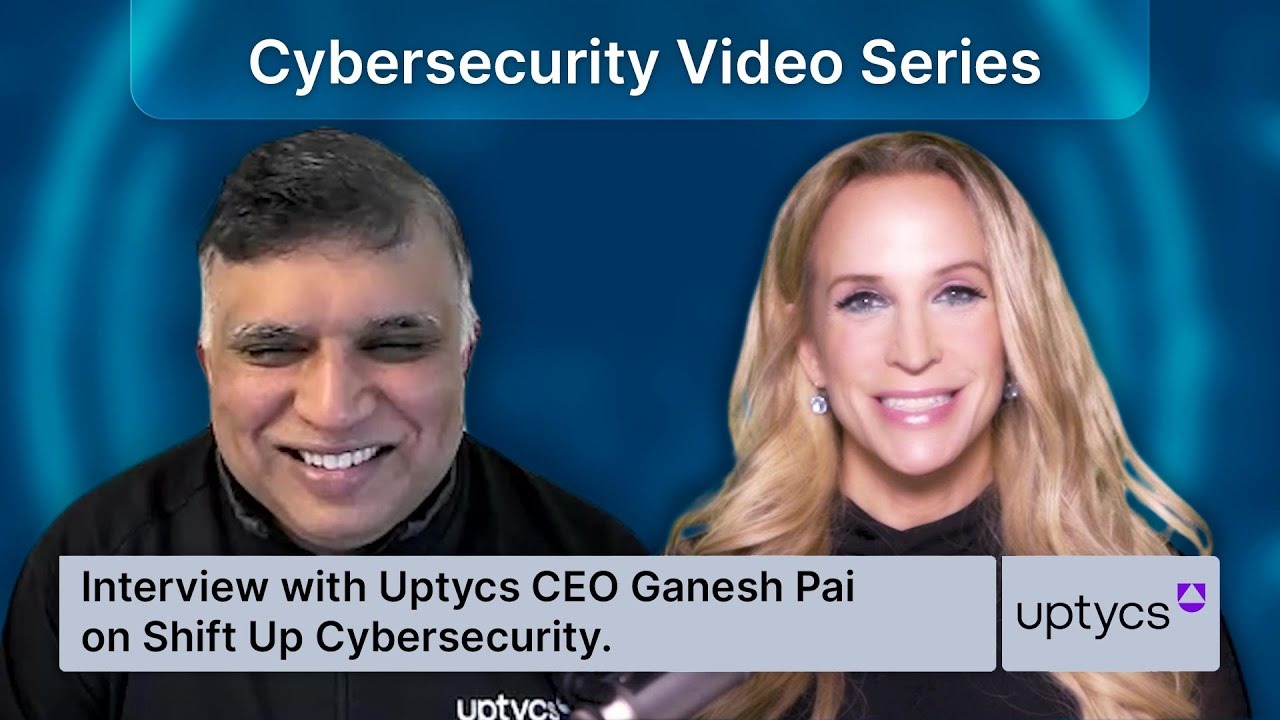
Pai has spent his career in that thicket. At Uptycs, the cybersecurity company he co-founded in 2016, his preferred tool is neither a grand metaphor nor a blinking map of digital danger. It is a query. Structure the telemetry, make it available at scale, and a security team can ask the system what happened. Better still, it can inspect why the answer deserves belief.
This sounds like database common sense, which is often the most radical sort. Enterprise security accumulated separate products for separate anxieties: vulnerability, compliance, endpoint detection, cloud posture, containers. Each arrived with another agent or console. Pai saw a data problem wearing a collection of expensive hats.
A career written below the interface
Pai studied electronics and communication engineering at Mangalore University, then earned a master's degree in computer science from Temple University. His professional life settled quickly into the machinery beneath everyday communication. At Sonus Networks, where he worked from 1999 into the middle of the next decade, he served in engineering and software architecture. He later described helping to architect and build a packet-based voice network for a major American wireless provider as one of his most satisfying achievements. Millions could use the result without knowing his name. Infrastructure considers anonymity a compliment.
A principal architect role at NetDevices followed. Then came Verivue, the content-delivery company Pai co-founded with Mike Hluchyj and others in 2006. It made technology for service providers moving video and other content across networks. Akamai acquired Verivue in 2012, and Pai became Akamai's chief architect for carrier products and strategy. By then his résumé had become a tour of scale: phone calls, network hardware, streaming content. The nouns changed. The engineering problem remained recognizable - how to make a distributed system perform predictably while the world insists on being untidy.
Engineering manager and architect at Sonus Networks, working in packet-based communications.
Principal architect at NetDevices, later acquired by Alcatel-Lucent.
Co-founder and vice president of systems architecture at Verivue, acquired by Akamai.
Chief architect for carrier products and strategy at Akamai Technologies.
Co-founder and CEO of Uptycs.
The route also supplied a useful scar. Asked in a 2020 interview to name his worst failure, Pai answered: “Hiding the fastest data storage in a video on demand pump.” The line is wonderfully compact. An engineering team can build something quick and clever, then package its virtue so thoroughly that the market cannot see it. The machine works. The meaning does not travel.
“I owe my career to an understanding of systems, network protocols, databases, and solving problems at scale.”Ganesh Pai, 2020
The friends inside the architecture
Uptycs began after Pai spent a year considering his next venture. The company reunited him with Uma Reddy and Mike Hluchyj, friends and partners across more than two decades. In describing his achievements, Pai has credited his wife first, then Reddy and Hluchyj. It is a revealing sequence. The mythology of the solitary founder makes for clean copy and poor engineering. Distributed systems, like companies, depend on relationships that keep working under load.
The founders' thesis was to create a common security analytics layer. Osquery, an open-source project originally developed at Facebook, provided part of the grammar: it exposes operating-system information as tables that can be queried with SQL. Processes, packages, users and configuration details become rows instead of a scavenger hunt. Uptycs built collection, storage and analysis around that idea, aiming to carry it across large fleets and, eventually, into cloud infrastructure.
That distinction matters at enterprise scale. A security team rarely suffers from a total absence of signals. It suffers from signals that arrive in incompatible shapes, at different speeds, with different names for the same machine. The analyst must spend valuable time deciding whether two alerts describe one incident or merely share a timestamp. Pai's proposed remedy borrows from the less glamorous virtues of data engineering: normalize early, preserve context and let a common model do the joining. The reward is not simply a tidier console. It is the chance to investigate without first negotiating among a cabinet full of tools.
In 2018, Uptycs emerged from stealth with a $10 million Series A. A $30 million Series B followed in 2020, then a $50 million Series C led by Norwest Venture Partners in May 2021. The last round brought disclosed funding to $93 million. Capital gave the company room to widen its original endpoint view into a platform spanning cloud workloads, containers, posture management and detection.
Pai's argument tracked a real change in the corporate perimeter. Data moved beyond office networks. Employee devices became mobile. Production workloads became elastic and scattered across cloud providers. Identity acquired the defensive importance once assigned to the firewall. A security product staring at one layer could produce a perfectly accurate fragment and still miss the event.
The question mark as management tool
Listen to Pai explain the product and he returns to questions. Which systems contain the vulnerable package? Is it actually running? Did a configuration change? Which user or process sits behind the alert? He has described good security as an observable program with measurable outcomes. This is less cinematic than promising to stop every attacker. It is also easier to test.
His taste in technology follows the same line. Pai has said that large-scale distributed systems excite him when they are directed toward measurable results. At Uptycs, SQL is valuable because it is both powerful and familiar. An analyst can combine facts rather than wait for a vendor to invent the appropriate dashboard. The query becomes a small act of independence.
This is also a practical response to the shortage of experienced security practitioners that Pai has identified as an industry constraint. Tools cannot manufacture seasoned judgment. They can stop wasting it. If an analyst can move from a question to the relevant evidence without assembling a temporary expedition across interfaces, scarce attention goes to interpretation and response. Pai's emphasis on measurable effectiveness follows naturally. A security product should demonstrate what it observed, what logic it applied and which action followed. Otherwise its impressive activity may amount to expensive weather.
There is wit around the edges of this precision. Asked what he would do in another life, Pai imagined being a system administrator by day, equipped with the latest computer and networking gear. At night he would operate a worldwide whiskey bar and invite instrumental and fusion bands to play. Even the fantasy has two shifts, a global footprint and demanding uptime. One suspects the bottle inventory would be impeccably queryable.
“By night, I'd be owning and operating a dedicated world-wide whiskey bar where I can invite global instrumental and fusion bands to perform.”Ganesh Pai, on an alternate life
When the answer starts talking
The arrival of generative AI has made Pai's old concern newly fashionable. Software can now answer an analyst in fluent prose. Fluency, however, can conceal the same defect as the video-on-demand pump: the useful thing is trapped in the wrong presentation. A confident paragraph without inspectable evidence may be more dangerous than a clumsy alert.
Uptycs launched Juno AI in late 2025 as a security analyst designed to construct and run queries over structured telemetry, explain findings in plain language and retain the underlying logic for review. Pai's pitch emphasizes verification. In March 2026, Uptycs and SAP announced a collaboration around agentic security operations. Pai framed the work as a way to combine human and machine capabilities while keeping transparency and control.
For a founder who once regretted hiding useful technology, the presentation is telling. Juno brings the query plan forward. The analyst is invited to inspect how the answer was assembled instead of admiring a sealed result. That approach does not remove uncertainty from security work. It gives uncertainty a paper trail. In a discipline where a false positive can consume hours and a false negative can consume a company, visible reasoning is less a philosophical preference than an operational courtesy.
The interface has changed from SQL prompts to conversation, yet the architecture of his thinking has barely moved. Collect evidence. Give it structure. Ask a precise question. Keep the reasoning visible. The sequence is old enough to feel almost unfashionable, which may be why it is useful now.
Founders are often credited with seeing around corners. Pai's more interesting habit is looking underneath them. He notices the database below the dashboard, the protocol below the call, the telemetry below the alert. Uptycs is a company built from that downward glance. Its wager is that the cloud, however sprawling, can still be called to account - one well-formed question at a time.