Fred Gibson used to be the person who documented the night out. While everyone else was busy having it, he was filming, saving, collecting. The clips lived on his phone and came back out the next morning, when a camera roll could make a small comedy of the previous evening. It is not the customary origin story for a dance artist. There is no sacred record shop, no mythic first rave, no thunderbolt over a pair of turntables. There is just a young Londoner who noticed that a day leaves crumbs.
He kept them. A friend’s message, a stranger’s phrase, a burst of street noise, a social-media clip whose emotional voltage exceeded its picture quality. Later he put those fragments beside soft piano and percussion, repeated a few words until they became a chorus, and called the project Actual Life. In lesser hands, the phone is a filing cabinet with a battery problem. In his, it became an instrument.
The twist is that Gibson already knew how to manufacture scale. Before the selfies on album covers and his own name above the door, he was a frighteningly effective producer for other people. His credits crossed from Roots Manuva, J Hus and Stefflon Don to Charli XCX, George Ezra, Stormzy and Ed Sheeran. In 2019, records he helped make spent fourteen weeks at the top of the UK singles chart. The following year, he became the youngest winner to that point of the BRIT Award for Producer of the Year.
An apprenticeship measured in cups of tea
Music had been the fixed point early on. At eight, Gibson made classical piano pieces on his aunt’s tape recorder. At Marlborough College, he sometimes escaped lessons for the music room. “I was fortunate enough to not even be slightly good at anything else,” he later joked, “so I had clarity of focus.” It is an elegant boast disguised as a confession.
At sixteen, a family friend invited him to an a cappella group held by a neighbour. The neighbour happened to be Brian Eno. Annie Lennox might be among the singers. Gibson made tea, cleared the song sheets and found moments to ask Eno about new synthesizers. Then he went home, stayed awake and made an absurd number of sketches - by his telling, sometimes 100 - before returning the next week and attempting to look casual.
The casual act did not fool everyone. After two years of informal mentorship, Eno asked the eighteen-year-old to help produce his two albums with Karl Hyde, Someday World and High Life, released in 2014. Professional work followed quickly. Fred learned to move between genres without treating them as gated communities. He disliked the old question about what “type” of music somebody liked, because the musicians around him had grown up listening to everything at once. His career began to sound the same way.
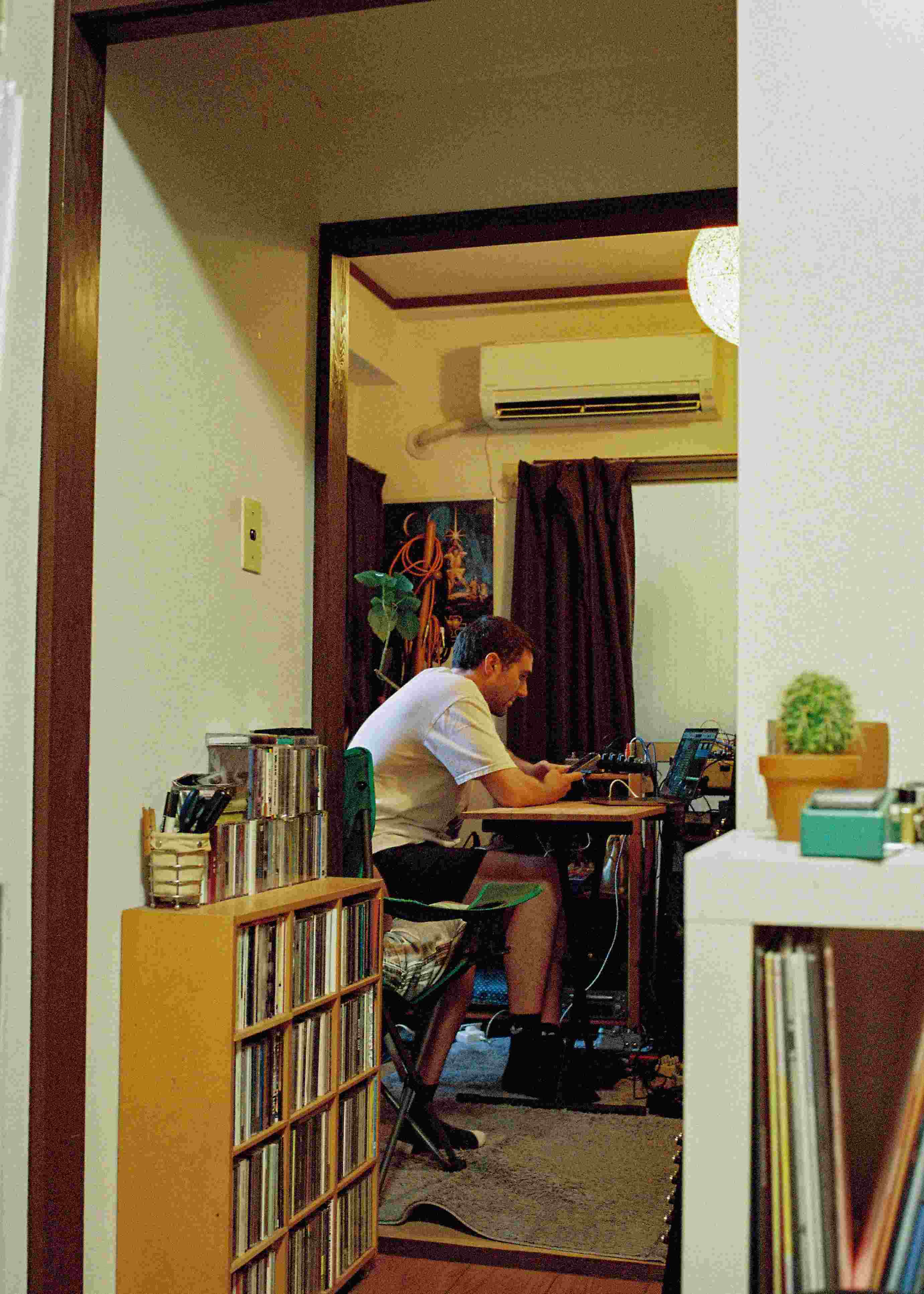
The hitmaker walks onto his own record
Success behind the scenes did not immediately solve what he should make for himself. Several artist projects failed to find the right lens. Eno finally intervened in Gibson’s preferred medium: a voice note. While cleaning his kitchen with music on shuffle, Eno kept stopping to identify an arresting song. Again and again it turned out to be an unreleased Gibson sketch. Enough, he told him. The work could not remain stranded on a laptop.
So the producer who could summon stadium-ready pop chose something conspicuously unvarnished. The first full Actual Life album, released in 2021, carried a date range in its title: April 14 to December 17, 2020. The dates marked when its raw material was gathered. The next two records did the same. Each became a ledger of moments rather than a set of songs pretending to have arrived from nowhere.
A construction worker named Carlos, whom Gibson met in Atlanta, appears as a source of bright encouragement. The Blessed Madonna speaks about everything dancing people had lost and might regain. Poets, friends and figures discovered online receive names in song titles. Gibson does not merely extract a useful syllable and hide the receipt. The sampled person often becomes a character. When he cannot find a voice that says precisely what he needs, his own hushed singing enters the frame.
The method matched its moment. Lockdown had compressed friendship into screens and speakers; here was music whose seams still bore that compression. Yet Gibson had started collecting before the world closed. He liked working while moving through London, riding trains or taking wandering Underground trips in search of what he called a “conveyor belt of humanity.” He once mentioned going all the way to Harrow and Wealdstone for a pointless flat white. The coffee may have disappointed. The commute did its job.
A diary large enough for strangers
The live show enlarged the notebook without making it impersonal. Fans sent videos from their cities. A videographer could interview people waiting outside, and their words or faces might be worked into that night’s visuals. Gibson described the goal as making the mood together. It sounds suspiciously gentle for a room full of sub-bass, but gentleness is part of the engineering.
The contrast appeared vividly in 2023. At NPR’s Tiny Desk, he moved among piano, marimba, vibraphone and loops, rebuilding seven songs at office scale. Elsewhere that year, he shared Madison Square Garden and the closing slot at Coachella with Skrillex and Four Tet. One version asked listeners to lean in. The other asked an enormous field to jump. Both were recognisably his because the centre was not volume. It was contact.
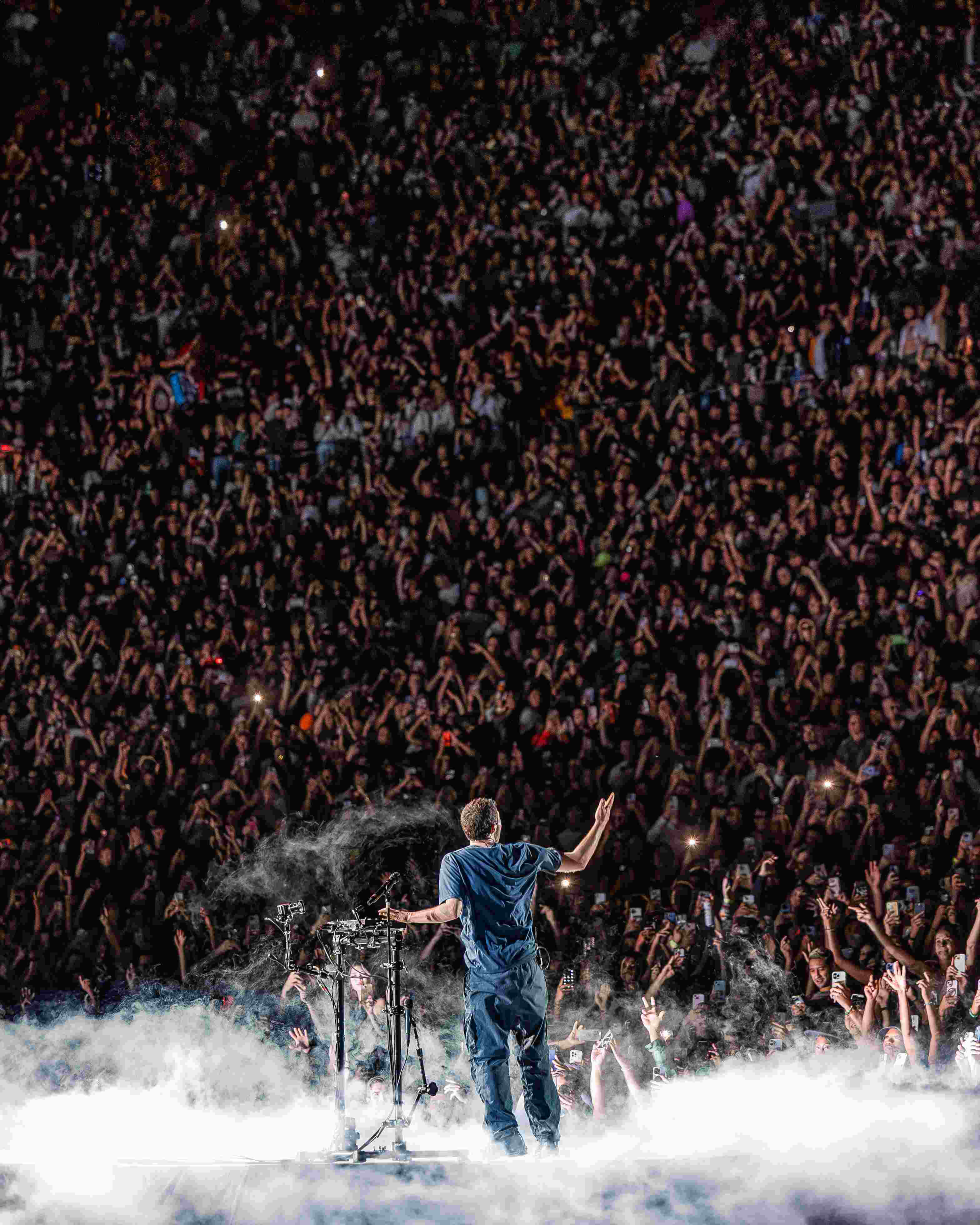
The prizes duly caught up. In 2024, Actual Life 3 won the Grammy for Best Dance/Electronic Music Album, while “Rumble,” made with Skrillex and Flowdan, won Best Dance/Electronic Recording. The tally now stands at two wins from nine nominations. Gibson has tended to meet such honours with less animation than he gives a new sound. When an interviewer raised his BRIT, he said he was not very fussed and carefully added that he did not want to diminish something meaningful to others. Awards were simply not why he worked.
The pleasure is still in the making
Later records widened the frame. Secret Life, made with Eno in 2023, turned toward ambient hush. The 2024 album ten days arranged ten remembered days with guests including Sampha, The Japanese House, Anderson .Paak, CHIKA, Four Tet and Skrillex. USB became an intentionally evolving container for club records, remixes and collaborations rather than a conventional album sealed on release day.
USB002 pushed that openness into weekly drops and location-led shows. Its closing London run at Alexandra Palace ended in February 2026 with Thomas Bangalter. Gibson later posted the official film and admitted he kept watching it, despite a usual rule against revisiting his own performances. In his account, what moved him was partly that so much of the music was not his. He could watch as a fan, proud of a human moment rather than grading his own work.
That response completes a neat circle. The documentarian finally appears inside the document and discovers that he wants to replay it. Yet the larger point is less tidy. Fred again.. has never stopped treating a finished thing as porous. Songs absorb voices. Shows absorb cities. Friends become titles. The celebrated producer distrusts endless plugin hunting and returns to a small set of tools, because the important decision is still emotional: does today’s playback make him feel something?
Most phones are full of material nobody will revisit. Most days seem to disappear without earning a title. Gibson’s work proposes a cheerful correction. Attention is not the prelude to making; attention is already a form of making. Save the sentence. Take the long train. Keep the awkward clip. Somewhere inside the disposable record of a Tuesday, a room of strangers may already be waiting to sing along.
There is wit in the artist name, too. Gibson has traced Fred again.. to a line in the 2002 live-action Scooby-Doo film, with Flowdan helping the phrase become his moniker. It is almost suspiciously apt. Again is what a loop requests, what a crowd shouts and what a memory asks of a recording. It also suits a worker who has spent his career returning: to a voice, to a sketch, to the pleasure of hearing yesterday become useful. The two trailing dots leave the thought open. For an artist whose albums keep admitting more life, a full stop would be rather rude.
Keep listening