The numbers were cheerful. A neobank had put its app in front of viewers on Samsung and LG smart TVs, and the campaign was receiving credit for more installs. Then the useful questions began. Why were the new users getting worse? Why were costs climbing while activation fell? And why did so much credit come from people who had supposedly seen an ad, rather than clicked one?
FeedMob, the mobile growth company running the campaign, said the trail led to attribution hijacking. In its June 2026 account, another media partner had used shared residential IP addresses to make fake installs appear connected to legitimate TV impressions. Ninety-five percent of attributed installs had come through the view-through route. The rising chart was the alarm.
In a minute
- FeedMob plans and buys app campaigns beyond the familiar search and social platforms.
- Its analytics and fraud tools judge the quality of an install and what a user does afterward.
- For app teams, the portable lesson is to test each new channel against downstream outcomes and a credible control.
The pivot was the point
FeedMob began in 2015, with co-founders Andrew Tan, Sarah Hawley and Ken Lu starting operations in New York and San Francisco in January 2016. Its own timeline records a September pivot toward transparent media buying and analytics. That is an unusually revealing line in a company history: the first version was not the final answer. By April 2017, FeedMob had released an anti-fraud suite. The progression makes sense. If a business promises growth in the less transparent reaches of mobile advertising, it soon needs a way to tell genuine customers from attractive arithmetic.
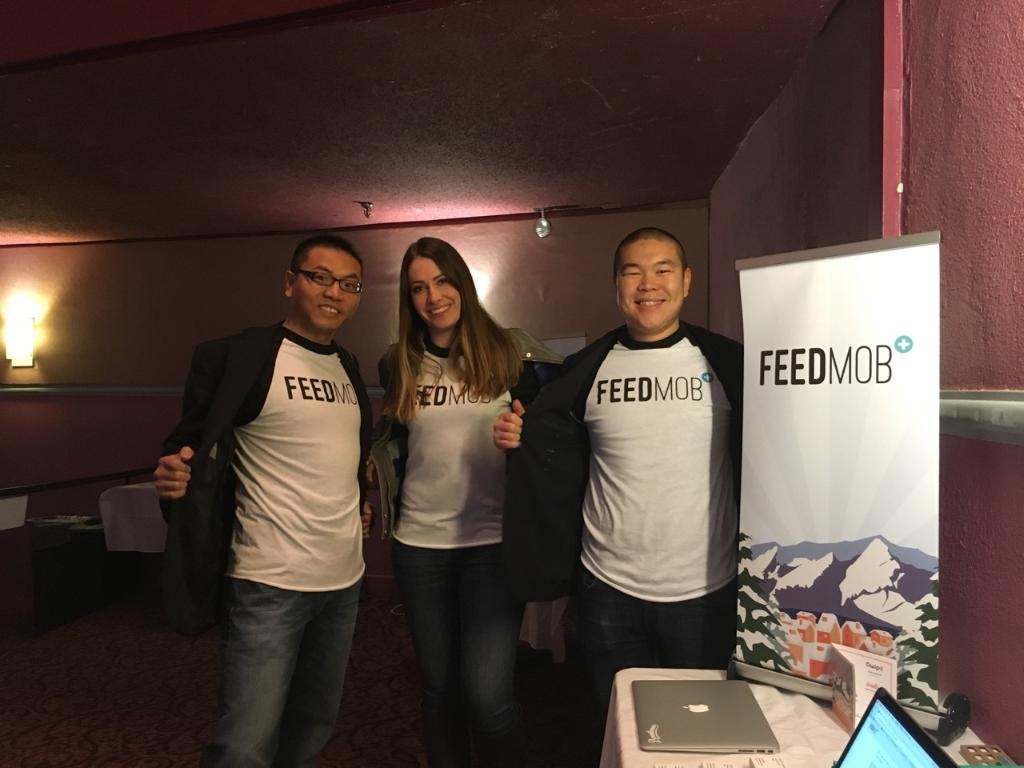
The company now describes itself as a senior user-acquisition team combined with proprietary campaign software. It studies an advertiser’s audience and target costs, proposes a media mix, handles partner discovery and onboarding, launches campaigns, and watches them in real time. Its website says it vets partners from more than 500 sources and typically tests two new ones each month. The emphasis is on places where an app might find customers after the obvious channels have become crowded: demand-side platforms, mobile websites, device-maker placements, rewards programs and connected TV.
That makes FeedMob both an agency and an adtech operator. A client buys expert labor, access to media relationships and analysis; the company’s own tools check attribution, retention, return on ad spend and engagement. Public materials describe some Samsung campaigns as priced by cost per install or cost per acquisition. Broader fee terms are not published. The practical comparison for a marketing chief is an in-house team working directly with many suppliers, or a performance agency that may have fewer proprietary checks.
“Everyone is going to max out of the search and social channels eventually.”Eric Willner, FeedMob director of growth, 2022
The $62 difference
A 2022 sports betting case gives the mechanics some weight. The client wanted scale and access to premium supply, but FeedMob says its starting media mix had fraud consuming nearly 24 percent of campaign spend at times. Conversion quality was poor too. The team tested five premium suppliers, including DSPs, then kept tuning bids and campaigns as more performance data arrived. By September, FeedMob reported acquisition cost falling from $139 to $77, while the fraud rate fell to 0.14 percent. The numbers are the company’s own case-study figures, not an independent audit, but the sequence is instructive: look at the existing mix, test alternatives, and let post-install quality decide what deserves more money.
The company’s analytics platform says it processes more than two million installs and 60 million post-install events each month. It examines click-to-install timing, IP patterns and behavior that may not look human. Those checks matter because a good-looking cost per acquisition can be built on the wrong attribution. A campaign can buy cheap installs that never activate. It can also claim credit for people who would have signed up anyway.
New shelves for the same app
Some of FeedMob’s distinctive inventory comes through named partners. In 2024 it announced preferred channel access with Samsung: Galaxy Store placements and promotions sent to users who had opted in on Samsung devices. For an ecommerce app whose customer had to register, make a real-world purchase and submit proof, FeedMob reported registration CPA falling by half and a later-stage acquisition cost declining 47 percent against target. The purchase requirement matters. A cheap registration would have flattered the campaign while missing the advertiser’s actual business.
A 2025 partnership with T-Mobile Advertising Solutions opened T-Mobile Tuesdays and other telecom inventory. FeedMob’s gaming case study reported 20 percent Day 7 retention and 31.15 percent Day 30 recoup from a T-Mobile Tuesdays promotion. These are not universal channel benchmarks. They are examples of the sort of audience a conventional app-media plan may overlook, with the necessary question attached: did the users stay and spend?
Connected TV extends that question into the living room. A smart TV does not share a phone’s advertising identifier, so measurement may connect a TV exposure and later phone install through a household IP address. That can be useful, and it can also be abused. In the neobank case, FeedMob says it compared install timing, device clusters and IP activity with the client’s measurement partner, blocked suspect ranges, filtered fraudulent devices and removed a fraudulent DSP. It reported the direct fraud rate falling to zero and the view-through share normalizing from 95 to 60 percent. Those are campaign-specific results, reported by FeedMob, and the company did not disclose the client’s name or a public independent audit.
The question worth copying
The strongest form of this work is not better attribution; it is a test of whether an ad caused anything at all. In July 2026, FeedMob described a Samsung connected-TV experiment for a large fintech advertiser. One matched audience saw the client’s ad. A control audience saw an unrelated public-service announcement. Enrollments in the app and on the web were compared, with the client’s data-science team reviewing the method and result. FeedMob reported a 110 percent lift in enrollments, far above the client’s 5 to 10 percent target. The figure is relative lift in that test, not a promise for another brand or campaign.
An app team can borrow the method without borrowing the whole company. Define an action that means something to the business: an activated bank account, a completed order, a retained player. Ask a new media partner how it is paid, how attribution works, and what access you will have to placement and event data. Run a limited test with a holdout where possible. Compare the result with the channel’s cost, fraud rate and downstream behavior. Stop if the measure is only the number easiest to inflate.
The conditions matter. Small budgets may not produce enough events for a useful causal test. Long purchase journeys delay feedback. Privacy restrictions can make cross-device measurement ambiguous. Rewarded traffic can be reasonable for one app and misleading for another. A partner with attractive reach but little placement transparency asks the advertiser to accept more uncertainty. FeedMob’s advantage, if it holds, lies in making those limits visible early enough to change the buy.
The company is not the only route to diversified media. An advertiser with its own buying, data-science and fraud teams can test partners directly. What FeedMob offers is an assembled practice: supplier relationships, campaign operators and first-party checks in one engagement. Its best case studies are therefore less about a secret ad placement than about a habit of suspicion. When a number improves, the first response is curiosity. It may be a customer. It may be a credit someone else borrowed.