In 1994, Tim Fisher and Scott Davenport took their family to Provincetown, Massachusetts. They met other LGBTQ+ families during their holiday and invited them to a barbecue at their rental. Nothing about the setting suggested a national institution. That was rather the point. Here were parents who could introduce themselves without first explaining why their household counted.
- Family Equality combines LGBTQ+ family resources, community gatherings and policy advocacy.
- Its signature event, Family Week, began with a vacation invitation.
- Families can find guides and providers, join events or contribute stories to advocacy.
The first formal Family Week followed in 1995, with nearly 45 families. By 2025, the gathering welcomed about 600. Family Equality, the nonprofit behind it, has made a practice of connecting an intimate need with a public problem. Parents need friends. They also need institutions that recognise them. A picnic can help with one; the other takes considerably more paperwork.
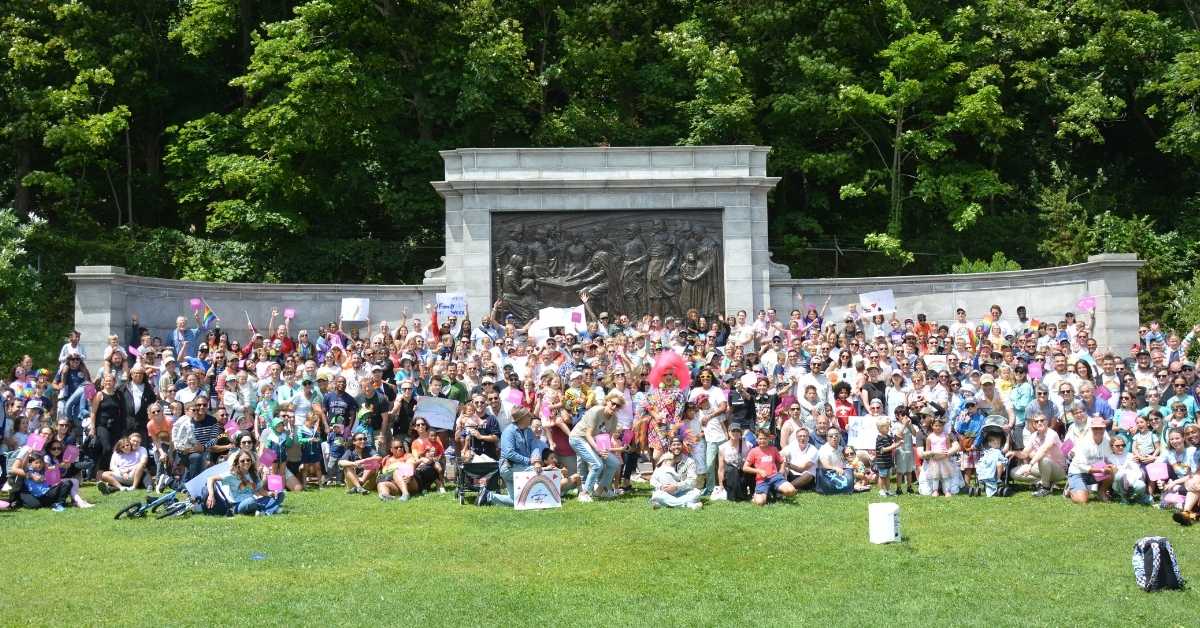
The first problem was being alone
The organization’s roots precede the barbecue. In the 1970s, gay fathers, many with children from marriages to women, were navigating discriminatory custody battles. Local groups offered potlucks, discussion and company. The failure was already visible: being a parent at home did not guarantee being treated as one outside it.
At the 1979 march in Washington, Alan Ross, Dave Berube and Al Luongo met and planned a national convening. A meeting at Ross’s Philadelphia home formally established the Gay Fathers Coalition in February 1980. Newsletters and telephone calls did the connecting. The network offered a way to find people who understood a situation that could otherwise feel singular.
Its membership changed, and its remit followed. As more out LGBTQ+ people built families through adoption, surrogacy and assisted reproduction, an organization initially centred on fathers broadened. Names changed too: Gay and Lesbian Parents Coalition International, Family Pride Coalition, Family Equality Council, then Family Equality. Each revision made room for people the earlier name could miss.
at the national march
at formal Family Week
at Family Week
When family life meets a form
Today, its useful unit of work is often a next step. A prospective parent can explore adoption or donor conception, compare family-building routes, and think through the financial implications. An existing parent can look for information about schools or securing legal parentage. The resource library is organised around situations families encounter, rather than an abstract invitation to care about equality.
The provider database makes that practical approach concrete. It covers fertility services, adoption and foster care agencies, lawyers, mental health professionals and more. Families can filter by provider type and location. Listed providers take a pledge to uphold the organization’s values. That gives a family a starting point for enquiries; it does not settle every question about suitability, fees or legal circumstances.
Family Equality occupies the space between specialist services and broad LGBTQ+ advocacy. It directs people to other organizations, too: COLAGE supports people with LGBTQ+ parents; Rainbow Families serves the Washington area; Our Family Coalition works particularly in the Bay Area. Its national family focus links those local and specialist needs to policy work on parentage, reproductive access and family protections.
The boundary matters. Family Equality says it cannot provide legal advice or family-building financial support. Resources and referrals help people navigate a system. They do not pay a fertility bill or replace advice about a particular family’s legal position.
The beach has a balance sheet
Belonging is not costless to organise. Family Equality’s 2024 audited statements report $3.54 million in operating revenue and support against $4.05 million in operating expenses. Net assets fell by about $510,000. Grants and contributions supplied roughly $1.70 million; fundraising events brought in $1.54 million before their associated costs.
That arithmetic describes a charity dependent on continued support. Donations, sponsorship and fundraising gatherings finance the public work; community events and smaller earned revenues also contribute. In that year, program services accounted for about $2.73 million in expenses. The organization must persuade supporters to fund both the visible gathering and the less photogenic labour that makes it possible.
Its homepage reports 13% more raised in 2025 than in 2024. That is an encouraging fundraising signal, not a complete account of the following year’s finances. For families using the services, the distinction is practical: dependable resources require an organization that can keep showing up.
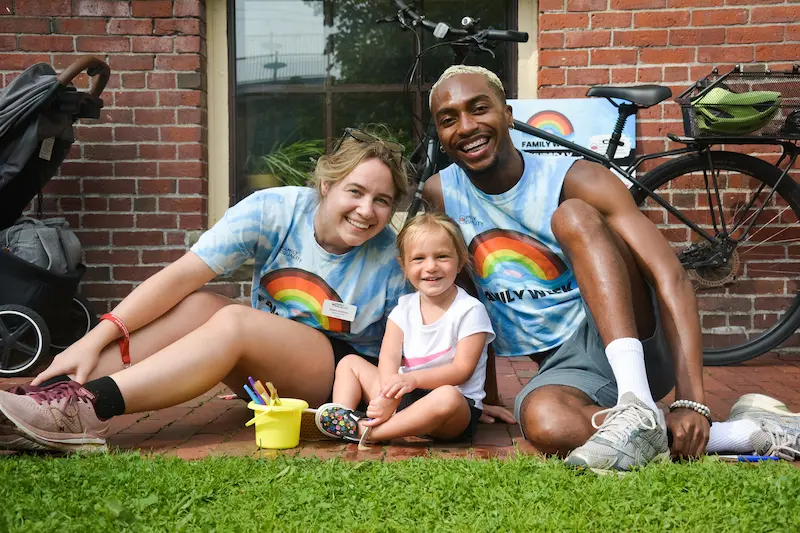
A story with somewhere to go
The other recurring ingredient is testimony. Family Equality’s marriage-equality work included Voices of Children briefs, bringing children’s experiences into proceedings where adults were debating the legitimacy of their homes. The organization’s history records recognition of those briefs in the Windsor and Obergefell proceedings. A family story had acquired a destination beyond the family itself.
In September 2026, Family Equality described a new brief with COLAGE and Rocky Mountain Equality in St. Mary v. Roy, concerning Colorado’s universal preschool program and nondiscrimination requirements. The brief gathered experiences from LGBTQ+ families and people raised by LGBTQ+ parents. Among them was Joseph, a veteran, husband and father who grew up with LGBTQ+ mothers.
“A program called ‘universal’ has to mean every family, including ones like mine - full of love.”
Joseph / quoted by Family Equality, September 2026
The technique makes institutional language answerable to a household. Who can enrol? Who has to find another school? It also demands restraint from a reader: submitting a brief is an action, not proof that the organization determines a court’s decision.
Copy the invitation
The transferable idea is modest enough to try. Create a recurring place where people with a shared problem can meet. Add useful information. Give their experience a route into the decisions affecting them. Family Equality also puts consent into the details: Family Week offers photo-shy badges and asks participants to seek permission before photographing or hugging others.
Participation needs more than a welcome. Travel takes money and time; a national directory may not solve a local shortage. Virtual peer spaces, launched in 2020, offer another way to connect. The original barbecue still explains the larger enterprise: people came for company, and found a reason to return.