The most interesting number at Fairfield Community Schools is a fraction: 129 out of 129. That is how the district describes its 2025 graduating class. Every student in the cohort earned a diploma. In a school system, where percentages can make individual children disappear into a decimal place, this one brings them back into view.
- Four public schools serve a local Indiana community.
- Career education crosses district lines through Pathways.
- New spaces address a practical shortage of room for student activities.
Fairfield’s result invites a question more useful than where it sits on a leaderboard: what kinds of opportunity surround a student before graduation day? The answer reaches from elementary classrooms to career training, music rehearsals and the ordinary business of finding somewhere for a club to meet.
A diploma has a neighborhood
Fairfield operates Benton, New Paris and Millersburg elementary schools, plus Fairfield Junior/Senior High School. Its community extends across the Goshen area into New Paris and Millersburg. Federal education data record 2,209 students and 129 classroom teacher equivalents in 2024-25. The scale matters: this is a local institution whose work follows children over years.
Its users are students and families. Its obligations also reach taxpayers, employers and neighbors who depend on educated young adults. Classroom instruction is the central service, with arts, athletics, student activities and family administration around it. A school district must make those pieces work together on an actual Tuesday.
The high school’s mission gives that work a destination: “Providing our students with opportunities to be college and career ready.” The handbook also emphasizes shared accountability and cooperation between school, home and community. Those principles suggest a broad definition of preparation, with room for academic study and practical skills.
Students in the cohort who graduated.
The percentage, with its edges intact
Fairfield’s graduation announcement describes an upward sequence: 93.5% in 2022, 94.2% in 2023, 99.2% in 2024 and 100% in 2025. These are successive classes, rather than the same students measured four times. The progression is encouraging; it does not identify which intervention made the difference.
Nor does a diploma percentage measure everything a family wants to know. Course availability, student support and the fit between a child and a school still deserve attention. The right response to a strong result is curiosity about daily practice, followed by questions specific to the student who will walk through the door.
The shortage was room
One of Fairfield’s documented constraints was physical. Weigand Construction’s account of the Student Activity Center project describes insufficient space for clubs, workshops and sports practices. That makes a building decision easier to understand. A timetable can offer many activities while the available rooms quietly limit participation.
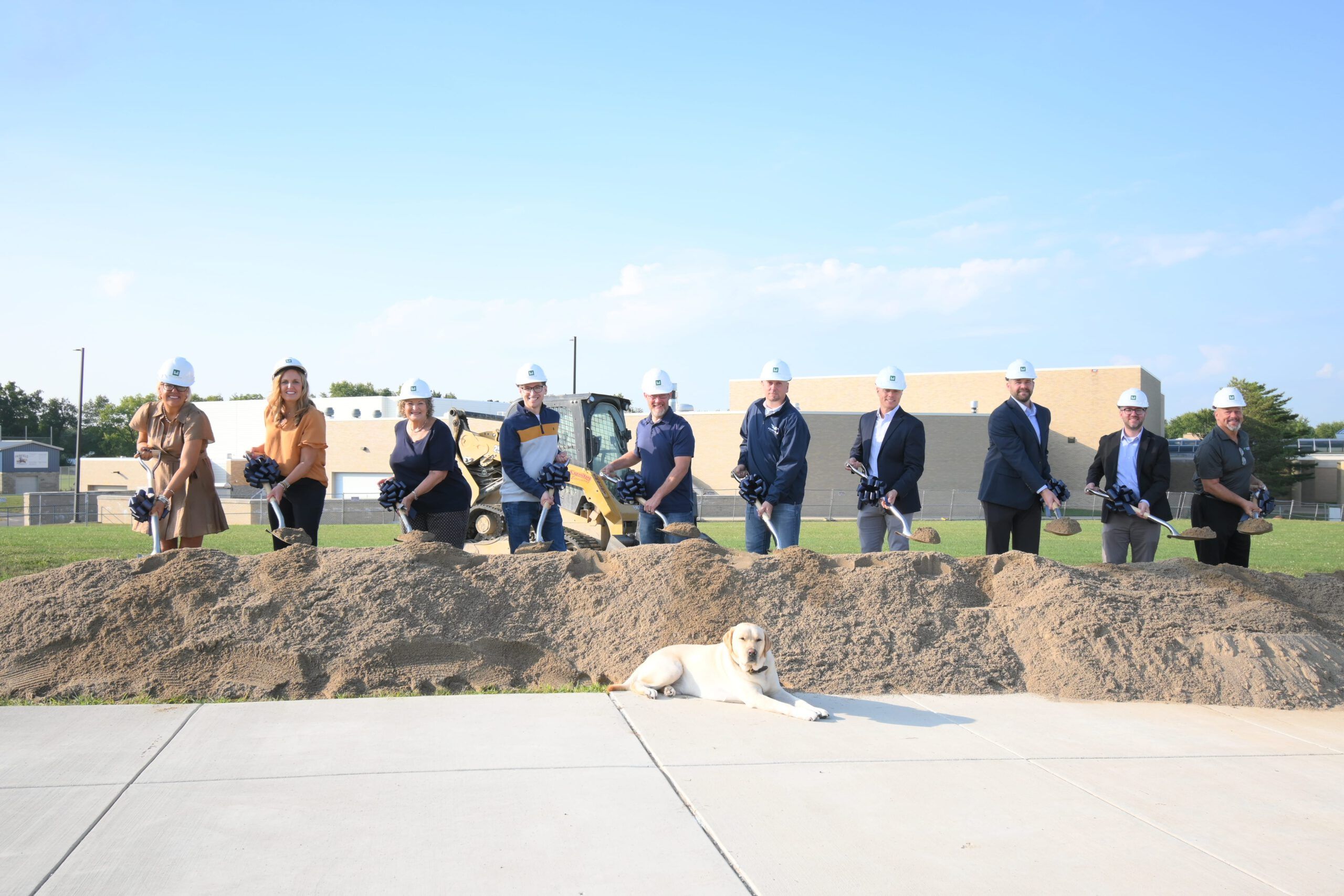
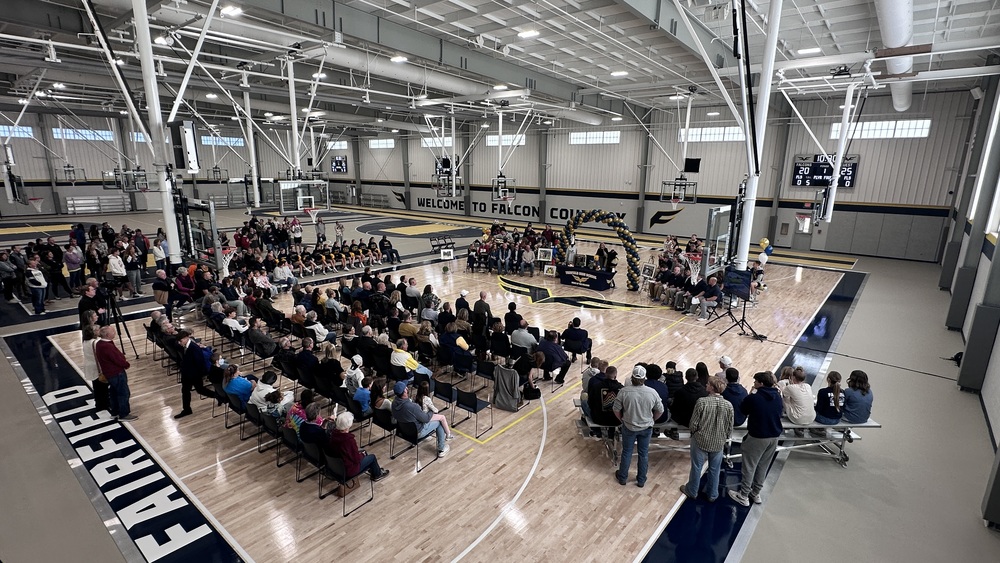
The planned center combined courts, a two-lane track, batting cages, meeting areas and 640 bleacher seats. The builder placed it within a $30 million package of campus renovations and improvements. That figure describes the wider package, so treating it as the price of a gym would give readers the wrong idea.
By April 2026, the district was reporting the Falcon Fieldhouse’s grand opening and an auditorium renovation during the school year. Together, those announcements show investment in different kinds of participation. The building story becomes interesting when you ask who gets to use the space, at what hour, for which activity.
A useful pause before the shovel
Construction also produced a small, revealing interruption. On January 31, 2024, Fairfield postponed a community presentation scheduled for the next day. Superintendent Carrie Cannon explained that discussions with the construction manager and architects had exposed scope items needing further development. The public explanation was about getting the project information ready.
“Fairfield Community Schools prioritizes transparency and accuracy first”Carrie Cannon · January 2024 construction update
There is a practical lesson here for any organization making promises about a building: settle enough of the scope to explain it. Fairfield changed the presentation timetable when that condition was unmet. The record supports that limited conclusion. It gives no reason to invent a failed building, a budget collapse or a dramatic reversal.
A separate April 2026 announcement described a $7 million, bond-funded outdoor project, including an access road, band practice facilities, track and turf football field. The announcement supplied completion targets. Those targets should be read as plans at publication, rather than evidence that every component was subsequently delivered on schedule.
Some opportunities travel across district lines
Fairfield’s career education offers another response to limited local scale. Through Pathways, Fairfield and Wawasee Community Schools cooperate on career and technical learning. The program describes hands-on training, dual-credit opportunities and certifications. Students begin the enrollment conversation with school counselors, connecting a future occupation to present course choices.
That approach has a tangible human example. In April 2026, Fairfield reported that Yasmin Yepez-Chavez won state SkillsUSA gold in esthetics. Its account also named cosmetology competitors from neighboring schools. Career preparation here has a subject, a competition and students doing recognizable work.
Other districts can study the arrangement: share access to specialized learning when a cooperative can support it. Replication depends on willing partners, suitable instructors, workable scheduling and courses students need. A shared program offers little help if students cannot fit it into their school day.
What a family can do next
Fairfield fits the market as a public education provider. Its financing and responsibilities follow that role. It uses software to operate schools: the July 2026 enrollment instructions direct returning families to Skyward and newcomers to guardian-account creation. The website, calendars and updates help families navigate the institution.
For a parent weighing Fairfield against nearby public districts, private schooling or home education, the next step is concrete. Check enrollment eligibility, ask about the child’s courses and support needs, and explore activities beyond the required timetable. Fairfield’s distinctive offer lies in that combination: local schools, shared career routes and space for more of school life.