Fahri Diner had already helped solve a problem measured in thousands of kilometres when he became preoccupied with a much shorter distance. The internet could cross oceans, traverse continents and arrive at a house, only to stumble on the journey to a device inside it. For an optical-networking engineer, this was an irritating place for civilisation to run out of competence. Diner called it the last two metres. Plume grew out of his determination to finish the trip.
There is something revealing about that choice of problem. Having founded Qtera and seen it acquired by Nortel, he could have confined himself to investing, collecting board appointments and enjoying California wine country. He did some of those things. He also returned to the awkward business of making connections work. His career keeps circling the space between a technical possibility and something people can actually use.
In June 2026, that circle brought him to Aliro as executive chairman. Quantum networking is the new assignment. The familiar question is how to take difficult engineering out of the realm of demonstrations and turn it into infrastructure. Along the way, Diner has become a wine-estate proprietor, an enthusiastic cyclist and a fundraiser for schools. His calendar appears to have rather loose ideas about retirement.
An island, an exchange year, a different future
Diner grew up in Cyprus, where his father was a chemical engineer with an olive-oil business. A school exchange took him to the Boston area, into a household whose father was an electrical engineer educated at MIT. At fifteen, he decided he wanted to become an engineer and build a life in America. A year away had changed the size of his world.
An academic scholarship brought him to Florida Institute of Technology. He studied electrical engineering, graduating in 1989. That detail matters more than the usual diploma entry in a founder’s biography: the scholarship made the American education possible. His subsequent work would carry him into optical components and telecommunications, through companies including Pirelli and Siemens, before he began building one of his own.
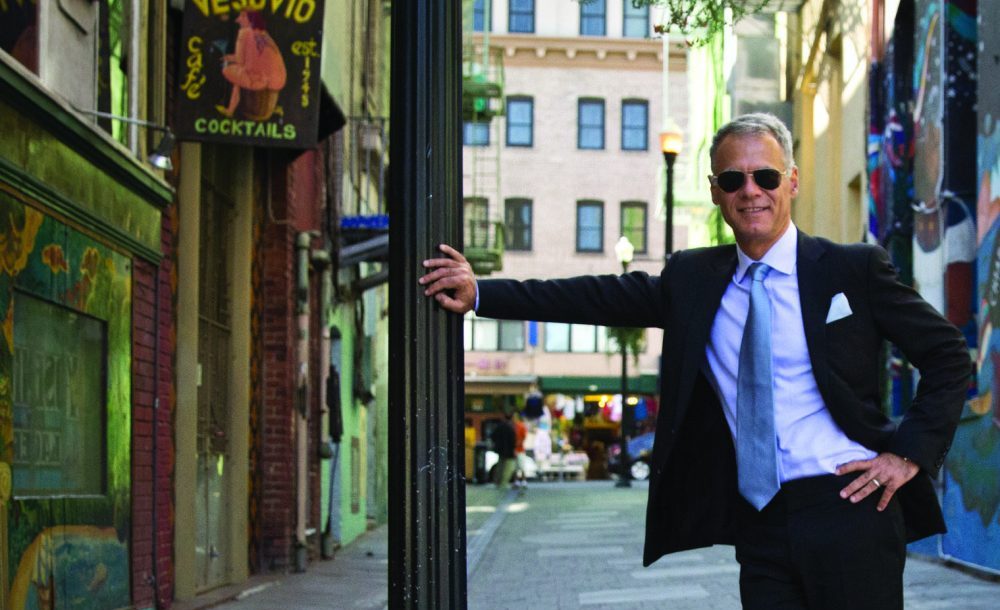
The light travelled farther. The deal followed.
Qtera was founded in 1998. Diner had worked on Siemens’ optical-networking business; now the startup pursued a way to move data over long distances while reducing the repeated regeneration of the signal. In a communications network, those interventions come with equipment, complexity and expense. Keeping the journey optical for longer could change the economics of the journey itself.
Qtera developed equipment capable of transmitting at 10 gigabits per second over distances of up to 3,200 kilometres with less signal regeneration. These were practical questions for an internet expanding rapidly: how much equipment did a carrier need, how far could a signal go, and what would the whole arrangement cost? Diner was working on the machinery behind the promise, where enthusiasm still has to obey physics.
Nortel completed its acquisition in January 2000, in a transaction valued at up to $3.25 billion in stock. The terms included additional shares tied to business objectives. Diner continued to lead Qtera as president within Nortel. The headline number was substantial, but it described a company transaction with conditions attached, rather than a cheque made out to its founder.
Electrical engineering degree, Florida Tech
Nortel completes its Qtera acquisition
Plume introduces Adaptive Wi-Fi
Executive chairman at Aliro
The network ended at the front door
Plume’s founding team included Diner, Adam Hotchkiss, Sri Nathan and Aman Singla. Their backgrounds covered networking, software and telecommunications. The company’s beginnings date to 2014; its home Wi-Fi offering arrived publicly in 2016. Diner was returning to connectivity with a problem familiar to anyone who had walked into another room and watched a connection become a negotiation.
The early Plume Pods plugged into wall sockets. Their visible simplicity concealed a different arrangement behind the scenes: computing in the cloud would help coordinate the wireless network. The network could respond to changing loads and interference instead of relying entirely on the decisions and computing power of a single box in the house.
For the person trying to use it, the engineering question had a pleasingly ordinary translation. Could several people watch television, play games, browse and make calls without the household convening an emergency meeting beside the router? Diner’s team treated the home as a changing environment. Devices arrived and departed. Demand moved between rooms. A setup that looked convincing at installation still had to cope with Tuesday evening.
The desire to make that arrangement understandable also produced an unexpected literary voice. In a 2017 post, Diner presented Plume as a developing romantic relationship. He asked users to switch off competing Wi-Fi networks, encouraged them to name their Pods and assured them that retaining an old network name was acceptable. Technical support had acquired a jealous streak.
“It’s ok to call us by the name of your ex”
Fahri Diner, explaining Wi-Fi setup in 2017
It was a joke with a useful instruction inside it. Reusing a network name and password could save people the chore of reconnecting their devices individually. Diner had spent years around complex systems, yet the explanation met the customer at the level of inconvenience. Nobody should need to become an enthusiastic network administrator merely to watch a programme.
Give the providers a reason to care
Plume’s larger opportunity lay with communications service providers. Diner argued that selling a broadband connection left them vulnerable to becoming interchangeable suppliers. He wanted them to sell personalised experiences, with managed Wi-Fi as a foundation for additional services. Parental controls, access management and network security gave that argument concrete substance.
OpenSync helped make the idea portable. Developed at Plume and deployed on its Pods, the framework was renamed and open-sourced in 2018 under a BSD licence. It supplied a layer between networking hardware and services managed from the cloud. A provider could develop and upgrade services across compatible equipment through standardised interfaces, reducing dependence on a single hardware arrangement.
There was a commercial logic to the openness. The household needed working connectivity; the provider needed a way to keep improving the service. Replacing equipment every time a new feature arrived would make that relationship cumbersome. A common software layer offered a way to separate some of the service decisions from the particular box already sitting in someone’s home.
By October 2021, Plume reported more than 35 million homes and small businesses on its platform and over 1.2 billion managed devices. A $300 million investment led by SoftBank Vision Fund 2 put its valuation at $2.6 billion. Those figures measure different things: deployment, devices and a financing valuation. Together they show how far the undertaking had travelled from its original household irritation.
Diner also occupied the investor’s side of the table as a managing director at Sigma Partners. His board experience included companies working in displays, semiconductors and engine technology. That is a fairly coherent collection for someone attracted to markets where difficult engineering creates the opening. The subjects vary; the requirement to make the underlying technology behave keeps returning.
The olive trees were there before the exit
Skipstone, in California’s Alexander Valley, supplies another thread through Diner’s life. He founded the estate in 2001. The connection to agriculture reaches back to Cyprus and the family’s olive-oil business. The estate’s olive groves and Mediterranean light recall the landscape of his childhood. After a career crossing borders, there was something recognisable waiting in Sonoma County.
Fahri and Constance Diner are its proprietors. Constance’s background includes marketing, brand building and events for Cartier, Rolex and Formula 1. Their undertaking brings together his experience building businesses and her attention to presentation. Wine also introduces a collaborator with little interest in anyone’s preferred schedule: the land.
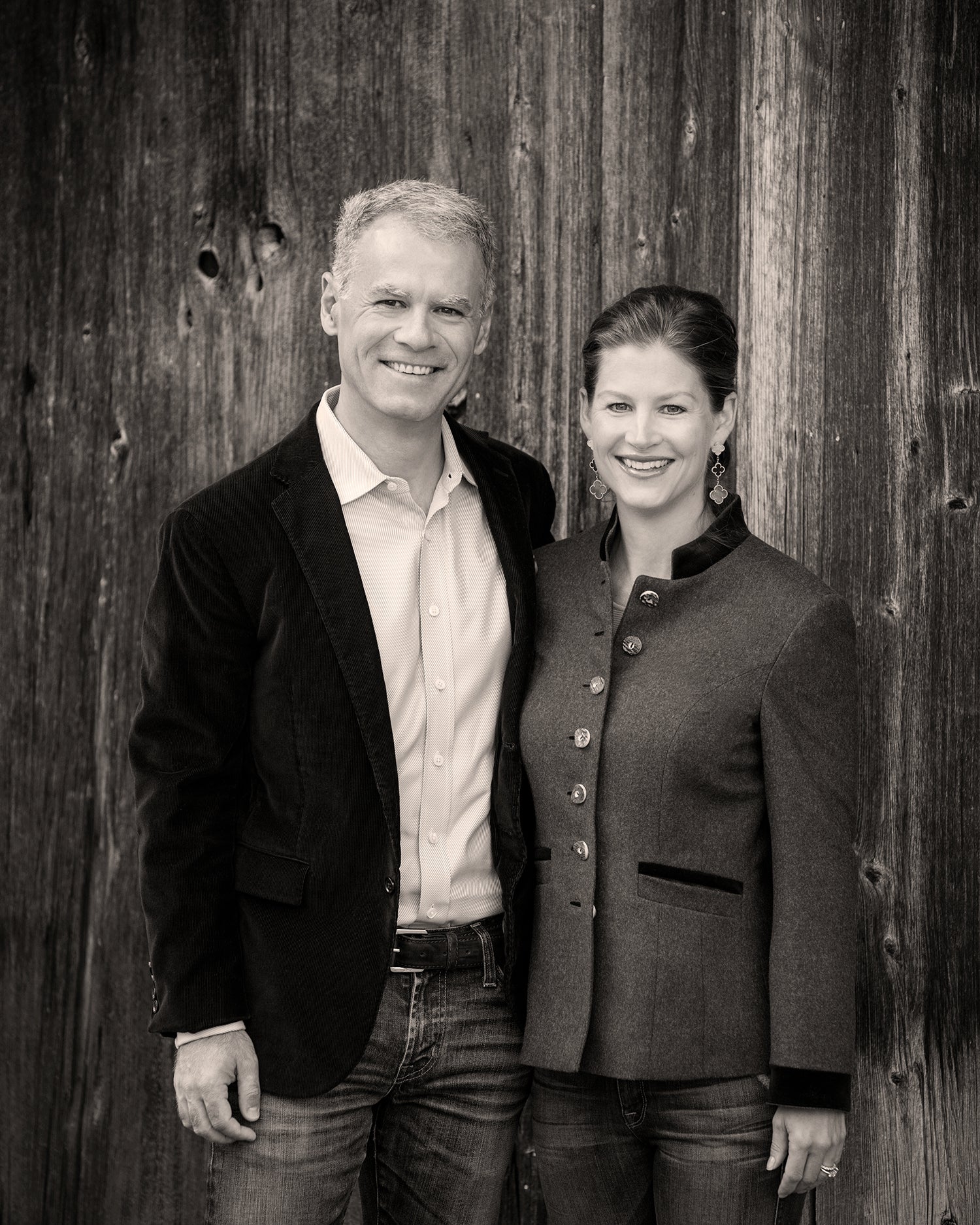
The current estate team includes winemaker Laura Jones and consulting winemaker Philippe Melka, whose relationship with Skipstone began in 2006. The names matter because the vineyard is a collective undertaking. Diner’s role as proprietor gives direction; people with specific knowledge of farming and production carry the work through the seasons.
One small detail makes the estate particularly personal. Skipstone produces an olive oil called Melina’s Harvest from seven acres of Manzanillo trees and donates all revenue from its sales to local volunteer firefighters. The product connects the landscape of his upbringing to the community around his California estate. It also makes a bottle of olive oil do more than sit handsomely beside the stove.
A school at the far end of the ride
The bicycle gives Diner a different way to cover distance. PlumeStrong’s cycling challenge began in 2021 and brought colleagues and supporters together to raise money. Plume’s ties to Slovenia helped connect the initiative with Tadej Pogačar, who became its ambassador. Diner’s description of the partnership was refreshingly free of elaborate destiny: they had been lucky.
In September 2024, the challenge went from Zurich to Venice over five stages: 824 kilometres and more than 15,200 metres of climbing. The route included the Stelvio, Pordoi and Zoncolan. Diner rode the first stage with Pogačar. A fundraiser can be agreeable company; an Alpine pass retains its own views about how agreeable the afternoon should be.
The cause that year, through Street Child, was the development of fifteen rural secondary schools in Sierra Leone. Earlier fundraising had supported education in places including Moldova and Ukraine, and school rebuilding in earthquake-affected Turkey. Secondary education was a deliberate choice: helping children begin school leaves another question waiting when elementary education ends.
That concern gives the ride a destination beyond Venice. The distance and climbing make a memorable challenge; the school gives the effort somewhere to land. In 2024, a separate PlumeStrong philanthropic dinner also supported the Ron Brown Scholar Program’s venture lab for Black founders. Diner’s fundraising connected education with the chance to build something afterwards.
Back to photons, with a new assignment
Diner’s tenure as Plume CEO ended in November 2024. Daniel Herscovici became CEO in April 2025, following Hotchkiss’s period as interim leader. In December 2025, Sagemcom announced that Diner would join its supervisory board. By June 2026, Aliro had appointed him executive chairman, putting optical-networking experience back at the centre of his work.
Aliro develops software to plan, manage and operate quantum networks. Diner has described his ambition there as helping quantum technology make the kind of transition Qtera pursued in photonics: towards practical operation. His own account of joining the company was characteristically playful. The subject involved entanglement and network control; the announcement arrived with an upside-down smile.
He once advised Florida Tech students to have unreasonable expectations and draw strength from their convictions. His career suggests how much work those expectations can entail. Light needs to travel farther. Wi-Fi needs to reach the room where somebody actually wants to use it. A child needs a school beyond the first one. Diner keeps returning to the next stretch of the journey.