In October 2019, the release notes for Radius Direct recorded a small problem with large consequences: some users could not join a session. The app belonged to the technology side of eNOVA, a medical communications business assembled that year. There is an entire company story inside that unglamorous fix. Before an expert can explain the science, before a physician can ask a question, somebody has to get into the room.
- eNOVA combines medical communications, speaker-program operations and engagement software.
- Its Radius Direct platform connects planning with live, virtual and digital delivery.
- Now an IQVIA business, it serves life sciences teams and the healthcare audiences they need to reach.
The company’s premise is that these activities belong together. A scientific presentation, a speaker invitation and a virtual meeting may look like separate purchases. For the person organizing the program, they are consecutive parts of one job. eNOVA sells expertise across those parts, with technology intended to connect them. That makes its story useful to anyone whose carefully prepared message has ever been defeated by the arrangements for delivering it.
Two companies, one unfinished job
The two halves arrived with different histories. Tracy Doyle and Angela Fiordilino founded Phoenix in 2002, building a medical communications and speakers-bureau business. Al Mahafzah and Bob Muratore founded Telesto Digital in 2016, concentrating on digital platforms. Telesto brought Radius Direct. Phoenix brought scientific content and program execution. Their merger was publicly announced in 2019.
The division of responsibilities was unusually explicit. The founding managing partners covered strategy, execution, technology and performance. Read those titles together and a picture emerges: what should be communicated, how the program should run, what should support it and how the engagement should be assessed. The organizational chart was also an outline of the customer’s problem.
A conceptual map of eNOVA’s four service disciplines.
Its buyers are life sciences companies seeking help with medical and commercial communications. The audiences include healthcare professionals, expert speakers, patients and caregivers. Those roles matter. A physician attending an educational session has a different task from a representative arranging it. A useful engagement system has to accommodate both without pretending they are the same customer.
The invitation is part of the product
Radius Direct makes the proposition tangible. Its mobile app lets speakers review invitations, accept them, inspect upcoming engagements, participate in virtual sessions and close out their work. Healthcare professionals can register, receive and accept invitations, attend and complete their own closeout. The sequence sounds ordinary. That is precisely its appeal: the product follows a recognizable piece of work.
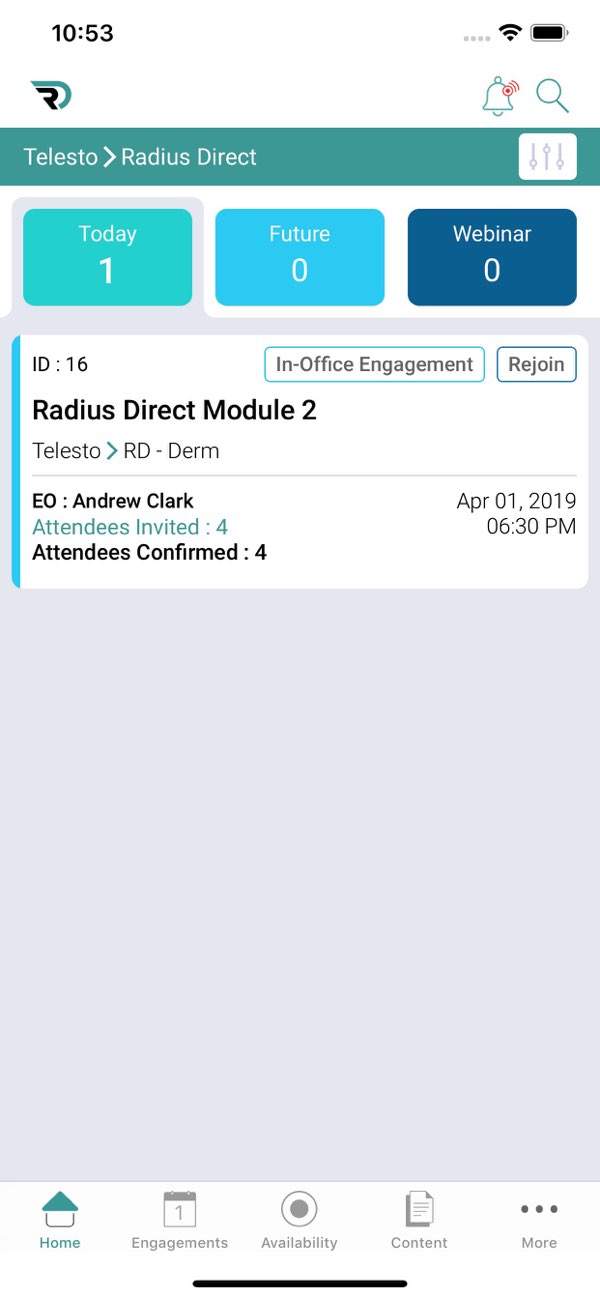
For the buying team, this suggests a better demonstration than a tour of buttons. Follow one program from its invitation through its conclusion. Who accepts? Where does the speaker find the material? What happens when the session ends? The value of joining those steps can be judged more clearly when the demonstration follows the organizer’s day.
The companion app is listed as free to download. That price describes access to the mobile application; it should not be used as a budget for a managed speaker program or an enterprise deployment. For a buyer, the sensible unit of comparison is the scope of work: the content, the people running the program and the platform configuration required.
A meeting link has limits
In March 2021, Doyle published an article through Informa Connect about the future of speakers bureaus. It described the rapid move to virtual programs during 2020 and questioned the assumption that this would be temporary. The experience of running those programs had made a longer-term operating question unavoidable.
The accompanying whitepaper argued for coordinated planning and delivery. It also offered a useful diagnosis: connection problems could be mistaken for platform problems. Its practical advice included testing the speaker’s setup in advance. This was eNOVA’s account of industry experience, rather than an independent comparison proving its software superior.
Before an expert can explain the science, somebody has to get into the room.A lesson from the product’s release history
There is a pleasing echo in the app history. An April 2020 update added a network-strength check before joining. The earlier joining fix and the later check do not establish a grand turnaround. They show the kind of friction a communications product must confront. A team can prepare excellent content and still need to troubleshoot the connection.
The software still needs the science
eNOVA’s service menu extends beyond event administration. It includes key opinion leader engagement, advisory boards, scientific and promotional content, speaker training and patient ambassador programs. Its digital-content work lists iPads, virtual reality and augmented reality. Those formats are delivery choices; the underlying assignment remains making clinical material useful to a particular audience.
Current IQVIA recruitment material places ENOVA within IQVIA Health Communications Group. A Medical Director listing calls for senior scientific leadership across client accounts alongside practical involvement in delivery. That combination is revealing. Even in a company selling engagement technology, scientific judgment remains a job for people with substantial training and experience.
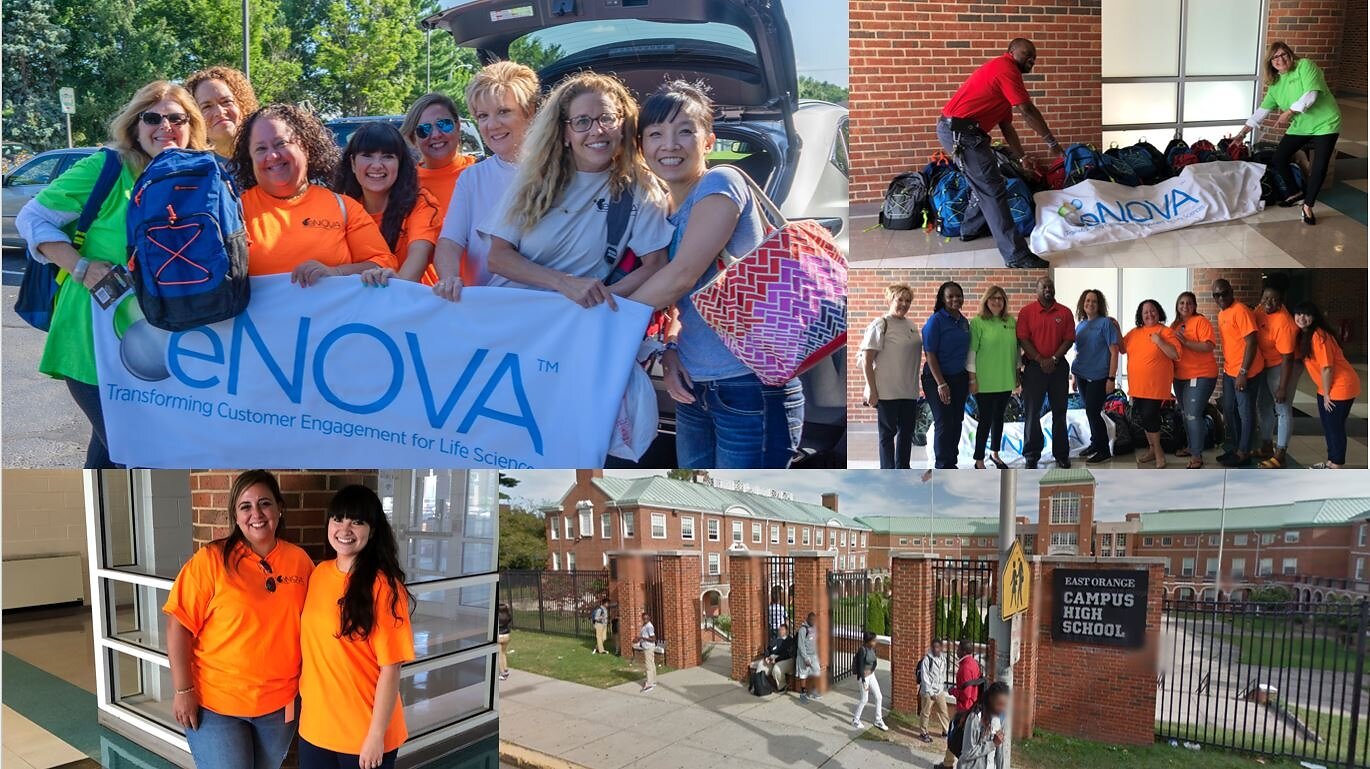
The company’s stated culture emphasizes curiosity, communication and service. One concrete example came in August 2019: its Culture Action Team organized an initiative that delivered 48 backpacks with school supplies to East Orange Campus High School. Muratore explained the effort simply: “Our company values align to helping others succeed.”
Start with the whole journey
eNOVA occupies the intersection of a specialist communications agency, a speaker-program operator and a software provider. Its difference is the combination. The alternative may be several vendors working together, or a simpler meeting setup when the task is small. The right choice depends on how much coordination the program actually needs.
The idea a reader can borrow is straightforward: examine the handoffs before buying another tool. Good content needs a route to its audience. Software needs an operating process. People need to know what happens next. eNOVA’s story makes the invitation, the connection check and the closeout worth examining as carefully as the presentation itself.