Procurement is where futuristic language goes to fill in a form. A supplier changes a price. A demand plan slips. An approval waits in an inbox owned by someone on holiday. Somewhere between the factory and the finance team, a human opens a spreadsheet and repairs reality by hand. Emre Isik has chosen this unromantic territory for his company, SpaceFlow Technologies. It is an instructive choice. The young founder has spent years thinking about intelligence; now he wants to know whether it can finish a purchase order.
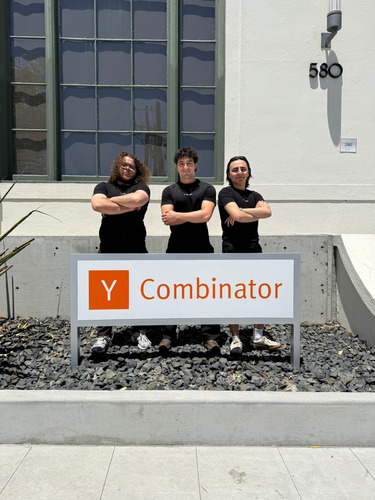
Isik is a computer engineer by training and an operator by recent necessity. He studied at the University of Cambridge, worked on computational linguistics there under professor Anna Korhonen, and developed system-identification algorithms for motor control through UCLA's Institute for Pure and Applied Mathematics. In 2026 he left Cambridge's master's track, moved to San Francisco and took SpaceFlow into Y Combinator's Summer batch. The company calls itself an AI-native procurement service for businesses that make, move and serve physical goods.
The phrase sounds polished. The work beneath it is gloriously untidy. SpaceFlow maps interviews, operating procedures, approval rules and configurations into workflows that can execute across a customer's existing systems. Its agents help with demand planning, sourcing, quotes, contracts, purchase orders, exceptions and reconciliation. The old ERP stays put. This is less like replacing the plumbing than teaching a careful new housemate where every valve is - and requiring a note whenever one gets turned.
A taste for the measurable
Long before he met an enterprise resource planning system, Isik was interested in what a machine could do with unfamiliar problems. At 15, he trained with Turkey's international informatics olympiad reserve team. In 2022, while affiliated with Bishop of Llandaff High School in Cardiff, he co-authored a paper with Ali Eren Aytekin and Halil Vurus on abstraction and reasoning without large amounts of data. Their algorithm faced grid-based tasks designed to test whether it could derive rules from a few examples. The reported accuracy was 0.834.
The number matters less than the appetite behind it. The paper did not ask a model to reproduce a pattern it had rehearsed endlessly. It asked whether the system could approach an unknown task, form a useful rule and be scored against a correct result. That sequence - unknown problem, executable reasoning, visible score - keeps reappearing in Isik's work.
At UCLA's IPAM, the subject was motor control rather than colored grids. Isik worked on transfer-function approximation and system identification, using algorithms to model how a system responds. At Cambridge, he also built around circuit design and intelligent agents. Different domains, same stern examiner: reality provides an output, and the model has to answer for its own.
This helps explain why SpaceFlow emphasizes audit trails, approval queues and per-action autonomy limits. An eloquent procurement agent is of limited use if it invents a supplier term or confidently orders the wrong quantity. In the physical economy, the error does not remain trapped in a chat window. It becomes an empty production line, excess inventory or a margin quietly surrendered.
The first order
SpaceFlow's path began with a practical ambush. Aytekin, Isik's longtime collaborator and fellow author on the reasoning paper, found his way into an invite-only AI showcase in Istanbul. He emerged with a procurement problem from the chief executive of a UK medical manufacturer. The team shipped a solution in two weeks. That encounter gave the founders something more useful than a sweeping market report: a live workflow, a customer with consequences and a clock.
SpaceFlow was founded in 2025. Isik, Aytekin and Ruolin Lu appeared among that year's recipients of a Sterling Road Cambridge University Grant. The team later evolved, with Hakan Enes Aksu joining Isik and Aytekin as the active founding group presented by Y Combinator. By the time the company entered YC, its focus had sharpened from broad enterprise orchestration toward procurement for the physical economy.
The public claims are substantial for a four-person company. SpaceFlow says $400 million in annual supplier spend runs through its service with no customer system migrations. It reports multiple six-figure contracts, a threefold increase in RFQ speed, a 42 percent fall in off-contract spending for one customer and $120,000 in annual savings for another. These are company-reported results, but they reveal Isik's preferred unit of storytelling. He talks in spend managed, orders prepared, hires avoided and savings realized. The nouns have receipts.
Company-reported figures published in August 2026. Customer identities were not disclosed.
The ledger is the benchmark
There is a useful contradiction in Isik's pitch. He has described SpaceFlow as potentially “the last piece of enterprise software a company will ever buy,” a sentence with the appetite of a founder newly arrived in San Francisco. Yet the product strategy is conservative in the older, better sense of the word. Do not rip out the ERP. Do not give an agent unlimited discretion. Keep approvals near consequential actions. Preserve an immutable record. Let finance inspect the saving.
SpaceFlow argues that coding improved rapidly because code can be checked. It either runs or it does not; tests pass or fail; a change can be reviewed against the files it touched. Enterprise work is usually hazier. Its rules sit partly in software, partly in documents and largely inside experienced employees. SpaceFlow's process-mapping engine tries to make those rules executable. Each completed action can then become an evaluation grounded in the company's own numbers.
Why procurement needs a visible score
That framework is more interesting than the usual argument about whether an agent can imitate an employee. Imitation invites theatre. Accountability invites design. What is the boundary of an action? Which evidence proves completion? Who approves the unusual case? What happens when a supplier sends a quote in a format nobody expected? The stubborn exceptions become training material and, eventually, institutional memory.
Cambridge, community and a little chaos
Isik's public life before YC was not confined to a lab. He served as president of Cambridge University Entrepreneurs, helped organize builder programs and hackathons, and spoke at a Cambridgeshire trade event about AI, logistics and supply chains. He thanked advisers for occasionally pulling the team out of “existential startup dread spirals,” a phrase that brings welcome oxygen to the solemn founder biography. The work may concern operational rigor; the operator appears to retain a sense of the ridiculous.
He also competed in a Cambridge AI Safety Hub and engineering society hackathon. Isik and teammates Henrik Halasz and Bill Leoutsakos built probes that attempted to detect potentially misaligned intent from a language model's internal activations before it generated text. The team won its track after a weekend that, according to Leoutsakos, involved about four hours of sleep each. Even here, the fascination was anticipatory control: can one inspect a system before its behavior becomes an incident?
In San Francisco, the chaos became more literal. Isik wrote that SpaceFlow's team had spent $45,000 on model tokens in a week while running multiple coding agents. Two agents rewrote the same file. One repaired a bug that somebody had deliberately restored. Git became the office gossip, arriving after the collision. So the team built Co-Vibe, a coordination layer that asks agents to declare the work and files they will touch. Isik said they used Co-Vibe to build Co-Vibe, which is either elegant recursion or the beginning of a modest technology farce.
The anecdote is revealing. Many founders would hide the mess and unveil the dashboard. Isik described the mess first: duplicated work, mysterious reversions, nobody quite sure which agent was doing what. The resulting product focused on coordination, collision warnings and reusable playbooks. The complaint became the specification.
A founder following the exceptions
Isik's biography is still short enough to resist mythology. There is no need to pretend the path was inevitable. A school-age reasoning project did not contain a secret blueprint for procurement automation. A motor-control model is not a purchase order. Leading a university entrepreneurship group does not guarantee a company survives its first market. The connections become useful only because he keeps choosing environments that return a verdict.
At SpaceFlow, that verdict arrives in the operation. Did supplier spend move under management? Did the quote cycle shrink? Was the negotiated saving visible in the ledger? Could the employee inspect why the agent acted? This is a less romantic conception of intelligence than the talking machine. It is also closer to the daily bargain companies make with software: take this annoying task, follow our peculiar rules and leave the books in order.
The ambition remains large. SpaceFlow says it wants to replace legacy service providers across the physical economy and grow output faster than headcount. Isik has spoken of connecting Cambridge innovation to the wider world and building ventures that matter. Those aspirations will meet procurement's ancient defense mechanisms: customized systems, cautious buyers, incomplete data and exceptions piled upon exceptions.
Good. They are exactly the test he appears to want. A benchmark made of colored grids could declare one answer correct. The enterprise version is noisier, slower and attached to an invoice. If SpaceFlow's agents can earn trust there, the achievement will not be that AI learned to sound like an operator. It will be that the operator finally got to stop repairing the spreadsheet.