Before the startup funds, the investment committees and the international offices, there were the four species used during Sukkot. Eli Gross recalled hearing that they were expensive in London and deciding to bring them from Israel. He went from synagogue to synagogue. A difference in price became a business opportunity; a religious calendar supplied the deadline. It was a small transaction with the outline of a much larger career inside it.
Gross would later build businesses around other crossings: Israeli inventions into American markets, Orthodox investors into technology, property owners into software. He founded Besadno in 2011. The name condensed an expression of divine assistance and hoped-for success. For a business concerned with capital, it was an unusually candid acknowledgment that the person running it did not consider himself the sole author of the outcome.
That combination made Gross a recognizable figure in a particular corner of investing. He could speak about patents and religious observance in the same conversation. His public identity also extended to storytelling: books, broadcasts and accounts of business encounters interpreted through providence. Today, the portrait includes another set of documents. Two Besadno companies entered insolvency proceedings in 2024. In July 2026, Israel’s Supreme Court upheld a judgment requiring Gross personally to repay an investor approximately NIS 5.9 million.
A bridge with a Sabbath timetable
Gross’s professional map stretches across Israel, the United States and Europe. His LinkedIn profile places him in Brooklyn and identifies him as Besadno’s founder and chairman. A Bseed company biography describes more than three decades of entrepreneurial and investment experience and lists a master’s degree in mathematics from the Hebrew University of Jerusalem. The qualification sits neatly beside the career, though his public stories tend to begin with people rather than equations.
The audience for Besadno mattered as much as the geography. Gross sought investment from the Haredi, or ultra-Orthodox Jewish, community. In 2019, when BuiltUp Ventures was being established to invest in early-stage real estate technology, he said much of its fundraising would come from that community in Brooklyn. He made religious observance part of the proposition: portfolio companies were expected to match investors’ beliefs, including observing the Sabbath.
This gave him a specific job as an intermediary. An investor might understand property and still have little familiarity with software procurement, digital building management or startup financing. A founder might understand the technology and still need introductions overseas. Gross’s business brought those groups into contact, with religious requirements woven into the selection process. The attraction was partly access and partly familiarity: new kinds of companies presented through a framework the intended investors already understood.
“We will not invest in companies that do not observe the Shabbat.”
Eli Gross · 2019
The backpack that opened a door
One early company was unusually easy to explain. SkySaver developed equipment for descending from a tall building in an emergency. Startup Nation Central’s company record identifies Gross as its founder and chairman and dates its founding to March 2011. The product gave his interest in inventions a physical shape: a backpack, a harness, a route down. There was no need to begin the conversation with a diagram of an enterprise software stack.
SkySaver also brought people into his orbit. Oded Eliashiv, an entrepreneur developing a crowdfunding platform, encountered Besadno through its involvement with the company. Gross invited him to join and help restructure the group while pursuing that platform. Eliashiv opened a Tel Aviv office and became involved with B-Seed. An encounter around one invention widened into a working relationship across several investment businesses.
By 2021, that collaboration had produced InvestiNation, an online investment platform within the Besadno group. Eliashiv was its chief executive; Gross was founder and chairman. At launch, the platform offered investments starting at $15,000 in six companies. Its stated purpose was to make participation in Israeli startups more accessible and to carry part of the investment process online.
Gross described an active role beyond supplying funds. The team would help portfolio companies develop market-entry plans and business resources. For an Israeli startup seeking customers in the United States, that was a practical promise. A cheque could buy time; an introduction could put the product in front of someone able to buy it. Gross’s network was part of what the businesses were selling.
- SkySaverA product brings Gross and Eliashiv into contact
- B-Seed / BuiltUpInvestment businesses connect Israeli ventures with overseas markets
- InvestiNationAn online platform launches in 2021
Buildings, but with software inside
Property technology gave the group a field in which to apply that approach. The businesses associated with InvestiNation included MyTower, which provided online building management; StructShare, which worked on contractors’ purchasing and materials workflows; and Trusstor, which gathered information for construction operations. These were ideas aimed at the everyday machinery of property: who orders something, who knows it has arrived, who tells the residents what is happening.
BuiltUp Ventures pursued the same territory. Its work connected Israeli property and construction technology with overseas markets. In January 2021, the group’s international ambitions included the United Arab Emirates, following the Abraham Accords. Gross framed the possibility in terms of ethical values and business judgment working together. His religious vocabulary traveled with him; it was part of the explanation he offered for the enterprise.
The expansion also had a community-facing side. At a 2023 real estate event in Bnei Brak, Gross appeared alongside real estate director Zvi Landau, business-development executive Tomer Cohen and Israeli real estate manager David Bograd. Besadno announced a planned $50 million Deal Estate Fund, with an intended allocation of 80 percent to real estate and 20 percent to property technology. Those figures described the announced plan, rather than money independently established as raised.
The mix was revealing. Familiar property investments would sit beside companies trying to change how property worked. Gross was asking his audience to consider both the building and the systems operating within it. The bricks provided an understandable starting point. The software required a longer conversation.
A storyteller without much patience for formality
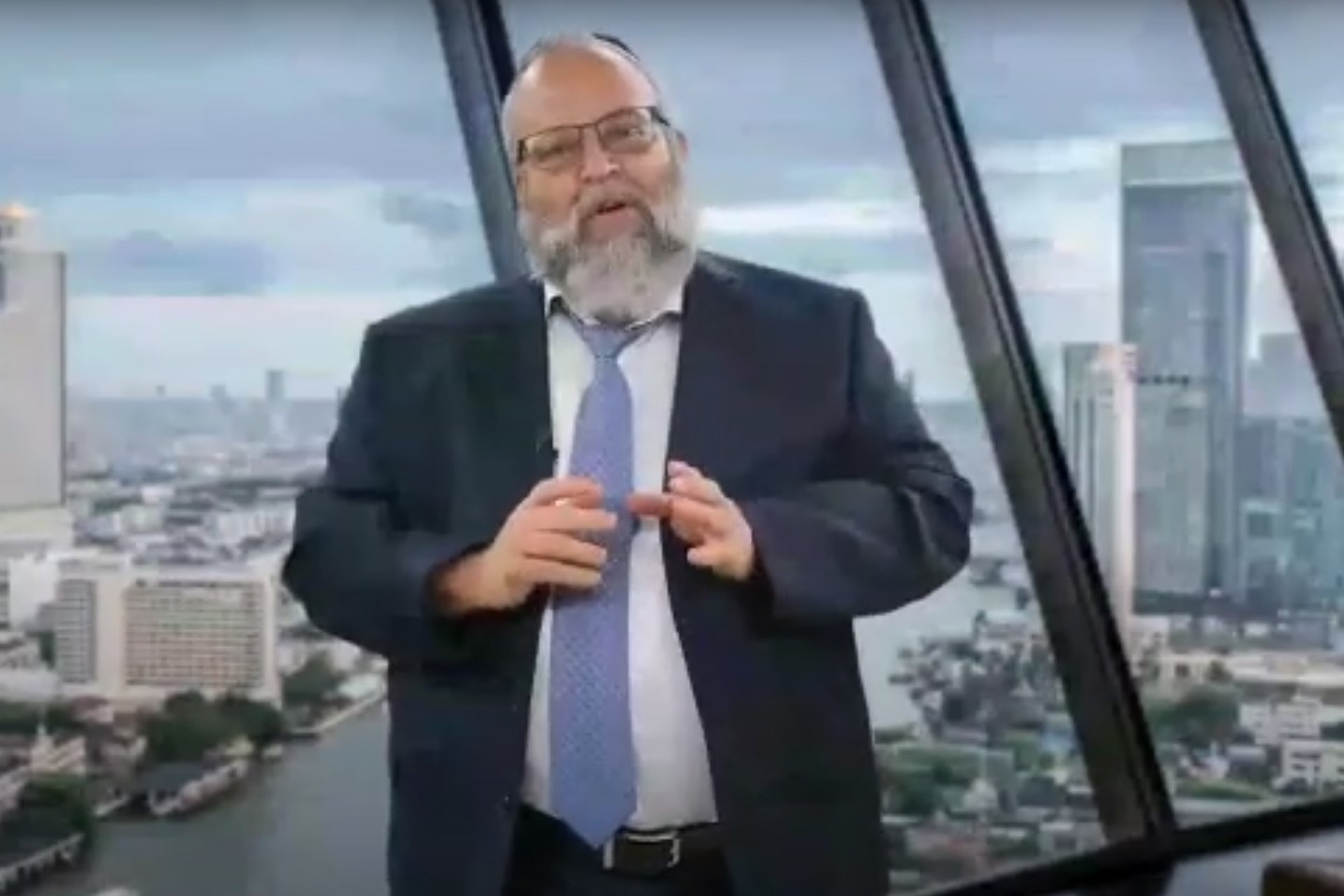
Gross’s television appearances offer a glimpse of how he conducted that conversation. On the Hebrew-language program Investing in You, host Akiva Ben David introduced him formally. Gross promptly asked to be called Eliezer, without the honorific. Later, he joked about interrupting the host and hoped that doing so would not get him thrown off the series. The exchange had the rhythm of someone comfortable moving a discussion along.
Asked how much investing depended on analysis and how much on intuition, he began with the committee. He said decisions involved experienced people from several disciplines and identified patent specialist Ilan Cohn as a member. Personal affinity could enter a close decision, he explained, but the process usually produced a clear view. In that account, his role belonged inside a group of decision-makers.
His book With Open Eyes takes a different form. Published in 2022, it collects 120 stories described as experiences from the preceding 50 years. Its subtitle, A Businessman’s Diary of Divine Providence, states the organizing idea. The advertised subjects include acquiring a very long limousine and dealing with 5,000 left shoes. A warehouse full of footwear becomes rather less useful when every shoe has the same political inclination.
The particulars of those adventures belong to Gross’s own account. Their presence in the book’s description tells us something narrower and still interesting: he presented his career as a collection of encounters worth retelling. The investor and the raconteur shared a public stage. A business trip could also become a lesson, and a peculiar consignment could supply the opening line.
The paperwork catches up
The legal history requires its own chronology. In 2017, an administrative enforcement settlement covered Gross and two companies, Besadno Ventures and Investments and Parnasa Management. They admitted violations concerning public securities offerings without a prospectus. The companies received a combined NIS 200,000 financial penalty, and Gross received a personal NIS 100,000 penalty, alongside conditional sanctions. This was an administrative proceeding.
The enforcement decision also recorded cooperation with the regulator. Both details matter: the admitted violations and the cooperation. Neither cancels the other. They describe a business whose methods for approaching investors had already come under scrutiny while its ambitions were still growing.
A separate investigation began in October 2022. By August 2024, trustees had been appointed in proceedings involving the two companies. The website reached through besadno.com now opens onto a trustees’ reporting site. Its notices name the companies as being in liquidation and list court decisions, reports and requests concerning assets. The vocabulary has changed from launching investments to administering what remains.
January 2026 coverage described prosecutors’ intention to bring a charge against Gross for offering securities without a prospectus, subject to a hearing. His lawyers disputed the characterization of the investigation and said the more serious suspicions had been closed. They stated that the proposed matter concerned the prospectus issue alone, without an allegation of actual deception of investors. These are their stated positions in the reported pre-indictment process, which must be kept separate from findings in civil litigation.
- 2017
- Administrative settlementAdmitted prospectus violations and financial penalties
- 2024
- Company insolvencyTrustees appointed for two Besadno companies
- 2026
- Civil appealPersonal repayment liability upheld in July
When a founder becomes personally accountable
The civil case brought by investor Edward Matkof reached a firmer outcome. On July 28, 2026, the Supreme Court dismissed Gross’s appeal against a judgment imposing personal liability for approximately NIS 5.9 million, plus the applicable interest, linkage and costs. The dispute arose from money invested through Gross under a 2017 agreement. Gross maintained that the debt had been repaid and challenged his personal liability.
The courts rejected those arguments. The appeal judgment emphasized that investment money had gone into his personal account and that he had not supplied information or documentation showing its transfer from that account to Besadno or its subsequent use. That supported a direct claim against him. The ruling concerned this investor’s money and the evidence in this case. It was a civil judgment, with consequences quite different from a proposed criminal charge.
Placed beside the earlier career, the case sharpens the central question of Gross’s story. His businesses offered investors the benefits of his relationships, judgment and familiarity with their values. The personal connection helped explain why someone might entrust money to the enterprise. The judgment shows a circumstance in which receiving that money personally also carried personal responsibility.
The founder who once carried religious goods between countries went on to connect communities, inventions and markets. He wrote down the encounters and gave them a providential interpretation. The later record adds committees, trustees and judges to that cast. His career now asks to be read with all of them in view: the businessman’s account of what he intended, the companies he helped assemble, and the obligations established when an investor asked for his money back.
Continue the conversation
- Eli Gross on LinkedIn ↗
- Besadno website / trustees’ updates ↗
- Watch: Gross, then and now (Hebrew) ↗
- Watch: Investing in You (Hebrew, with transcript) ↗
- With Open Eyes: book details ↗
- BuiltUp’s 2019 launch ↗
- Gross’s lawyers’ January 2026 response (Hebrew) ↗
- The July 2026 civil appeal report (Hebrew) ↗
- The 2017 administrative decision (Hebrew PDF) ↗