In 2017, Jason Warner, then the chief technology officer of GitHub, offered to acquire the company Eiso Kant was building. Kant says he turned him down. It is a pleasingly untidy beginning to a partnership: the deal that did not happen led to a friendship, a podcast, and eventually Poolside, the AI company they founded together six years later. There is no neat lesson about always saying no. There is, however, a useful reminder that a rejected offer can leave a conversation open.
Kant’s company was source{d}, an early attempt to apply machine learning to source code. The timing was awkward. In a later interview, he described that effort as too early. Today, AI tools that write and edit code sit in the daily workflow of many developers. The distance between those two moments explains much of Kant’s career: he kept returning to the same subject while the technology around it caught up.
He now co-leads Poolside as co-CEO and CTO. The company builds foundation models and agents for software engineering. Its ambitions reach far beyond the small team that once tried to teach machines what code meant, but the question underneath is recognizably the same. What can a computer learn from the programs people write, and from the simple fact that those programs either run or fail?
A student company, built for other students
Kant came to Spain from the Netherlands in 2009 to study at IE University. In an essay he wrote in 2015, he placed himself among people who had “never really known anything else” besides entrepreneurship. He had been programming since age 12. At IE, he met Jorge Schnura and Philip von Have, and the three started Tyba, a platform connecting young talent with startups. It was a practical idea born among students who could see the gap between ambitious graduates and small companies looking for people.
The numbers were already substantial by the time Kant wrote that essay. Tyba had a Madrid team of 30 people from more than a dozen nationalities, operated in 14 countries, and worked with more than 800 technology startups. This was the first clear expression of a pattern in his work: start with the people who make software, then ask what technology could do to make their work easier to find, understand or perform.
Tyba was acquired by the Danish career network Graduateland in 2016. By then the founders had already turned toward source{d}, a spin-off focused more closely on developers. The old business helped people find startup jobs. The new one looked directly at the code developers produced. It was a move from the résumé to the repository, from claims about ability to traces of actual work.
The machine learns to read
source{d} began in 2015, long before the present rush of coding agents. Kant has described it as a company working on AI that could write code, with early code-completion models among its projects. Its open-source work also made repositories easier to analyze. Even the name suggested a conviction: source code itself was a rich material, full of patterns that could be studied at scale.
That work put Kant in Warner’s path. The GitHub acquisition offer in 2017 did not produce a sale, yet the two stayed connected. In a World Economic Forum conversation, Kant described a friendship that grew from the encounter. They later co-hosted Developing Leadership, a podcast about engineering organizations and the decisions inside them. An AI founder and a former GitHub CTO discussing managers, hiring and team design may sound like a detour. In retrospect, it was an extended conversation about the human system into which any coding tool would have to fit.
“Personally, I’m a computer geek. I started programming when I was quite young.”Eiso Kant, speaking about his early work
Kant’s next company, Athenian, began in 2019. It used data to help engineering teams see how work moved through their organizations. The change in emphasis is revealing. At source{d}, code was a training ground for machine learning; at Athenian, the surrounding workflow became the object of study. Teams have review cycles, bottlenecks and competing priorities. A line of code rarely travels alone. These are mundane details until someone claims that an AI agent can help with real software development. Then they become the whole job.
There is something almost comically methodical about that progression. Most founders pivot because a market tells them to. Kant’s companies changed products and customers, but the developer remained in view. By the time he and Warner began Poolside in April 2023, they had spent years looking at both code and the organizations that make it.
An answer you can run
Poolside’s central technical bet rests on an unusually convenient feature of software: code can be executed. A model may generate an answer to a question and leave people arguing about whether it is good. A program can be compiled, tested and run. The result is not always a perfect verdict, but it supplies a stronger signal than a thumbs-up or a plausible sentence. Kant and Warner have argued that this feedback can train systems to improve through repeated attempts.
In October 2024, Poolside announced a $500 million Series B. Kant’s own comment on LinkedIn resisted the usual victory lap. The financing, he wrote, was “not success”; it gave the company resources to participate in work he regarded as consequential. The distinction matters because the money bought a chance to test a thesis at scale, not proof that the thesis had won.
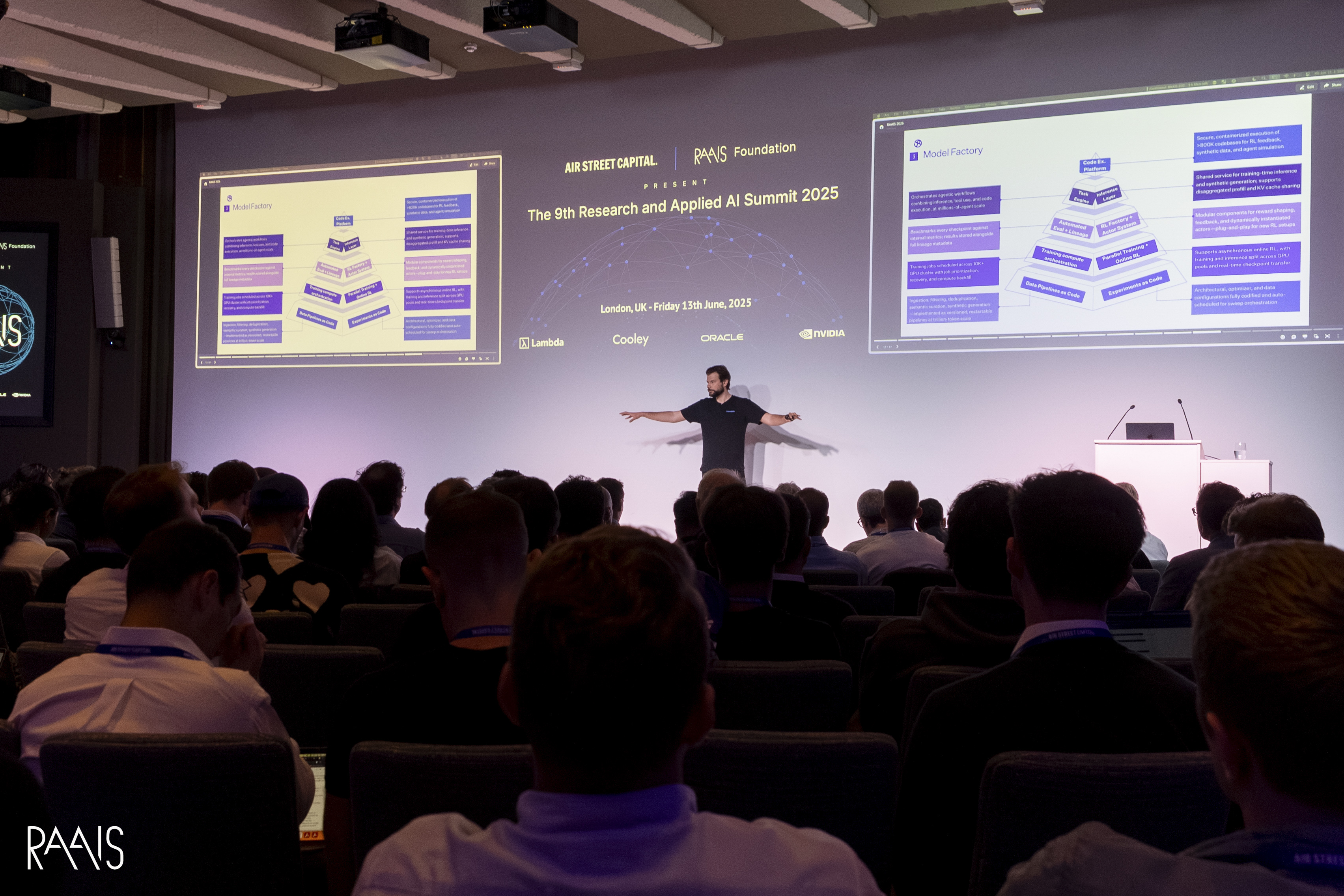
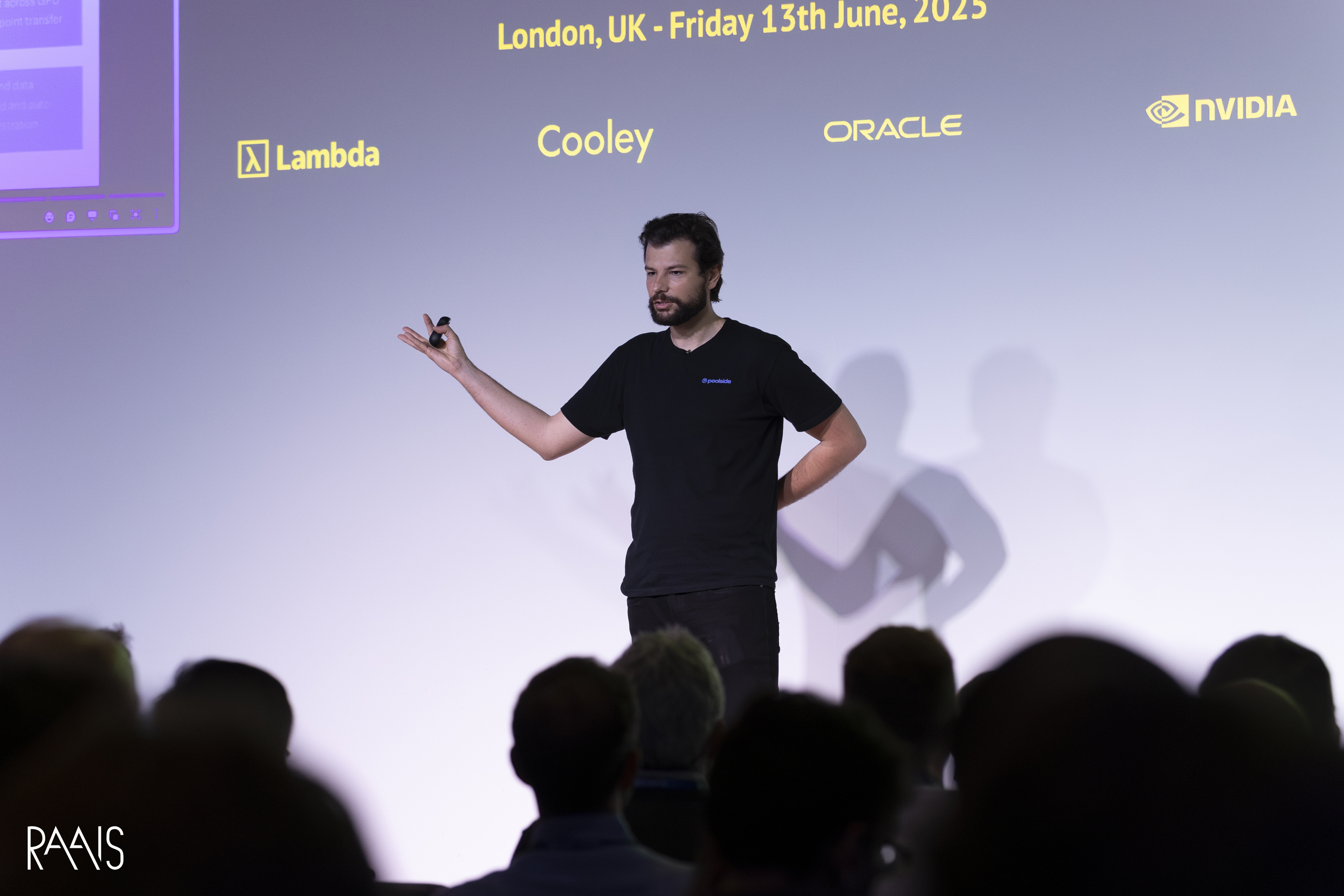
At the 2025 Research and Applied AI Summit in London, he gave that machinery a name: the Model Factory. On stage, he walked through a system linking data, training, evaluation, infrastructure and deployment. The phrase sounds industrial because the work is. A model lab needs to turn a research idea into a measurable experiment, then do it again without rebuilding the workshop each time. Kant’s emphasis was on the rate of learning, which depends as much on plumbing as on inspiration.
The presentation also made his role unusually visible. A founder who once helped students find startup jobs was now explaining the systems needed to train AI models across thousands of processors. The change in scale is dramatic; the habit of following the work itself is familiar. In his account, code remains a practical route toward broader machine capability because it gives a system problems it can try, inspect and try again.
The quiet contradiction
Kant’s public argument for AI that can write software has an interesting companion: he still wants children to learn to program. In a 2025 interview, he compared coding with history and mathematics as a way of developing one’s own intelligence. He said he writes far less code now because of his role, but that years of writing it shaped how he thinks. The point is easy to miss amid predictions about automated work. A person can expect a tool to become powerful and still value the craft it changes.
His own career makes that view less abstract. He began programming young, studied business, built companies, and kept shifting between the technical and organizational sides of software. He and Warner’s leadership podcast spent its time on decision-making and the people inside engineering teams. These were not side quests from the AI project. They were studies of what “helping developers” actually involves.
Poolside’s first public model releases arrived in April 2026. Kant and Warner announced Laguna M.1 and Laguna XS.2, along with early versions of a terminal coding agent and a cloud development environment. XS.2 was released with open weights under Apache 2.0. The company said its applied research organization numbered about 60 people. After years of building behind enterprise walls, this was an invitation for outside developers to try the work themselves and respond.
The company’s footprint has expanded, too. Kant became co-CEO in 2025 and president of Poolside Infrastructure Company in 2026, a role tied to large-scale compute and a West Texas data-center project. He joined Axon’s board in July 2026. Those positions show how the question about code now reaches into buildings, chips, governance and capital. The AI may be digital; the machinery that trains it has an address and a power bill.
Still a work in progress
Kant’s career invites a tidy summary, but tidy summaries conceal the useful parts. Tyba was a real recruitment company, not merely a preface. source{d} was early enough to encounter the limits of its moment. Athenian studied engineering work from another angle. The offer from Warner was declined. The podcast continued the conversation. Poolside grew from that accumulation, not from a single flash of insight.
The present claim is large: that software development can serve as a training ground for increasingly capable AI. Its outcome remains to be tested in products and in the work of people who use them. Kant’s more durable story is already visible. For over a decade, he has kept changing the question he asks about developers without leaving the subject. The most recent question - what happens when the software starts helping to make itself - may take the longest to answer.