The first RentRedi strategy meeting had no slide deck. It had a basketball. Ryan Barone was home in New York’s Capital Region, shooting with his father and worrying aloud about an apartment application that had gone wrong. He and his college friends had found a place in Manhattan, but the landlord wanted W-2s, pay stubs, a guarantor letter, and other paperwork. By the time they assembled it, the apartment belonged to somebody else.
Ed Barone knew the paperwork from the other side. He was his son’s guarantor. He also had the professional vocabulary to turn an annoyance into a business question: more than 30 years across marketing, finance, and real estate, plus a finance degree from Siena College. Father and son talked through whether the answer should live on a website or a phone, what it should store, and why a landlord might care. The ball kept bouncing. An early product brief took shape between shots.
The charming version ends there, with family chemistry and a clean origin myth. The useful version begins there. A son had felt the pain and could write the software. A father understood markets, money, and the suspicious little question every customer eventually asks: why should I change how I already do this?
A problem with two sides
RentRedi’s first form was narrower than the platform is today. It helped renters collect application documents in one place and send them quickly when a desirable apartment appeared. In a fast market, the difference between organized and almost organized can be the lease itself. Ed described the value plainly in 2017: the app could help a landlord get a better renter, while helping the renter arrive prepared.
If you don’t have all these documents together, you lose. I think it really helps both sides.Ed Barone, 2017
“Both sides” became the durable phrase. Property software is usually bought by an owner and lived with by a tenant. One person wants reliable payments, clean records, and fewer midnight puzzles. The other wants a simple application, a receipt, a functioning repair channel, and some dignity. A product that pleases only its buyer can still make everybody else miserable. Ed’s early description put the lease, not merely the landlord, at the center.
That perspective also widened the opportunity. The founders met landlords, agents, and tenants, then adjusted the software around what they heard. The renter-document utility gradually became an operating system for independent landlords: listings, screening, leases, payments, maintenance, communication, accounting, and performance data. The original headache remained visible inside the larger machine. Paperwork had not vanished; it had acquired better plumbing.
The CMO in the chat window
At a mature software company, marketing and customer support occupy different boxes on an organizational chart. At early RentRedi, Ed and Ryan answered every chat. Ryan has recalled building the iOS app, Android app, backend, and landlord interface while the two founders fielded setup questions and product ideas. A message might begin as confusion about an account and end as an argument for a feature.
This was customer research without the clipboard. It also made marketing less theatrical. Ed did not have to imagine the customer’s vocabulary because it was arriving on his screen. Landlords were not asking for “digital transformation.” They wanted rent collected, tenants screened, repairs tracked, and the spreadsheet circus brought under one roof. The founders could watch where language failed and where the product failed, often in the same conversation.
There is a particular humility in this arrangement. A title can suggest altitude; a support queue restores gravity. When a user cannot complete a task, the problem is not improved by a founder’s job title. Ed’s commercial role grew from that proximity. Marketing was not decoration applied after the software. It was translation between people who managed rentals and people who built tools.
Experience meets urgency
Ed’s route into startup life was not the standard young-founder dash. He graduated from Siena in 1984 and arrived at RentRedi after decades of work in marketing, finance, and real estate. Public professional records list him as the longtime chief executive of Souders Brand Marketing before and during RentRedi’s early years. The sequence matters. His son brought urgency, code, and firsthand renter frustration. Ed brought pattern recognition earned across several business cycles.
Their skills did not overlap neatly, which was the point. Ryan has described them as complementary: technology and customer support on his side, sales and marketing on his father’s. Family businesses often get sentimental treatment, as if shared DNA resolves strategy. Here, the more persuasive explanation is ordinary specialization. One founder could make the product work. The other could help make the company make sense.
Ed and Ryan Barone co-found RentRedi around a mobile tool for rental applications.
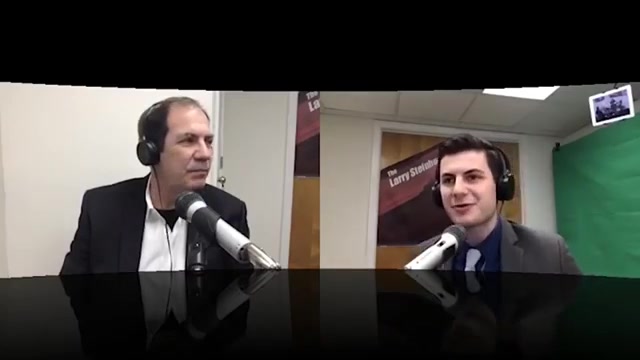
The pair appear together for RentRedi’s first live interview.
A $12 million Series A brings disclosed funding above $17 million.
RentRedi debuts on the Inc. 5000 at No. 180.
A third straight Inc. 5000 appearance arrives as the platform passes 300,000 landlords and tenants.
The financing came after years of iteration. In April 2022, RentRedi announced a $12 million Series A led by K1, with TIA Ventures, Tribeca Early Stage Partners, and RiverPark Ventures participating. The round brought the company’s announced funding above $17 million. By then, the original app had become a mobile-first platform used by more than 10,000 subscribed landlords managing over 85,000 properties.
Numbers, with their shoes on
Growth rankings are snapshots, not personality tests. Still, RentRedi’s sequence is revealing. The company entered the Inc. 5000 at No. 180 in 2024, ranked No. 666 in 2025, and No. 1,431 in 2026. A lower rank did not mean contraction. Inc. reported 247 percent three-year growth for the latest period. The treadmill simply kept accelerating around it.
The more tangible evolution is in the product. RentRedi now reports more than $35 billion in rental assets under management and over $6 billion in rent payments processed. In late 2025 it added native accounting with receipt capture, expense tracking, profit-and-loss statements, and tax summaries. In July 2026 it introduced a portfolio dashboard for net operating income, cash flow, cash-on-cash return, and estimated equity. A tool born from scattered documents now promises to organize the financial life of an entire rental portfolio. There is a pleasing symmetry to that.
Ed’s own public voice remains economical. He has written practical guidance for landlords, including a 2019 explanation of how New York rent-law changes affected receipts and late fees. His official biography is equally unornamented: strategy and heart at work, time with his children and travel with his wife away from it. The exclamation points belong mostly to the company accounts.
Keeping the lease human
RentRedi’s current language emphasizes financial performance: clearer cash flow, less administrative work, better-informed decisions. That vocabulary fits Ed’s background. Yet the platform still has two audiences, and its official mission keeps returning to both. Tenants can pay rent, establish a payment history with credit bureaus, sign leases, and submit maintenance requests. Landlords can run the operation. The software sits between them, where small inconveniences can become large resentments.
A marketer’s contribution is easy to reduce to acquisition numbers. Ed Barone’s more interesting contribution is framing. From the start, he could see that the lost apartment was not solely Ryan’s problem. The landlord also needed a faster way to receive and judge an application. Later, every support chat reinforced the same pattern. The best commercial story was the one in which both parties got some time, order, or confidence back.
The product began with a renter’s scramble. The company grew by learning the landlord’s day.A decade of RentRedi, in one line
Ten years after the founding, the scale has changed almost beyond recognition. The family conversation has become a distributed company of more than 60 people. The document wallet has become a broad SaaS platform. A speculative pitch became institutional funding, national partnerships, and three straight appearances on a famous growth list.
The image worth keeping, though, is smaller: father and son, a ball, a frustrating rental story, and two different forms of attention. Ryan noticed that paperwork had cost him an apartment. Ed noticed that the same mess burdened the person reviewing it. One observation produced code. The other gave the code a market. Between them sat the beginnings of a company - waiting, like an open shot, for somebody to take it.