Douglas Levin dates the idea for Black Duck Software to December 27, 2002, on a beach in Cancún. A holiday is a peculiar place to start worrying about software licenses. It is, however, an excellent place to notice that something familiar looks different from a distance. The company he conceived would help businesses look more closely at the code they were bringing through the door.
Black Duck took its name from a childhood pet. Beneath the agreeable absurdity of the name sat a practical question: if a company assembled software from other people's work, how could it know what it had? Levin built a business around answering that question. More than two decades later, with AI agents entering corporate systems, he is asking a related one: who knows what these things are doing?
A beach, a duck, and an awkward question
When Levin retells the beach story to students, the cast includes his wife, his young daughter and a dog named Trent. Watching his daughter run toward her mother prompted a thought about the difficulty of identifying things at a distance. He later worked on the business plan with Trent nearby, awarding the dog the affectionate title of “best engineer I ever had.” Startup histories could use more employees who require payment in walks.
The joke makes the idea approachable. Software could look like a single finished product while containing contributions from many places. A business buying or distributing it needed to understand those ingredients. Otherwise, the apparent simplicity of the product concealed a decidedly complicated set of obligations.
Learning how software reaches the world
Long before Black Duck, Levin had worked inside Microsoft's machinery of product development and distribution. His experience included the original Excel team, OS/2, the company's early vertical marketing group and its Select corporate licensing program. He also worked in Germany, with responsibilities across sales, channels and marketing. That range matters: writing useful software and persuading an organization to buy it are separate occupations, often conducted by people who suspect the other occupation is easier.
His education took him from the University of North Carolina at Chapel Hill, where he earned a bachelor's degree, to the College of Europe in Bruges for advanced study in international economics. The combination offers a useful backdrop to a career concerned with how technology travels between companies and countries.
He also knew the uncomfortable questions that arrive when a software business is being sold. In recounting earlier ventures, he describes buyers and bankers wanting to establish where the code came from and whether the company could legitimately claim it. Asking engineers was one way to begin. A repeatable inspection process offered something more durable than reassurance.
The ingredients needed an inventory
Black Duck's proposition was tied to a change in how software was made. Developers could collaborate across the internet and reuse components rather than build every piece themselves. That created opportunities to move faster, alongside the work of tracking origins and licensing. The business opportunity lived in the paperwork everyone hoped someone else had done.
In a 2006 interview, Levin described Black Duck as a product company offering a collaboration platform for identifying intellectual property during development. The distinction put the task inside the process of building software. An inventory becomes more useful when it can be maintained as the product changes, rather than reconstructed in a panic when someone asks to see it.
By September 2007, Levin could describe a company with 81 employees and almost 400 customers worldwide. Its offices extended beyond the United States to Amsterdam and the United Kingdom. He was presenting those facts to a Senate committee considering internet access and small business competition. A business built around distributed work had a direct interest in whether the connections actually worked.
He raised the cost and difficulty of delivering software updates, the demands of software delivered as a service and the problems poor connections created for telecommuters. His experience also included service on Brookline's Cable Monitoring Committee. The internet could be a platform for international collaboration and a matter of local committee work. Somebody still had to care about the connection.
Black Duck, September 2007, during Levin's tenure as CEO.
A founder's chapter has other authors
Levin led Black Duck through its first eight years. The early job involved explaining an unfamiliar proposition, adjusting its positioning and finding capital for a business he believed needed outside investment. In July 2004, with an acquisition offer also in view, the company raised a Series A co-led by General Catalyst and Flagship Ventures.
His later recollections give substantial credit to investor Larry Bohn and to colleagues across engineering, sales, documentation, marketing and management. He singled out Lou Shipley, who later led the company. There is generosity in remembering the people responsible for the less photogenic work. Documentation rarely gets cast as the lead in a startup film; customers tend to notice when it goes missing.
Synopsys announced its agreement to buy Black Duck in November 2017 at approximately $565 million. The completed December transaction was reported at about $547 million net of cash acquired. Those figures describe different presentations of the deal. They also belong to the company's history, rather than a tally of Levin's personal wealth.
By then, the buyer described open source as making up 60 percent or more of the code in contemporary applications. Identifying components, finding known vulnerabilities and flagging license issues had become a substantial business. The unglamorous inventory problem had acquired a price tag.
Willing to question his own category
A founder could comfortably spend the next chapter defending the category he helped establish. Levin has been willing to question its limits. In February 2025, he argued that traditional software composition analysis, or SCA, was insufficient for the threats companies now faced. His concern extended to malicious code inserted into development pipelines and risks inside finished software.
The position has a clear commercial context: he serves on the board of ReversingLabs, whose work includes software supply chain security and analysis of compiled software. His argument is that an inventory of familiar components cannot, by itself, establish the integrity of everything being shipped. The inspection must reach further.
In May 2026, his writing again emphasized layered security, including discovery, analysis, remediation, runtime defenses and organizational context. He called for human review where judgment mattered. Read across the years, the emphasis has shifted from identifying ingredients to examining a much larger chain of decisions and dependencies.
The classroom keeps the argument moving
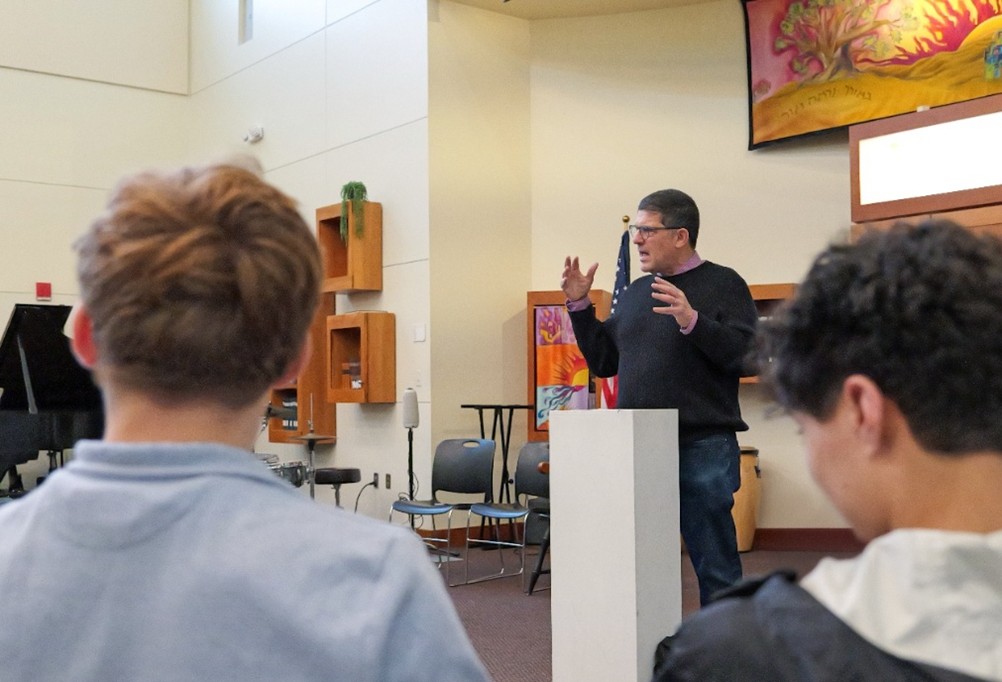
Levin's work now includes teaching and advising. He is an Executive Fellow at Harvard Business School and an Academic Advisor at Stanford Law School's Directors' College. His subjects include AI startup ideation, innovation strategy and AI governance for corporate boards. The audience has widened from people making software to people expected to oversee what their organizations do with it.
He has also taught Startup Academy in the Harvard Business Analytics Program. His newsletter and podcast, Lessons from a Startup Life, carry that teaching into conversations about financing, company formation and management. Guests have included investor Eric Paley, Glasswing Ventures founder Rudina Seseri, Harvard's Jeffrey Rayport and Carta's Peter Walker. A cap table and product-market fit make less picturesque holiday reading than a beach novel, but both can alter a founder's plot.
His advice on AI startups includes building communities, embedding products into workflows and developing advantages around data. In a 2025 conversation with Alastair Goldfisher, he discussed fundraising, exits and the continuing need to revisit product-market fit. The technology can change quickly; a business still needs a reason for customers to return.
October 2026: show me the controls
In 2026, Levin launched Northstar Clarity, an advisory firm focused on AI strategy, governance and oversight. Its work includes helping leadership teams assess readiness, assign responsibility and examine the liabilities accumulating around AI systems. The firm's framework covers issues such as data, models, prompts, infrastructure and security. The practical ambition is to make those obligations visible enough to manage.
His October writing brings the discussion down to recognizable office problems. On October 17, he examined how lower token prices could encourage more consumption and larger total AI bills. He urged companies to measure costs against completed work and business value. The question is familiar to anyone who has ever opened an unexpectedly large invoice: what, exactly, did we buy?
“We are moving from governing what AI says to governing what AI does.”
Douglas Levin, October 20, 2026
Three days later, he turned to AI agents and the gap between executive confidence and operational controls. His questions were concrete: which agents are running, who owns them, what can they access, and how are their actions reviewed? He argued that boards should expect management to establish accountability and intervention mechanisms.
There is a line from the holiday idea to that boardroom demand. A finished software product can conceal its ingredients. An AI system can conceal a chain of actions behind a convincing result. Levin keeps returning to the work of looking inside. The duck supplied the memorable name. The awkward questions have kept him occupied.
Keep looking inside
More from Levin, his conversations and his work.