Person Profile

Varun
Talwar

Co-Founder & CTO, Tetrate  ·  gRPC & Istio Creator

He wrote the protocols that carry millions of conversations you had today without knowing it. Then he left Google to build the company that would keep those conversations secure. Now he's building the security layer that generative AI doesn't know it needs yet.

gRPC Istio Envoy Service Mesh Zero Trust AI Security Cloud Native Open Source
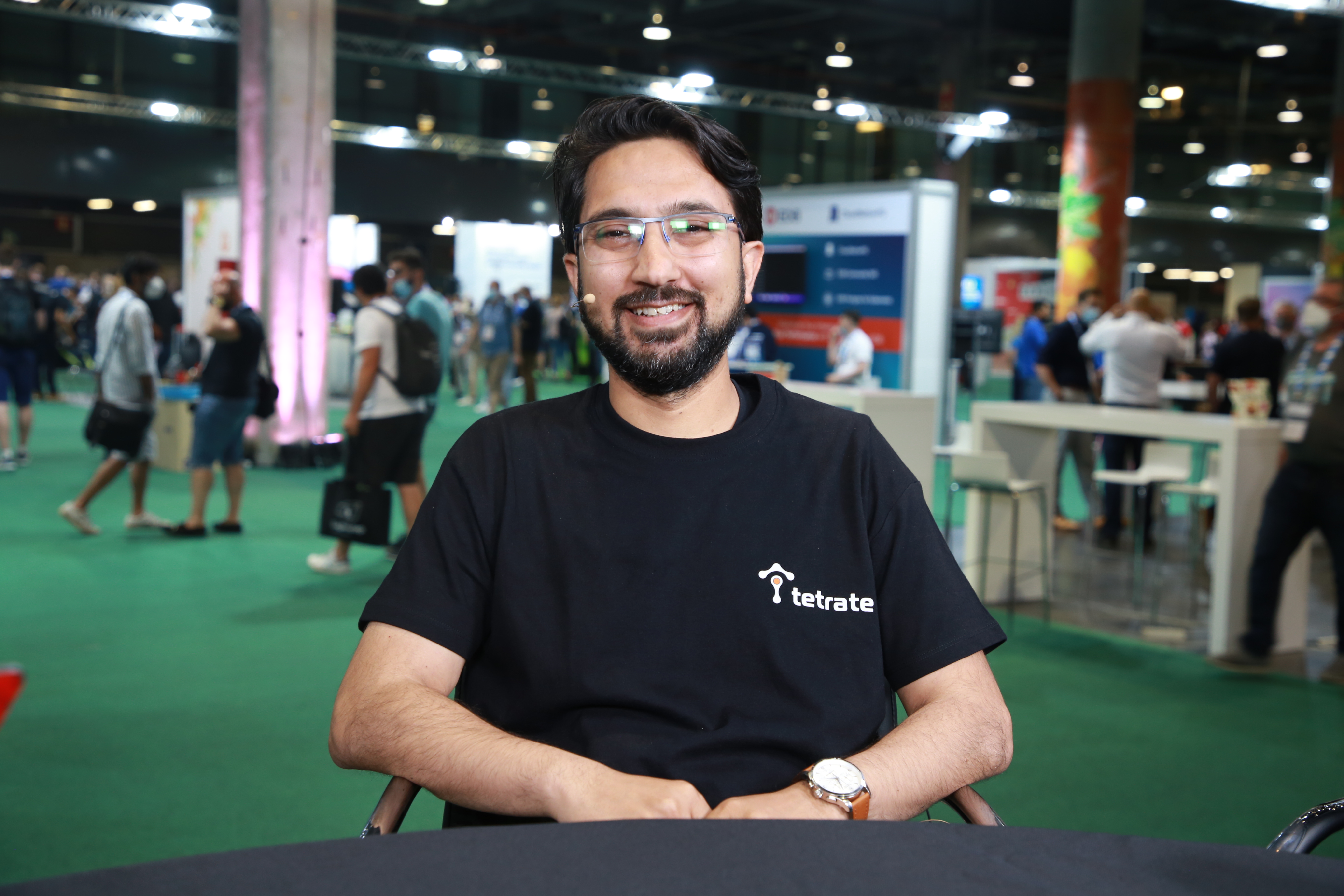
Varun Talwar speaking at KubeCon 2022

Varun Talwar at KubeCon + CloudNativeCon 2022

2 Open Source Projects Co-Created
$52.5M Total Funding Raised
8% Of All Internet Traffic, One Stream
2018 Tetrate Founded

The Hidden Plumber of the Modern Internet

October 14, 2012. Felix Baumgartner stands at the edge of a capsule 39 kilometres above New Mexico and steps off. Below him, at YouTube headquarters in San Bruno, Varun Talwar watches the traffic monitors. Eight percent of all internet traffic is watching this jump. Not 8% of YouTube. Eight percent of the entire internet. The infrastructure doesn't blink.

That moment didn't make Talwar famous. It made him curious. What happens when 8% of the internet tries to flow through a pipe that was never designed for it? What does that reveal about the gap between how we build distributed systems and how distributed systems actually behave under pressure?

He spent the next four years finding out. First by building gRPC at Google Cloud - the open-source remote procedure call framework that now handles service-to-service communication at Google, Netflix, Square, and thousands of companies you've never heard of but whose products you use every day. Then by co-creating Istio, the service mesh that became the de facto standard for Kubernetes networking.

"Solve a hard problem and make it easier for people to adopt the technology."

- Varun Talwar

The philosophy is deceptively simple. Hard problems, in infrastructure, are always the same problem wearing different clothes: something critical is invisible, and the cost of it being invisible only becomes obvious after something breaks. gRPC made inter-service communication predictable. Istio made the space between services observable, manageable, and secure. Both projects were, at their core, bets on making the hard invisible into the easily auditable.

In 2018, Talwar and co-founder JJ Jeyakeerthi - who had led Twitter's Cloud Infrastructure Management platform - left to build Tetrate. The thesis: enterprises needed what Google had, and they needed it without building a decade of internal expertise first. Service mesh was Google's secret infrastructure advantage, handed to the world as open source. Tetrate would be the company that made enterprises capable of actually using it.

Four years and $52.5 million later, Tetrate runs inside the US Air Force's wartime communications infrastructure. The path from a teenager winning 80% of Delhi programming contests to securing military communications is, in retrospect, a straight line - even if it ran through Singapore, MIT, YouTube, and two open-source revolutions to get there.

Now in 2025, Tetrate has pivoted again, this time into AI. The Envoy AI Gateway - co-released with Bloomberg and the first CNCF-backed AI gateway - brings the same philosophy to the era of large language models: make the hard invisible auditable. Where are the token costs flowing? Which model is handling which request? If an AI agent calls another AI agent calls an API that calls a database, who authorized that chain?

"Envoy is rapidly becoming the community of choice for AI innovation."

- Varun Talwar, February 2025

Talwar's career has always been about the layer no one sees until it fails. In 2012 that was livestreaming infrastructure. In 2016 it was service mesh. In 2025 it's AI governance. The bets get bigger each time, but the instinct is the same: find the invisible, make it visible, and ship it before the bill comes due.
From Delhi Contests to Google India

Talwar grew up in New Delhi in the 1990s, when Linux was emerging and a personal computer was a reward, not a birthright. He earned his first in 1998, after convincing his parents he was serious enough about programming to deserve one. By then he was already winning roughly 80% of Delhi city programming contests - alongside a friend named Virat.

The competitions sharpened something that formal education often blunts: the ability to treat an unsolved problem as personally interesting rather than professionally obligatory. That habit carried him to the Singapore-MIT Alliance - a joint NUS/MIT initiative that selected 30 students from across Asia, fully sponsored - where he studied under Charles Leiserson, the MIT algorithms legend who co-founded Akamai.

He returned to India and joined Google in 2007, when the India office had 30 employees. By the time he transferred to San Bruno in 2011 to run YouTube Live, he had spent four years learning that products don't fail because of bad ideas; they fail because good ideas hit infrastructure they weren't designed for.

The Delhi Years
Grew up in New Delhi. Earned first computer in 1998. Won ~80% of Delhi city programming contests as a teenager. Developed a "math teacher named Dash" inspired him to pursue algorithms seriously.
Singapore-MIT Alliance
One of 30 students selected from across Asia for the fully sponsored NUS-MIT joint program. Studied algorithms under Charles Leiserson - the same professor who co-founded Akamai to turn academic internet research into infrastructure scale.
Google India, 2007
Joined when Google India had 30 employees. Worked on local search, maps, language localization. Watched a startup become a giant, and learned what infrastructure problems look like when they're allowed to compound quietly.

A Timeline of Invisible Infrastructure

1998
Earns first personal computer. Begins winning Delhi city programming contests alongside friend Virat.
2002-2004
Joins Singapore-MIT Alliance - 30 students, fully sponsored, joint NUS/MIT. Studies under algorithms legend Charles Leiserson.
2007
Joins Google India as one of 30 early employees. Builds local search, maps, and language products for the Indian market.
2011-2012
Transfers to YouTube in San Bruno. Spearheads live streaming partnerships including Indian Premier League cricket. Manages infrastructure for Felix Baumgartner's space jump - 8% of all internet traffic, no outage.
2013-2015
Joins Google Cloud Platform. Becomes founding product manager for gRPC - a high-performance, open-source RPC framework now used by millions of engineers worldwide.
2016
Co-creates Istio service mesh as founding PM - becomes the industry standard for Kubernetes networking and the basis of Tetrate's entire product line.
2018
Co-founds Tetrate with JJ Jeyakeerthi (ex-Twitter Cloud Infrastructure). Mission: bring Google-scale networking reliability to the enterprise.
2021
Tetrate closes $40M Series B. Investors: Scale Venture Partners, 8VC, Dell Technologies Capital, Sapphire Ventures, Samsung, Intel. Total raised: $52.5M.
2023
Tetrate brings enterprise-ready Ambient Mode to the US Air Force, securing wartime communications. Forbes names Tetrate one of America's Best Startup Employers.
2025
Co-releases Envoy AI Gateway v0.1 with Bloomberg - first CNCF-backed open-source AI gateway. Tetrate launches AI governance suite: Agent Router, AI Gateway, MCP Gateway, AI Guardrails.

Two Projects. One Philosophy.

gRPC
Built internally at Google as "Stubby," open-sourced in 2015 under Talwar's product management. A high-performance, language-agnostic RPC framework now used by Google, Netflix, Square, Cisco, and thousands of cloud-native companies. Made service-to-service calls fast, typed, and observable - before that was considered a requirement.
🔒
Istio
Co-created at Google as the operational control plane for microservices. Handles traffic management, security policy enforcement, and telemetry across thousands of services - automatically, without touching application code. Talwar's thesis: "Istio is making your network a lot smarter." Now the de facto standard in Kubernetes environments worldwide.
🤖
Envoy AI Gateway
Released February 2025 with Bloomberg. The first stable, CNCF-backed open-source AI gateway. Provides a unified API for multi-provider LLM access, token-based rate limiting, and upstream credential management - bringing the Istio playbook to the AI era. If your AI agents are talking to OpenAI and AWS Bedrock, this is the policy layer in between.

The Infrastructure Varun Talwar Helped Build and Operates

gRPC Istio Envoy Proxy Kubernetes CNCF Ecosystem Prometheus Grafana OpenTelemetry Datadog Jaeger ArgoCD Terraform Helm Zero Trust SPIFFE / SPIRE FIPS Compliance AI Governance AWS / Azure / GCP Go TypeScript

The Record

  • Co-created gRPC - open-source RPC framework used by millions of engineers globally, at companies from Google to Netflix
  • Co-created Istio - now the industry standard service mesh for Kubernetes networking
  • Led YouTube infrastructure for Felix Baumgartner's 2012 Red Bull Stratos space jump - peak 8% of all global internet traffic, zero downtime
  • Co-founded Tetrate, raising $52.5M from 8VC, Dell Technologies Capital, Scale Venture Partners, and Sapphire Ventures
  • Won approximately 80% of Delhi city programming contests during school years
  • Selected for Singapore-MIT Alliance - 30 students handpicked from across Asia, fully sponsored
  • Co-released Envoy AI Gateway v0.1 with Bloomberg - first CNCF-backed open-source AI gateway (February 2025)
  • Partnered with NIST on zero-trust architecture standards for microservices
  • Secured US Air Force wartime communications infrastructure via Tetrate's Ambient Mode deployment
  • Forbes Best Startup Employers recognition for Tetrate

Open Source Impact at Scale

gRPC Ecosystem AdoptionUbiquitous
Istio Market Share (CNCF)~92%
Tetrate Enterprise TractionGrowing
Envoy AI Gateway AdoptionEarly
~1998
2002
Delhi Institute of Technology (NSIT)
B.Engg. in Computer Engineering
2002
2004
Singapore-MIT Alliance, NUS
MS in Computer Science
~2013
2014
UC Berkeley, Haas School of Business
Product Management Program

The Signal, Not the Noise

"Solve a hard problem and make it easier for people to adopt the technology."

- Core philosophy

"Istio is sort of making your network a lot smarter."

- Google Cloud Platform Podcast

"Security should be built into DevOps."

- Authority Magazine interview

"Envoy is rapidly becoming the community of choice for AI innovation."

- Envoy AI Gateway launch, Feb 2025

"You get all the telemetry between A and B in terms of latency, rate, QPS — automatically, without requiring applications to wire in monitoring libraries."

- On Istio's observability capabilities

"It's all about people. Pick for the partner, not the firm."

- On choosing investors

The AI Internet Needs a Plumber

Enterprises don't have an AI ideas problem. They have an AI plumbing problem. An AI agent calls a model. The model calls a tool. The tool calls an API. The API calls a database. Each hop adds latency, cost, and attack surface. Nobody agreed who owns the policy.

Talwar saw the same pattern before. When microservices exploded, every team built their own retry logic, their own TLS configuration, their own tracing. The result was a thousand tiny, inconsistently implemented decisions that collectively made the system fragile and invisible. Istio solved that by pushing the policy to the infrastructure layer. Tetrate's AI governance suite is doing the same thing for generative AI: token-based rate limiting, model fallback strategies, cost forecasting, compliance reporting - all at the infrastructure layer, invisible to the application code.

The Envoy AI Gateway, co-released with Bloomberg in February 2025, gives enterprises a CNCF-backed, community-governed foundation to build on. Support for AWS Bedrock and OpenAI in v0.1, with Google Gemini 2.0, automatic failover, semantic caching, and prompt templating on the roadmap. The enterprise is coming. The plumbing needs to be ready.

AI
Agent Router
Routes AI agent traffic to the right model based on cost, latency, capability, and compliance requirements.
AI Gateway
Unified API layer for multi-provider LLM access with token-based rate limiting and credential management.
MCP Gateway
Secures Model Context Protocol traffic between AI agents and enterprise tools.
AI Guardrails
Policy enforcement layer for AI model governance, compliance reporting, and risk management.

Why Your AI Agents Keep Failing

Varun Talwar on the hidden security and governance layer that breaks when enterprises move AI agents from sandbox to production.

The Details That Matter

The Space Jump
When Felix Baumgartner stepped off his capsule at 39km altitude in 2012, Varun Talwar was watching infrastructure monitors at YouTube. 8% of all internet traffic. One stream. The systems held. The experience changed his career trajectory toward infrastructure at scale.
The Tetrate Name
A "tetrate" is a mathematical operation: a number raised to a power, raised to a power. Compounding, exponential, recursive. The name is the product roadmap.
From Delhi to DoD
The service mesh software Talwar helped design now runs inside US military aircraft communications systems. A straight line from teenage programming contests in New Delhi to wartime comms for the US Air Force.
The Leisure Principle
His advice: "Get to know your relaxation muscle. Know what relaxes and rejuvenates you." From a founder who built two of the internet's most-used plumbing systems, the self-care note lands differently.
The Leiserson Effect
He studied algorithms under Charles Leiserson at MIT - the same professor who co-founded Akamai to solve internet delivery at scale. The lineage from academic theory to production infrastructure runs directly through Talwar's career.
First CNCF AI Gateway
The Envoy AI Gateway released February 2025 is the first open-source AI gateway project backed by the Cloud Native Computing Foundation - the same foundation that stewards Kubernetes, Prometheus, and Envoy itself.

Share this profile