At BASF Agricultural Solutions, the scientists already had systems for capturing data. What they needed was a better way to use it. Experiments accumulated. Questions crossed projects. The interfaces through which researchers searched their own work had become too cramped for the work itself.
- Dotmatics connects scientific applications, instruments, and experimental records.
- BASF improved visualization and search before replacing its lab notebook.
- Siemens bought the business to help connect research with production.
That distinction explains much of Dotmatics. A laboratory can be beautifully equipped and digitally documented while remaining remarkably awkward to navigate. The result exists somewhere. Finding it, understanding its context, and putting it beside another result can become a separate research project.
The notebook was the third move
BASF’s published account describes a revealing sequence. First came visualization, moving beyond spreadsheet analysis. Then came search and aggregation across different sources. Only afterward came the electronic laboratory notebook, or ELN. The team improved how researchers could see and retrieve information before changing how they recorded experiments.
“High quality data is the basis for good business decisions.”
Dr. Joachim Dickhaut · BASF Agricultural Research
The company called its initiative Data to Value. Scientists, project leaders, and IT staff needed different things from the same underlying record. A phased rollout gave them a route through that complexity. The useful lesson is the order: begin with an everyday frustration researchers recognize, then expand the system around it.
Improve access before changing capture.
A spare bedroom. A very specific problem.
Dotmatics began in 2005 with Stephen Gallagher and Alastair Hill, colleagues who had worked on scientific data access at Merck in Britain. In a 2018 interview with Genetic Engineering & Biotechnology News, Gallagher recalled the thought behind leaving: “If it works here, it can work elsewhere.”
The pair acquired rights to their technology and wrote code in a spare bedroom. Their problem was wonderfully unglamorous: make the software specific enough to help one research company, yet flexible enough to serve another. According to that interview, UCB became their first customer about six months into the business.
The founding insight survives in the current portfolio. Scientific information carries meanings that ordinary business software cannot simply guess. A chemical structure, a DNA sequence, and a cell-analysis file require different representations. Getting them into storage is one job. Preserving enough meaning to compare experiments is another.

The tools on the bench, the plumbing underneath
A researcher may encounter Dotmatics without starting with the corporate name. GraphPad Prism handles statistics and graphs. SnapGene helps scientists design and document molecular cloning. Geneious Prime supports sequence analysis. OMIQ and FCS Express address flow cytometry, where researchers study populations of cells. Protein Metrics serves protein characterization.
These are working tools with distinct scientific jobs. The enterprise layer tackles a different problem: connecting the work across people, applications, and instruments. Dotmatics’ ELN and Data Discovery products organize experimental records and retrieval. Luma, launched in October 2023, adds a shared platform for scientific data and workflows.
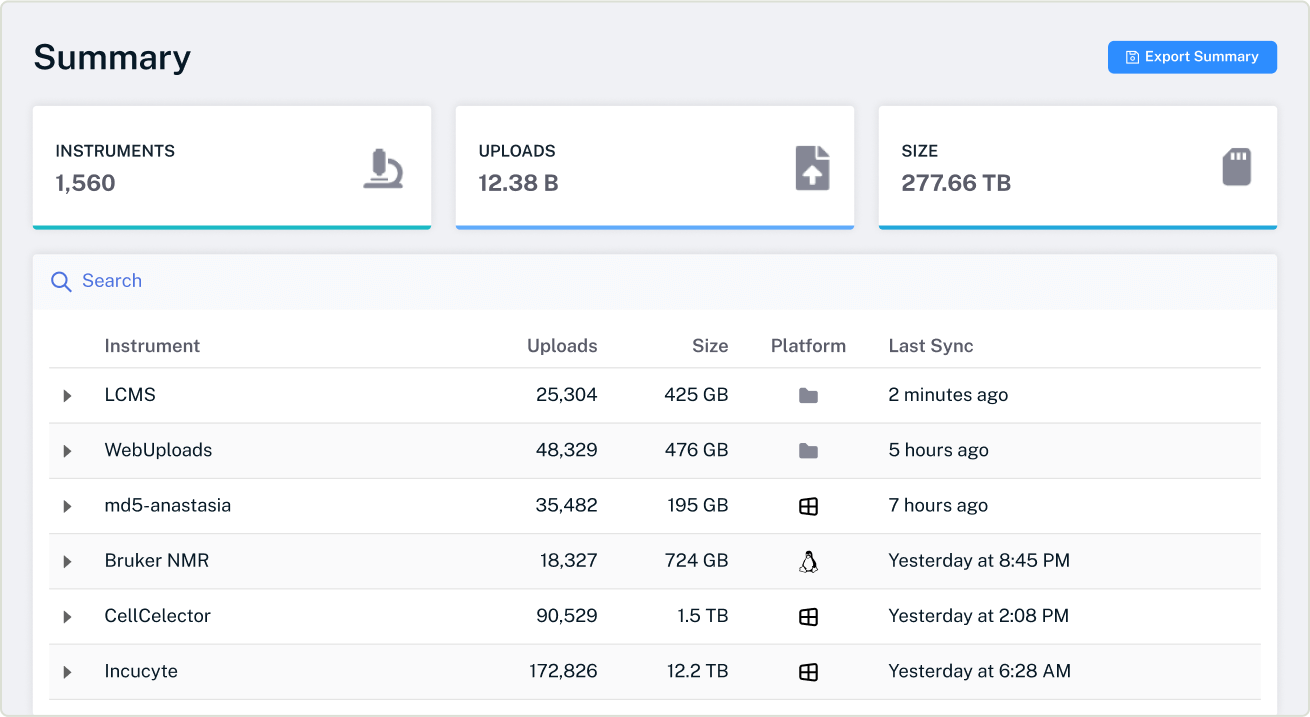
Luma Lab Connect ingests instrument files and extracts data and descriptive metadata. Researchers can then model relationships, enrich records, and make information available for analysis. Built on Databricks, Luma also offers interfaces for other software to access that information. The attraction is less time spent moving and reconciling files between useful tools.
What $5.1 billion actually bought
The present business also reflects portfolio building. Insightful Science acquired Dotmatics in 2021, joining enterprise informatics with scientific applications. A shared Dotmatics identity followed. At the Siemens deal announcement in April 2025, Insight Partners said it had supported fourteen strategic acquisitions.
Siemens completed its purchase on July 1, 2025, at an enterprise value of $5.1 billion. It expected Dotmatics to generate more than $300 million in fiscal 2025 revenue, with an adjusted EBITDA margin above 40 percent. Those were forecasts at closing, rather than reported full-year results.
Enterprise value paid by Siemens.
A purchase price, not a venture funding round.
The business sells application licenses and subscriptions alongside enterprise platform agreements and services. A Siemens investor presentation described approximately 95 percent recurring subscription revenue. Customers range from academic researchers to pharmaceutical, biotech, chemicals, and materials organizations. Dotmatics reports more than two million scientists and 14,000 customers across its portfolio; those numbers do not describe Luma alone.
Siemens’ stated ambition is to connect research through production. Its manufacturing software and digital twins could extend the record beyond the laboratory. That is a strategic rationale, with integration work behind it. Buying the ingredients does not establish that every handoff already works.
Now the software wants to act
In May 2026, Dotmatics announced Luma Agent. Scientists describe a goal in ordinary language; the agent is designed to plan and execute work such as analysis, reporting, and workflow configuration. Dotmatics says actions are logged and data changes require human approval. The distinction matters when software can alter the scientific record.
October brought Databricks Gold partner status and a Luma listing on Databricks Marketplace. For organizations already governing enterprise data there, this creates another route to adoption. The proposition rests on scientific context traveling with the data, so an answer can be traced back to the experiment behind it.
Start where the scientist gets stuck
Alternatives include Benchling’s biotech R&D platform and Dassault Systèmes’ BIOVIA laboratory software. Dotmatics’ distinctive combination is its specialist application portfolio, enterprise informatics, and Luma’s data layer. Buyers should test that combination against their actual experiments, existing systems, and required integrations.
Enterprise pricing depends on products, seats, and contract length. A sensible evaluation also counts data mapping, training, and maintenance. A small team needing one analysis tool may gain little from a broader platform. Missing metadata and poorly maintained connections will limit any promised intelligence.
BASF’s sequence offers a practical starting point: choose one question that takes too long to answer. Make the relevant data visible. Check whether scientists use it. Then widen the scope. Dotmatics’ opportunity lives in that ordinary interval between finishing an experiment and knowing what to do next.