The first thing Diligent killed was not a competitor. It was the board binder: hundreds of confidential pages, assembled by skilled people, delivered by courier, outdated the moment somebody changed slide 47. In 2001, a client of the New York software consultancy then called Manhattan Creative Partners asked for a secure way to automate board documents. The resulting product, Boardbooks, gave the firm a narrow but unusually powerful perch. It sat between the people preparing the meeting and the directors making the decision.
That perch became the business. The consultancy renamed itself Diligent Board Member Services, listed on New Zealand's stock exchange in 2007 and eventually put its software on the iPad. Today Diligent says it serves 25,000 organizations, more than one million users and roughly 700,000 directors and leaders. Its customer wall ranges from Barclays and Mastercard to Heineken, Medtronic and Schneider Electric. Governments, universities, school boards and nonprofits buy versions of the same promise: the right material, in the right hands, before the gavel drops.
The boardroom was the distribution strategy
Board portals look prosaic until you count the anxiety packed into them. Materials contain merger plans, executive pay, cyber incidents and legal advice. Email is easy but leaky. Paper is tangible but slow. Generic file sharing rarely understands committees, recusals, late additions or the ritual of a formal vote. Diligent built around those particulars: permissions, version control, annotations, minutes, signatures, questionnaires and a support line for a director who cannot open the packet on Sunday night.
The clever bit was where the product landed. Most risk software starts with practitioners and begs for executive attention later. Diligent started on the screen in front of the director. Insight Partners once framed that screen as roughly 100 square inches of precious corporate real estate. Once the board portal became familiar, adjacent work could travel through it: entity records from legal, controls from audit, risk registers from operations, cyber exposure from security and shareholder intelligence from advisers.

This is what Diligent does now: it sells connective tissue. Diligent Boards remains the visible front door. Diligent Entities tracks subsidiaries and ownership. Audit Management and ACL Analytics plan audits, test controls and analyze records. Enterprise Risk Management organizes assessments and registers. Compliance products cover policies, training, third parties, speak-up reports and investigations. Market Intelligence adds proxy voting, activism, compensation and peer data. Diligent One is the wrapper intended to make those pieces feel like one system rather than a software cupboard.
What failed first: Diligent's own controls
There is an uncomfortable chapter in the middle. In 2013, the governance software company announced that it had recognized revenue incorrectly and would restate results for 2010 through 2012 and part of 2013. Financial reports arrived months late. New Zealand's market tribunal censured the company and imposed a NZ$100,000 fine. An audit-committee investigation found no intentional misconduct or fraud, but the filings identified weak compliance and internal controls. Investigation costs reached about $2.5 million over the first nine months of 2013; restatement and re-audit work added further expense.
It is tempting to turn that episode into a tidy conversion story: governance vendor learns governance, then builds GRC. The evidence is messier. Diligent was already growing, and the broad platform arrived through new ownership, leadership and acquisitions years later. Still, the sequence matters. The company experienced the exact gap its current pitch describes - operational processes can look orderly until evidence must withstand directors, auditors, regulators and investors at once.
A platform that promises clarity is most useful when the underlying work is traceable - and most dangerous when a polished dashboard hides weak evidence.The practical tension inside every GRC suite
Brian Stafford became chief executive in 2015. A year later Insight Partners took Diligent private for about $624 million, paying roughly a 31 percent premium to the previous closing price. The ownership change gave Diligent room to assemble a larger company away from quarterly markets. By 2020, it said its client count had grown from roughly 4,400 at the take-private to more than 19,000. Clearlake Capital increased its investment and Blackstone joined that year.
They did not build the suite. They bought the missing rooms.
The decisive move came in 2021. Diligent acquired Galvanize, the Vancouver company behind HighBond and ACL, for a price reported around $1 billion. It also bought ethics-and-compliance vendor Steele for a reported $325 million. Those deals added audit analytics, risk management and compliance machinery to the board channel. The combined company was reported to be worth more than $7 billion and expected to reach about $550 million in revenue that year.
More pieces followed. Accuvio brought emissions and ESG reporting. Insightia added shareholder activism, voting and governance data. Spark Compliance added consultants who design programs and assess culture. Vault Platform added speak-up and investigations workflows. In January 2026, Netherlands-based 3rdRisk added AI-native vendor-risk management. The acquisition list explains both Diligent's breadth and its central product challenge: integration cannot be a navigation menu with many logos hiding behind it.
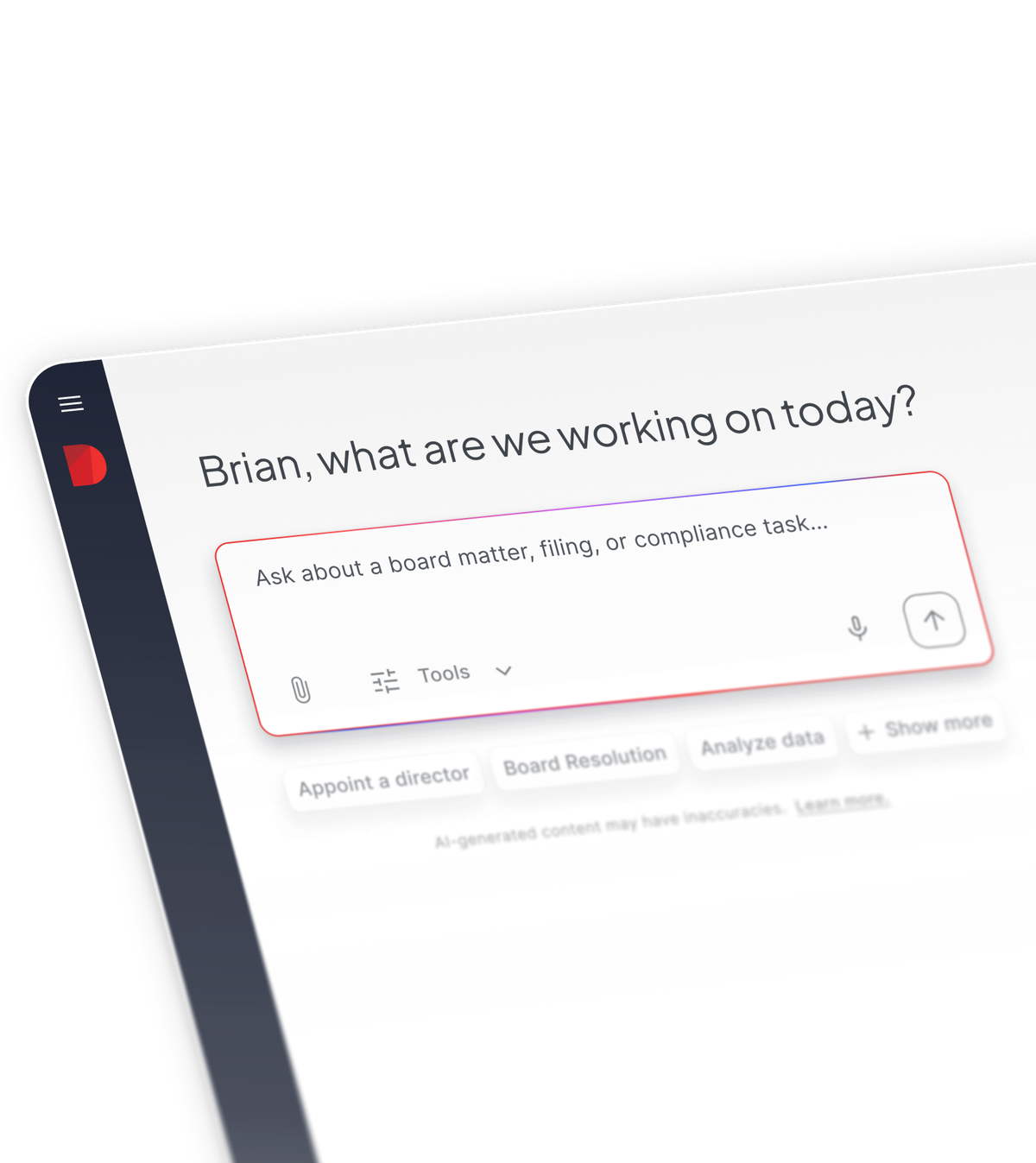
Diligent is using partnerships to fill data gaps it should not recreate. Cloudflare telemetry and Qualys exposure data feed cyber reporting. Moody's data adds an external view to enterprise risk. S&P Capital IQ Pro supplies market comparisons and sentiment. PwC works with Diligent on subsidiary governance. The product difference is not owning every data point. It is translating those points into the vocabulary, timing and evidence standard of a board decision.
What it costs - and what has to disappear
Diligent sells annual subscriptions with modules and packages tailored to the buyer. Its general pricing page asks customers to request a quote. One public AWS Marketplace listing for eligible U.S. customers prices a 12-month Board & Leadership Collaboration Essential package at $48,500 and Pro at $84,500. Those are procurement-channel prices, not a universal menu, but they set expectations: this is enterprise software, not a $29 meeting app.
Essential board and leadership package listed through AWS Marketplace for eligible buyers.
Retire an old portal, shorten packet production, reduce support and stop duplicating risk reports.
The economic case depends on subtraction. A Forrester Consulting study commissioned by Diligent modeled nearly $190,000 in benefits across three years for a composite customer switching from another board solution. Interviewed organizations reported 50 to 60 percent less time creating and sharing materials. Older customer studies were more tactile: FirstRand said it cut annual board-pack costs by about $748,000 and avoided more than four million sheets of paper. Assore says AI-assisted preparation moved work from days to minutes.
Those numbers are not promises to every buyer. They reveal the condition for value: an old process must actually go away. Paying for Diligent while executives keep emailing PDFs, administrators maintain parallel folders and risk teams rebuild the same slides will produce a secure new layer of duplication. The first system to decommission is as important as the first feature to switch on.
What another builder can copy
Diligent did not begin with “governance transformation.” It fixed the frantic, confidential hours before a board meeting.
Follow the packet backward to the systems that create its numbers and forward to the actions and minutes it produces.
Partner for threat, credit and market feeds. Differentiate through context and delivery instead of copying every upstream database.
Name the binder, spreadsheet, portal, reporting cycle or support burden that will vanish. “One more dashboard” is not a return.
The least copyable asset is trust. Board material is unusually sensitive, directors are unusually time-poor and switching costs are emotional as well as technical. Diligent accumulated that trust before the iPad existed. A startup can copy the wedge, but not the installed base of people who already know where to tap five minutes before a meeting.
When the Diligent model does not work
- A small board needs only agendas and file sharing, so enterprise controls and modules outweigh the labor saved.
- Source systems cannot integrate cleanly, leaving staff to re-key stale numbers into prettier reports.
- Leaders want AI-generated summaries but cannot establish review, provenance and accountability for consequential output.
- The buyer licenses the full suite without an operating owner who can standardize workflows across legal, audit, risk, security and the board office.
- The organization cannot retire its old portal, spreadsheets or email habits, turning unification into duplication.
AI raises the stakes for evidence
Diligent now puts AI into board-book assembly, entity records, risk programs, audit tests and third-party diligence. In 2026 it introduced AuditAI, Third-Party Risk Intel and an “AI Board Member” concept alongside an agentic GRC workforce. The direction is understandable. Governance work contains repeated collection, comparison and drafting tasks, and the people doing them are buried in documents.
But a board cannot delegate accountability to autocomplete. The useful AI is the one that shows its work: where a claim came from, which control it touched, what changed, who reviewed it and how to reverse it. Diligent's original product made the board book portable. Its present ambition is to make the institution behind that book legible. If it succeeds, the company will have turned a humble packet into an operating system for oversight. If it fails, it will have built the most polished binder in the room.