A corporate website used to be a relatively contained object: pages, pictures, a contact form, perhaps a small newsroom. Now it arrives with the appetite of an operating system. It needs to speak two languages, satisfy a security team, connect to a customer database, survive a marketing campaign, pass an accessibility audit and load quickly on a phone held in a lift. The brief gets divided among specialists. Then the client becomes the person translating between them.
Digital Gravity has built its business around that translation problem. The privately held Dubai agency puts web and mobile developers, interface designers, performance marketers, e-commerce specialists and emerging-technology teams inside the same broad offer. Its clients range from public institutions and universities to banks, property companies, retailers and healthcare groups. The promise is not a piece of software so much as continuity: the people shaping the experience can remain in the room when it is built, launched and promoted.
Founded in 2014 by Danish Mehtab, who is identified in public agency profiles as founder and director, Digital Gravity occupies a busy patch of the professional-services map. It is more technical than a traditional advertising shop, more brand-conscious than a software outsourcer and broader than a product-design studio. That in-between position is crowded. It is also where many modern digital assignments actually live.
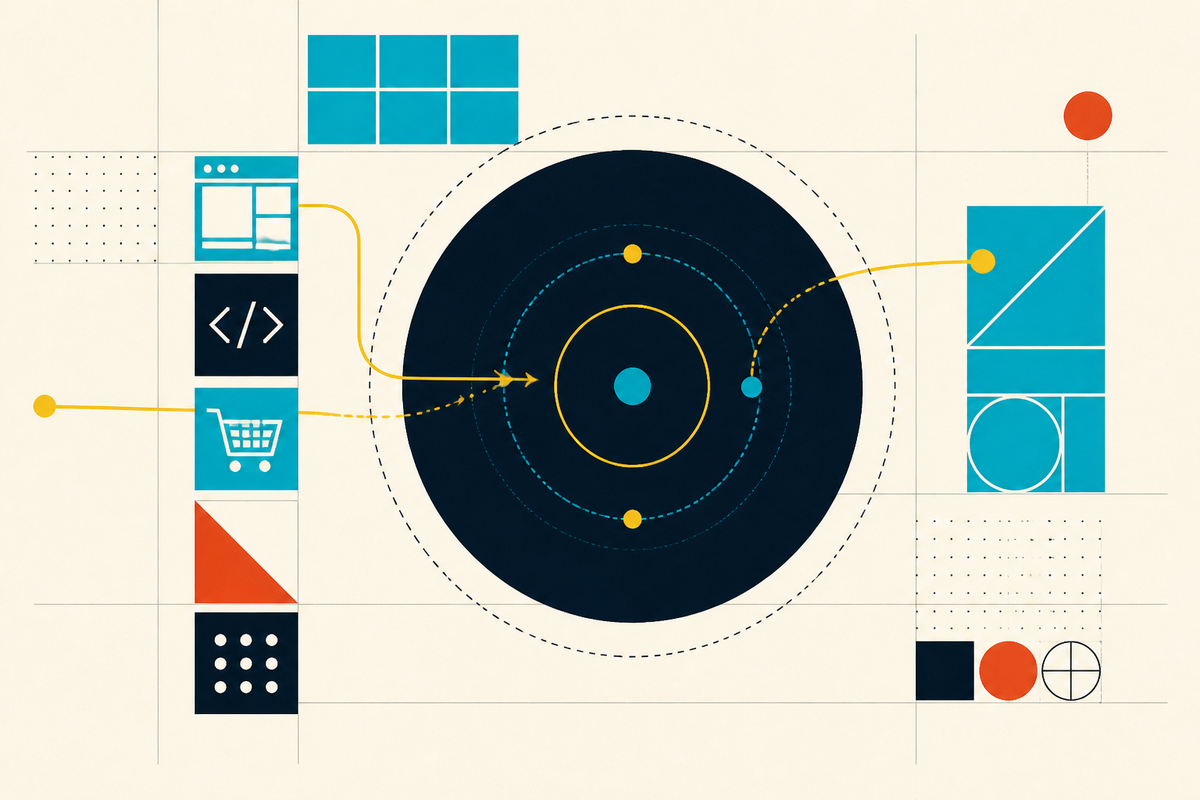
The handoff is the enemy
Digital Gravity’s most useful idea is not one of the trendier items on its service menu. It is the claim that designers and developers work in one delivery flow. In the familiar agency relay race, strategists pass to designers, designers pass to developers, and developers discover that a beautiful interaction is expensive, slow or impossible. Marketing arrives later and asks where the analytics, landing-page variants and search structure went.
“Designers + Developers Under One Roof”Digital Gravity’s description of its delivery model
Putting disciplines under one corporate roof does not magically remove disagreement. It does, however, create the possibility of resolving it before a design becomes a promise. Digital Gravity says its enterprise engagements begin with discovery and move through agreed strategy, prototypes, implementation and training. On its corporate web offer, it describes named teams, fixed-price scopes and client ownership of the finished platform. That language is aimed at buyers who have endured vague proposals and rotating account teams.
The problem it solves is therefore wider than “we need a new site.” A bank may need a governed publishing system and secure integrations. A university may need to make hundreds of academic routes understandable. A retailer needs commerce, content and acquisition to work as one machine. A public body needs accessibility, performance, Arabic support and resilience. Each organization can hire a set of excellent specialists. The difficulty is making their decisions add up.
Company-reported figures. Public head-count signals vary: LinkedIn lists 51-200 employees, supplied company data lists 170, while Digital Gravity’s own site describes a team of more than 200.
A Gulf-market feature, not a footnote
The company’s sharper regional advantage is bilingual delivery. Arabic right-to-left design changes more than the direction of a sentence. Navigation, icon placement, data displays, type scale, line length and the rhythm of a whole interface can need reconsideration. Digital Gravity’s enterprise materials describe Arabic as a mirrored experience rather than a translation plug-in bolted on at the end. For UAE and GCC institutions, that is an architectural decision.
This is where the agency’s customer list becomes more informative than a generic capability deck. Public portfolios and independent directories associate it with Dubai Police, Dubai International Financial Centre, the University of Sharjah, Masdar, ADIB, BurJuman, Sephora and others. These are not identical projects and the public case studies vary in detail. The common demand is to turn organizational complexity into something a citizen, student, shopper or investor can use.
For Masdar, Digital Gravity describes a long-range SEO program addressing technical issues, content and non-branded search visibility. For DIFC, the agency presents responsive design, speed, security and international brand expression as the assignment. In 2025 it announced that Sephora had selected it for a third engagement on the Sephora Squad website, Season 6. The repeat matters: winning a polished launch is one kind of evidence; being asked back suggests the working relationship also functioned.
Six doors into the same shop
The breadth can be helpful, but it also creates the agency’s central tension. A long menu risks turning expertise into a catalogue. Digital Gravity has pages for AI, blockchain, AR/VR, digital twins and other technologies that regularly migrate through boardroom presentations. Buyers should still ask the ordinary questions: Who will do the work? What has shipped? Which systems will the client own? How will success be measured after launch?
The more durable expertise is visible in the unglamorous layers: content management, .NET and Sitecore implementations, WordPress and Laravel builds, React Native and Flutter apps, cloud infrastructure, testing, analytics, search and conversion. These are the pieces that keep a digital experience useful when the launch event is over. Emerging technology can be valuable when it serves a clear job. It is less useful as decoration on an already crowded brief.
The operating model
Not a revenue chart. A map of how the company extends one engagement from early strategy through implementation and recurring optimization.
Projects first, retainers after
Digital Gravity is a services business, not a software platform. Its primary unit of sale is a team applied to a client problem. Strategy, design and implementation generate project fees. SEO, paid media, content, maintenance, optimization and staff augmentation can continue as recurring work. Enterprise web briefs are described as fixed-scope proposals; prices, revenue and funding are not publicly disclosed.
That model puts the agency in competition with several different alternatives at once. Dubai and MENA full-service firms compete for the whole account. Product studios compete on design and engineering craft. Global consultancies compete for large transformation programs. Specialist SEO or performance shops argue that focus produces better outcomes. In-house teams offer institutional knowledge and permanent control. A client can also assemble its own coalition.
Digital Gravity’s answer is coordinated range. Its website lists enterprise technologies such as Sitecore, SharePoint, .NET and Laravel alongside commerce platforms and creative tools. In February 2026 the company announced Shopify Plus Partner recognition, giving its commerce offer a clearer enterprise marker. The agency’s culture language stresses leadership, passion, transparency, creativity, excellence and fun. More revealing is its repeated insistence that execution remains in-house and that the named team is accountable for what ships.
The modern agency does not merely make the campaign. It has to understand the system the campaign lands on.
Where Digital Gravity fits
The company is best understood as a regional digital integrator with a creative-agency front door. It can make a brand visible, but it also wants to build the platform beneath that visibility. That places it in the middle of the market: large enough to staff multi-disciplinary enterprise work, but presented as more direct and locally fluent than a multinational consulting firm.
Its best customer is likely an organization whose digital problem crosses departmental lines. A redesign that also needs a CMS migration, Arabic UX, CRM integration, search preservation, security testing and a launch campaign fits the model. A company seeking only an unusual brand identity may prefer a small creative studio. A firm replacing a core banking platform will likely need a specialist systems integrator. The full-service proposition works when the shared context saves more effort than the breadth costs.
That is also the practical lesson others can steal. The agency’s advantage is not simply having many capabilities. Plenty of firms have long menus. The valuable part is designing the interfaces between capabilities: bringing search considerations into information architecture, engineering constraints into prototypes, Arabic into the design system and analytics into launch planning. Coordination becomes something the customer can buy.
Digital Gravity’s name makes the metaphor almost too convenient. Websites, apps, storefronts and campaigns tend to fly apart because each has its own team, vocabulary and incentives. The Dubai agency is trying to pull them toward one center. The result will always depend on the people assigned and the discipline of the scope. Procurement still needs to inspect the portfolio, meet the delivery team and define ownership before work begins. But in an industry that often sells novelty, making the pieces agree is a refreshingly concrete ambition.
Find Digital Gravity