A career spent doubting the numbers
On a podcast in 2025, an economist with ten books and three royal honours to her name said something most of her profession would never admit out loud: "The more research I've done on economic statistics, the less certain I am that we know anything solid about today's economy."
That is Diane Coyle's whole project in a sentence. As Bennett Professor of Public Policy at the University of Cambridge, where she co-directs the Bennett Institute, she spends her days picking apart the ledger the modern world runs on - and finding it does not add up. Productivity, the digital economy, artificial intelligence, and the slippery art of economic measurement: these are her subjects, and she treats them less like dry statistics than like a crime scene where the evidence keeps going missing.
"The invisibility of the economy, as it is now, and the statistics available, is extraordinary," she says. Trillions of dollars of value now move through software, data, and services - intangible things that a measurement system built for a century of steel mills and assembly lines simply cannot see. Coyle's argument is not that the numbers are slightly off. It is that we are flying a 21st-century economy on a 20th-century instrument panel.
Her newest book, The Measure of Progress: Counting What Really Matters, published in 2025 by Princeton University Press, lands exactly there. In it she floats a quietly radical idea: that time, not money, might be the missing unit of economic value. "Our budget is 24 hours," she points out - and an accounting framework built around how people actually spend those hours could tell us things GDP never will.
"GDP was a good measure for the twentieth century but is increasingly inappropriate for a twenty-first-century economy driven by innovation, services, and intangible goods."
- Diane Coyle, GDP: A Brief but Affectionate HistoryAn affectionate quarrel with GDP
In 2014 Coyle did something no one had managed before: she made gross domestic product interesting. GDP: A Brief but Affectionate History told the story of how a single number - cooked up in the mid-20th century to help governments fight wars and depressions - became the closest thing humanity has to a scoreboard for civilisation. The book was affectionate because she genuinely admires the invention. It was brief because she wanted people to actually read it. They did.
The affection has limits. GDP counts a felled forest as income and ignores the unpaid work that holds families together. It struggles with free digital goods, with quality, with anything that does not carry a price tag. Coyle's case is that what we measure shapes what we chase - and a country optimising blindly for GDP can grow its way into problems it cannot even see on the books.
In 2017 she put proposals where her arguments were and won the Indigo Prize, shared with Benjamin Mitra-Kahn and Jonathan Haskel, for a blueprint to overhaul GDP measurement for the digital age. Her work since has pushed the same frontier through the Bennett Institute's research on the many forms of capital - social, natural, human - that conventional accounts leave out.
She is also a sharp critic of concentrated tech power. "The big digital platforms wield a lot of power, full stop," she has said, pointing to mounting evidence that they use monopsony muscle to hold down workers' wages and sellers' fees below what a competitive market would bear. It is the rare economist who can move from the philosophy of measurement to the antitrust weeds without losing the thread - or the reader.
"The invisibility of the economy, as it is now, and the statistics available, is extraordinary."
- Diane Coyle, 2025Bury to Brasenose to the Bennett
A grammar school start
Born in Bury, Lancashire, in 1961, she went from Bury Grammar School for Girls to Brasenose College, Oxford, for Philosophy, Politics and Economics - then crossed the Atlantic for a Harvard PhD, finished in 1985.
Economist in the press gallery
Before academia claimed her she was a working journalist - Economics Editor at The Independent through the 1990s, where she learned to make hard ideas land for ordinary readers. It shows in every book since.
Running parts of the state
She sat on the UK Competition Commission, served as Vice-Chair of the BBC Trust, advised on competition policy, and was briefly Acting Chair of the BBC in 2014. Theory, but with the levers attached.
The timeline
Joins the UK Treasury as an economist after finishing her Harvard PhD.
Economics Editor at The Independent, translating the dismal science for a national readership.
Member of the UK Competition Commission.
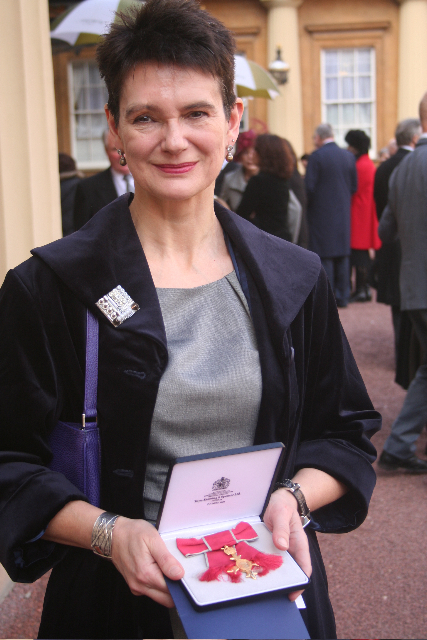
Appointed OBE for services to economics.
Vice-Chair of the BBC Trust, helping steer the broadcaster through turbulent years.
Becomes Professor of Economics at Manchester and publishes GDP: A Brief but Affectionate History.
Wins the Indigo Prize for a plan to overhaul GDP for the digital economy.
Appointed Bennett Professor of Public Policy at Cambridge; awarded CBE.
Publishes Cogs and Monsters, a reckoning with what economics is and what it should be.
Made Dame Commander of the Order of the British Empire (DBE).
Publishes The Measure of Progress and is elected a Fellow of the Royal Economic Society.
Ten books, one obsession
Quotable
"The more research I've done on economic statistics, the less certain I am that we know anything solid about today's economy."
"Time could be the basis of a new accounting framework for economic value."
"The big digital platforms wield a lot of power, full stop."
"GDP was a good measure for the twentieth century but is increasingly inappropriate for a twenty-first-century economy."
Things that do not fit on a CV
- Her consultancy is called Enlightenment Economics, and her long-running book blog is The Enlightened Economist - where she reviews a steady diet of economics and business books for general readers.
- She is married to Rory Cellan-Jones, the BBC's former Technology Correspondent. Between them, the economics and the gadgets are well covered at the dinner table.
- She was named one of the BBC's 100 Women in 2013, and elected a Fellow of the Academy of Social Sciences in 2016.
- She is openly skeptical of universal basic income - a position that puts her at odds with chunks of both the left and Silicon Valley.
- Three honours from the Crown - OBE, CBE, and finally DBE - track a career that kept climbing well past the point most people coast.
- She received an honorary doctorate from the Open University of Catalonia, a nod to an influence that travels well beyond Westminster.