A subscription has a wonderfully blunt vocabulary. Yes. Again. Cancel. For DennisTC Lin, the last word became a business lesson. In 2019, asked how easily a departed subscriber could be persuaded to return, he paused before answering: the difficulty was extremely high. The pause matters. A creator can earn someone’s attention in a moment; earning another payment requires a relationship that survives the moment.
Lin, known in Chinese as 林鼎鈞 and publicly as Dennis, co-founded PressPlay in Taiwan in 2016. He is the chief executive of PressPlay Academy, its learning business. His work sits in the unglamorous space between a person making something worth watching and that person being able to keep making it. There are bills in that space. There are also viewers who would rather keep their money.
By 2023, PressPlay Academy had reached a million members. Lin appeared on Tatler’s Gen.T Leaders of Tomorrow list that year. Those are the tidy facts a profile can put in large type. The more revealing story concerns the several times he had to reconsider what, exactly, those members were buying. A platform that began with support for creators gradually became a place to buy knowledge, and then part of a larger multimedia group.
Before the lesson, there was a crowdfunding pitch
Lin’s earlier career was in public relations at Ogilvy. In 2013, he and a partner with a hardware background, Weng Tzu-yang, started HereO, a crowdfunding platform for design and creative projects. The appeal was practical: small teams with ideas could obtain marketing opportunities normally available to companies with larger budgets. A campaign also offered an unusually direct verdict. People either contributed money or they did not.
Hardware brought complications. A persuasive project could still run into manufacturing trouble. In September 2015, the team decided to change direction, bringing in Kuo Chuan-jung and moving toward creative projects and the PressPlay brand. Subscription services such as Patreon offered a model for recurring support. PressPlay’s public company history dates its launch to 2016. The business had changed before it had acquired the neat founding date that later biographies would use.
Here is an early clue to Lin’s way of working: he wanted a result he could observe. The crowdfunding campaign connected a marketing promise to a sale. The subscription connected a creator’s promise to the next month’s payment. Both exposed a weakness that applause can conceal. Being liked is pleasant; making the arrangement last is work.
An audience is not automatically a livelihood
In the early creator market, advertisers and YouTubers were still learning how to work together. Lin later recalled campaigns in which brands repeatedly altered scripts and intervened in production. PressPlay tried bringing existing creative scripts to potential advertisers instead. That reversed the usual sequence and gave the creator’s idea a better chance of surviving the commercial conversation. The details sound small until one remembers who has to rewrite the script.
The company’s first creator relationship was with TGOP, followed by Ray Du English. PressPlay developed management and advertising work alongside subscriptions. In August 2024, Lin and Kuo appeared together in a management podcast to discuss the company’s two business tracks: PressPlay Academy for learning and PressPlay Next for the creator economy. Their company had received the 2023 Super MVP management award. The award belonged to a team; the operating model depended on several kinds of work.
A subscription asks the viewer to become a customer, which is a considerable promotion. Lin and his colleagues found that support based mainly on donations could fade and paying fan audiences had limits. Educational content offered a more durable exchange. The subscriber could receive something useful on a continuing basis. That changed the question from how much someone liked a creator to what someone wanted to learn.
「使用者的時間和專注度都非常珍貴」
DennisTC Lin, 2021
“Users’ time and attention are very precious.” Translation.
The reader gets a vote every month
The 2019 subscription business had a telling design choice. Search results were ordered by when content went live, without rankings based on price or subscriber numbers. Lin and his colleague Tim Chen discussed the danger of letting popularity decide what counted as valuable knowledge. The platform’s arrangement gave the content itself more room to make its case. A crowded shop window is not always the best guide to what you need.
Their conversation also returned to cancellation. The subscriber could withdraw support; the creator needed to stay in touch before trust was lost. Buying a book and paying a creator monthly impose different duties on the seller. The latter arrangement keeps reopening the transaction. There is no final sale after which everybody can politely stop caring.
That helps explain the word “Academy.” A learner may follow a familiar personality into a course, but there must be a reason to keep going once the novelty has worn off. The business must serve the person who has already arrived as carefully as the person it hopes to attract. This is one reading of Lin’s recurring concern with relationships: the invitation and the experience have to agree.
A reading of PressPlay’s evolution: creator subscriptions, learning content and consumer brands.
A school built around the rest of the day
PressPlay Academy grew to offer text, video, audio and podcasts, alongside recurring subscriptions and courses bought with a single payment. These formats make a modest but consequential promise: learning can fit around the rest of someone’s day. The official Academy introduction puts learning for oneself at the center. The classroom is no longer the only place where curiosity gets to have an appointment.
Lin has described PressPlay through the image of the school in X-Men, a place that helps people develop their abilities. It is an entertaining analogy for an executive whose daily problems include subscriptions and commercial partnerships. The comic-book school has unusually gifted pupils; an adult learning platform must make room for someone who simply wants to get better at a presentation or understand a subject that has puzzled them.
His educational record also has an international thread. His LinkedIn profile lists Queensland University of Technology in 2009-2010. A National Taiwan University career event in 2024 introduced him with an EMBA background in its business administration group. At that event, his subject was PressPlay’s development and the bottlenecks encountered along the way. He had become someone invited to explain the business of learning while continuing to learn how to run it.
The company cannot teach everything alone
By 2023, Lin was discussing a learning industry with room for separate specialists: content providers, editors, learning tools, teaching assistants and marketing partners. His idea of scale involved cooperation. A knowledgeable person and an engaging presenter do not always arrive in the same body. Working with partners could bring those abilities together and distribute the work of turning expertise into a course.
International expansion required another adjustment. PressPlay worked with Japanese personality Roland on a course sold in Taiwan, using the project to establish connections rather than treating it as a finished overseas expansion. Lin and his colleagues considered both taking a course-production model abroad and bringing overseas content back to Taiwanese learners. The direction of travel could change; the work of making content useful remained.
This is a more patient version of the creator economy than the expression sometimes suggests. The obvious asset is a recognizable face. Less visible are the people who shape the lesson, organize the release and answer the learner. Lin’s story keeps returning to those supporting roles. Influence may get the introduction; a company still has to arrange everything that follows.
Then the classroom met the streaming company
On October 2, 2025, PressPlay and KKCompany announced strategic integration. Lin’s stated priority was using AI in online courses, including translation, multilingual voice work, search and recommendations, with Japan as the next important market. These were plans for how the material would be produced and used. The test would be whether a learner could find, understand and continue with a course more easily.
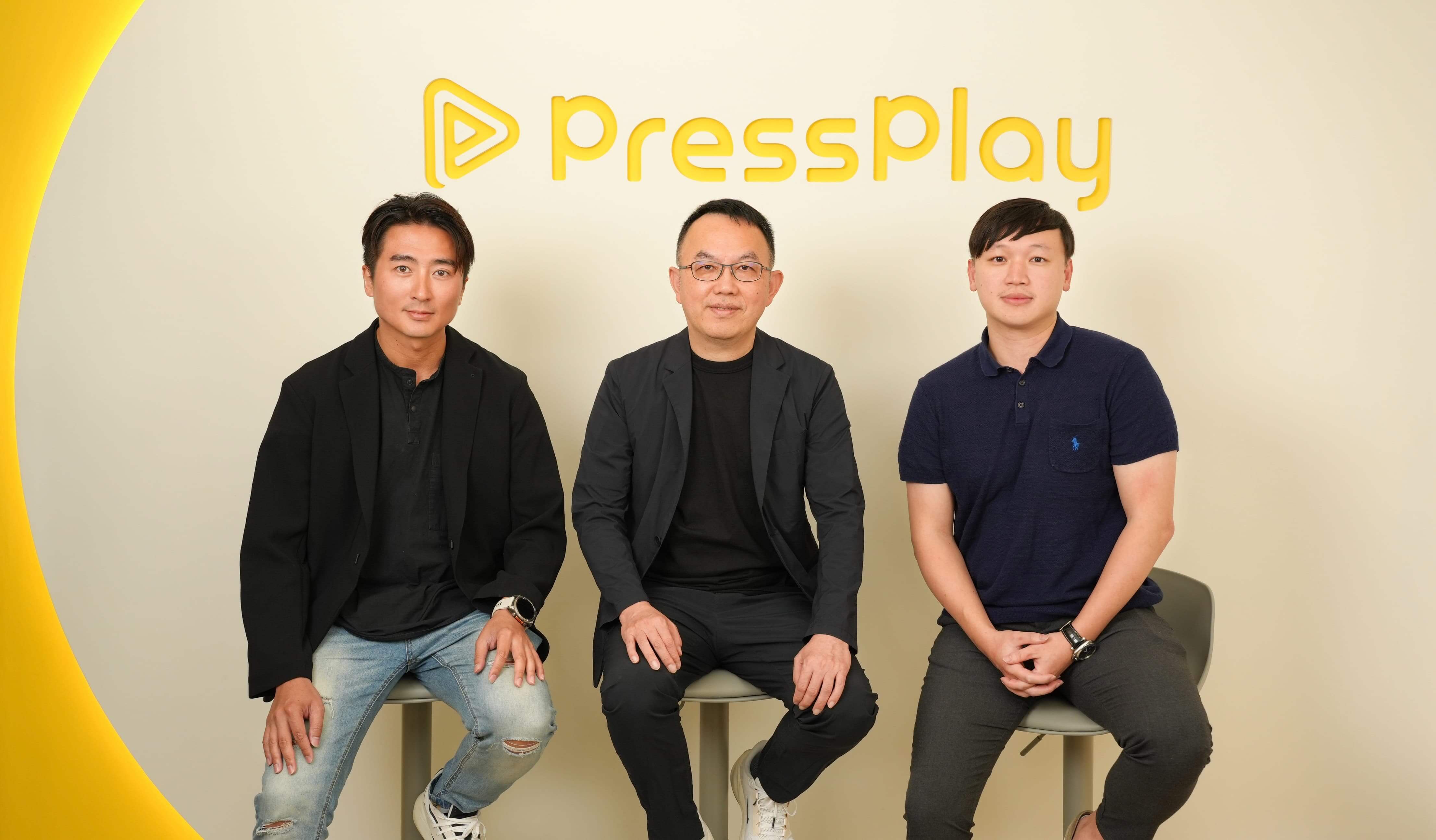
By August 2026, KKCompany was announcing its August 31 entry to Taiwan’s Emerging Stock Market. Its description of PressPlay Academy included more than 1.8 million members and over 2,000 courses, subscription columns and the PPA Plus unlimited-learning offering. The figures describe platform membership and its content catalog. They are not a count of people who finished a course, nor a count of paying students.
A September 10 update said PressPlay’s integration had contributed to the group’s growth following integration effects from May 2026. PressPlay Next’s influence-monetization transactions exceeded NT$770 million for January-August. That is transaction value in the creator business, a different measure from Academy membership or group revenue. Numbers become much more interesting when they keep their proper names.
In a July 2026 interview, Lin discussed choosing KKCompany because of compatible leadership ideas and complementary capabilities. He also addressed differences in company culture and working methods, and the communication needed to complete the combination. After years spent coordinating creators, advertisers and learners, the coordination problem had moved inside a larger organization. Even an agreement between companies has to become an agreement between people.
The next payment is still a choice
Lin’s career now runs from public relations and crowdfunding to learning platforms and a multimedia group. The range can look untidy on a résumé. Seen through the customer’s decision, it is more coherent. At each stage, he has worked on the distance between an idea and someone’s willingness to pay for it. That distance includes usefulness, familiarity, timing and the simple matter of keeping a promise.
The X-Men comparison supplies the color; the cancellation button supplies the discipline. One imagines a place where people develop their abilities. The other reminds its operator that people can leave. PressPlay’s next chapter will contain new technology and new markets, but the learner’s decision remains refreshingly ordinary: was this worth my attention, and would I come back?