- DeepIP puts patent drafting, prosecution, prior-art search, patentability, and risk analysis in one enterprise platform.
- Its adoption wager is practical: work inside Word and existing IP systems, instead of teaching lawyers a new desk.
- The company reports 500+ customer organizations, 25,000+ applications drafted, and up to two hours saved per attorney per day.
- It has raised $40 million. Its subscription price is not public, and every output still requires professional review.
The blank page has a peculiar power over patent law. It arrives after the inventor has explained the machine, after counsel has sifted the novelty from the enthusiasm, and just before someone must turn all of that into claims precise enough to defend an idea and broad enough to matter. For decades, the page usually arrived in Microsoft Word. DeepIP’s founding insight was not that the page should disappear. It was that the first pass across it could change.
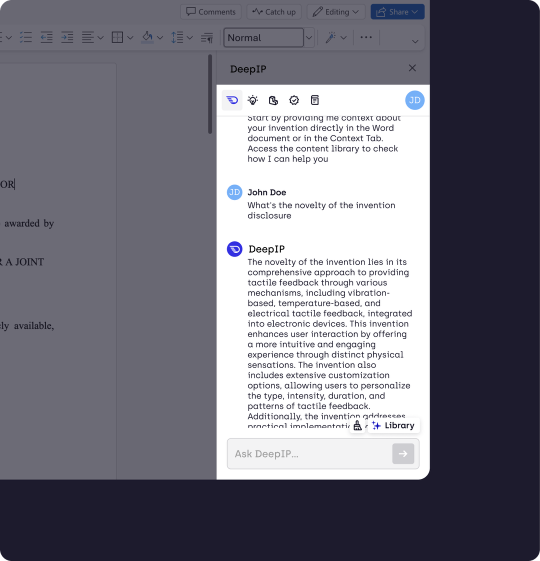
The company’s assistant sits in a Word sidebar. Give it an invention disclosure, a prior patent, a diagram, even a recording of the inventor talking. It can summarize the novelty, propose claims, draft a specification, describe figures, flag inconsistencies, and help prepare an office-action response. The attorney remains in the document, with track changes, comments, house style, and the small keyboard rituals accumulated over a career.
That arrangement sounds almost boring. Boring is the point. Legal software often fails first at the border between impressive demonstration and ordinary Tuesday. A separate portal means another login, another repository, another place where context goes to die. DeepIP made the assistant a tenant in the room the lawyer already occupies.
The software that disappears
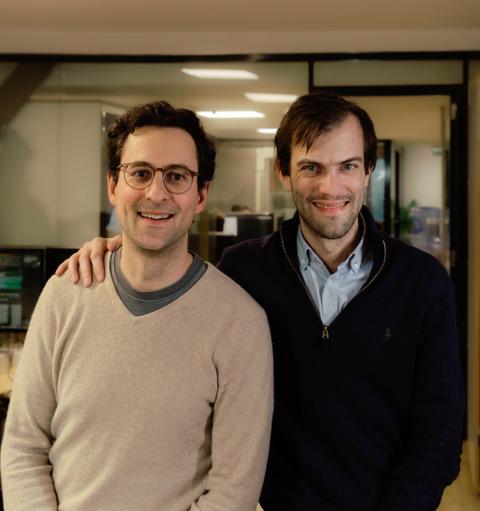
François-Xavier Leduc and Edouard d’Archimbaud created DeepIP in 2023 after building the AI-data company Kili Technology together. The product first appeared as “davinci,” then became DeepIP in 2024 as the Word add-in reached general availability. Leduc became chief executive; d’Archimbaud, chief technology officer. Their offices in New York and Paris placed the company between the two largest traditions it wanted to serve: American prosecution practice and Europe’s jurisdiction-heavy patent system.
The company started with drafting because the pain is obvious: patent practitioners were being asked to produce complicated work on tighter budgets while the supply of trained talent remained stubbornly finite. DeepIP says its customers can cut a full application’s drafting time by as much as 70 percent. Schwegman Lundberg & Woessner, a firm with more than 100 practitioners and thousands of annual filings, reported that the tool could add as much as two hours of focused work to an attorney’s day. Those are company and customer claims, not independent benchmarks. They are still a clue about what buyers believe they are purchasing: concentration.
“The point is not about the smartest model…it’s about relying on the technology that disappears.”Andy Newland, IT Director at Mewburn Ellis
Mewburn Ellis reached that conclusion after evaluating tools in real practice. The cleverest demo was not necessarily the product an attorney would open under deadline. Technology that required parallel workflows was deprioritized. At Dilworth IP, the evaluation reportedly ran across multiple patent-drafting products for two years before the firm chose DeepIP as its primary system. What changed minds was not a single theatrical answer. It was fit: output quality in context, security, customization, and the ability to remain in Word.
One matter, not seven little miracles
Drafting was only the opening. Patent work is cumulative: invention capture leads to search; search shapes claims; claims invite examination; examination creates objections; years later, the same record may matter in licensing or litigation. A point solution can save an hour and lose the context in the handoff. DeepIP’s current platform tries to keep the thread intact.
the idea
prior art
review
claims
& enforce
The modules now cover semantic search, patentability analysis, application drafting, patent drawings, office actions, freedom-to-operate work, and invalidity analysis. In prosecution, the system can retrieve USPTO and EPO documents, index them with optical character recognition, summarize an examiner’s objections, compare claims with cited art, and suggest a structured response. Outlook, docketing systems, IP-management products, and a REST API widen the perimeter beyond Word.
This puts DeepIP in a busy market. Solve Intelligence and Clarivate’s Rowan Patents emphasize drafting; Patlytics stretches across prosecution and litigation; PatSnap and IPRally have deep search and intelligence positions; PatentBots and Junior.law address pieces of the daily workflow. Generic enterprise AI is cheaper and broad. DeepIP’s difference is the combination of patent specialization, end-to-end matter context, Word-native delivery, and security controls designed for unpublished inventions.
Forty million dollars and no sticker price
In March 2025, Resonance led a $15 million Series A, joined by Headline, Serena Capital, and Balderton Capital. DeepIP said it had reached seven-figure annual recurring revenue within seven months. One year later, Korelya Capital and Serena co-led a $25 million Series B, with Headline and Balderton participating. The company reported tenfold ARR growth over the preceding 18 months and more than 40,000 matters assisted.
The product cost is less legible. DeepIP publishes no rate card. Its terms say customers pay fees shown on a subscription page or an executed order form, usually in advance. That makes the business recognizably enterprise SaaS: sell to firms and corporate IP departments, configure seats and modules, pass procurement and security review, then expand through the organization. Anyone budgeting a pilot must ask for the number.
The more revealing expenditure may be trust. DeepIP says it encrypts data in transit and at rest, segregates customer data, and accesses models through private Azure infrastructure with zero data retention. It lists ISO 27001, ISO 42001, SOC 2 Type II, and GDPR among its standards. For a consumer chatbot, this would be infrastructure detail. For a tool reading an invention before it is filed, it is part of the product.
A global product meets local law
In June 2026, DeepIP acquired PatentMaker, a tool born inside the German firm Boehmert & Boehmert. The move added a Munich office and a customer base that included nearly half of Germany’s top-tier IP firms, according to the companies. More importantly, it admitted something that generic AI tends to blur: patent practice is local. An EPO application and a USPTO application do not merely prefer different formatting. They embody different habits of argument, amendment, and examiner expectation.
PatentMaker brought practitioner-built German and European workflows; DeepIP brought capital, distribution, and a broader platform. That is a repeatable lesson for vertical AI companies. When expertise varies by jurisdiction, localization is not a language pack. It is product architecture, training, evaluation, and customer support.
The judgment stays human
DeepIP’s usefulness has boundaries. Its own terms say the software is not a lawyer, does not provide legal advice, and cannot guarantee that an output is correct, complete, or current. A weak invention disclosure will still produce a weak foundation. An AI-generated claim can be fluent and strategically wrong. Chemistry, prosecution history, an unusual jurisdiction, or a client’s business plan can make the apparently efficient answer the dangerous one.
So the practical playbook is narrower than “automate patents.” Start with work that is repetitive but reviewable: summaries, first-pass specifications, figure descriptions, consistency checks, document retrieval. Test on real matters with the attorneys who carry the liability. Keep the assistant in the existing workspace. Measure adoption after the novelty wears off. Preserve a visible review step. DeepIP’s customers describe the system as an exoskeleton, which is a better metaphor than autopilot. It adds endurance; it does not choose the destination.
- Bring the tool to the user’s current document and matter system.
- Evaluate outputs by technical field, jurisdiction, and real client context.
- Automate retrieval and first passes before automating consequential judgment.
- Treat security, provenance, and review as product features, not procurement chores.
By September 2026, DeepIP said more than 500 law firms and in-house teams used the platform across five continents. Named customers included Greenberg Traurig, Mewburn Ellis, Philips, and Dexcom. The number matters, but the habit matters more. A patent attorney opens Word. The matter is waiting. The AI is already there. The future, in this version, does not arrive as a robot counsel in a glass office. It arrives as a better sidebar.