There is a small paradox at the center of the Debbie Allen Dance Academy. The place is named for a star, but its most revealing statistic concerns the people who cannot afford to be stars yet. More than 70 percent of its Academy students, the organization says, receive some form of financial support. This is a school where a teenager may spend ten classes a week correcting a turned-out foot, then walk into a building paid for largely by people who decided the teenager ought to have the chance.
The paradox disappears when you listen to Allen explain the institution. Dance, in her telling, is not decoration. It is a delivery system for discipline, imagination and confidence. The point may be a professional career, or it may simply be a life made larger by rehearsal. Either way, the training has to be real. The academy teaches ballet, modern, contemporary, Dunham, African, flamenco, jazz, tap and hip-hop. It asks some students to audition. It puts them onstage. It expects them to remember the count.
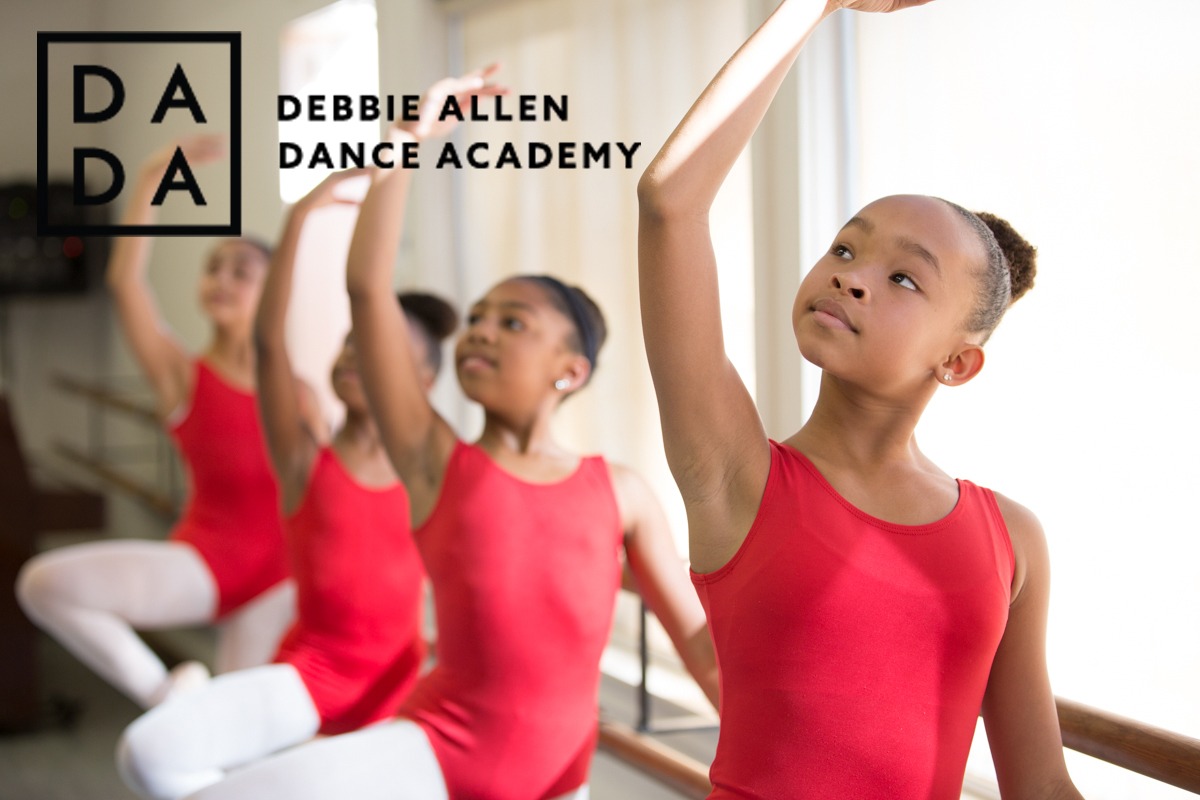
Allen did not set out to build a narrow little ballet machine
When Debbie Allen and her husband, former NBA player Norm Nixon, founded the nonprofit in 2000, Los Angeles already had dance studios. What Allen could not find was the combination she wanted: a comprehensive language of dance, high expectations and a serious welcome for Black and Latino children who had historically met closed doors in classical training.
That explains the academy’s oddly satisfying range. Early Bird begins with children as young as three. Academy students, ages nine to nineteen, take nine or ten classes a week. The hand-selected Conservatory centers ballet and modern but keeps African, Dunham, jazz, tap, hip-hop, flamenco and Latin fusion in the mix. RISE adds acting, voice, audition technique and backstage behavior. Adults can take an open class in the morning or evening without auditioning. The building also contains a private middle school where grades six through eight combine academic work with dance and theater arts.
“I know what got me to where I am ... all of that training, the bel canto singing, the acting: I’m trying to give it to these kids.”Debbie Allen, speaking to the Los Angeles Times
This is what the academy does differently from a competition studio or a single-discipline conservatory. It treats breadth as professional preparation, not a recreational sampler. A dancer can learn the precision of ballet, the grounded history of Dunham and the current vocabulary of hip-hop without pretending those traditions are interchangeable. The repertoire is broad; the standards are not vague.
The menu is transparent. The subsidy is the real product.
The current prices reveal a deliberate ladder. A standard open class is $22. Eight monthly Dance Fundamentals classes cost $176. The Conservatory is listed at $600 a month. RISE, with private voice, acting, Broadway dance and audition work, reaches $620 a month. The 2026 four-week Los Angeles summer intensive cost $2,300; housing with meals was another $3,600.
One low-commitment door for ages nine through adult.
Ten to twelve weekly classes for selected students.
The full musical-theater package.
Four weeks in Los Angeles, before housing.
Those numbers are neither token fees nor elite-school mysteries. Training costs money: teachers, sprung floors, insurance, rehearsal hours, production, lights. DADA’s model does not wish those costs away. It charges families who can pay, earns program-service revenue, and raises donations to move the effective price for families who cannot.
FY2024 public filings report about $7.09 million in revenue: roughly $4.49 million from grants and contributions and $2.50 million from program services.
The scholarship is not a charitable footnote after the curriculum. It is part of the operating design.
The customer list is correspondingly unusual. It includes families buying weekly training, teenagers seeking a professional runway, adults dropping into fitness-minded classes and middle-school families choosing a combined academic and arts education. Then the idea of “customer” breaks down. Los Angeles schoolchildren receive free lecture-demonstrations. Seniors and caregivers join Colibrí Arts. Cancer patients and survivors move through the eight-week J.O.Y. program, developed with oncologist Lawrence Piro and backed by the Angeles Clinic, Cedars-Sinai and Wallis Annenberg.
Before the funding model broke, the building did
The academy’s former home was a converted Marie Callender’s restaurant in Culver City. This is the kind of detail an institutional history ought to preserve. You can renovate a restaurant into a dance school, but eventually the students win. There were too many bodies and too many ambitions for the rooms.
Allen looked for a larger home. The first failure was ordinary and stubborn: real estate. A new facility was expensive, and she could not find someone to co-sign on a building. The academy had demand, a famous founder and a proven mission, yet the balance sheet still met a locked door.
Then Shonda Rhimes called. Rhimes knew the school first as a parent; her children had studied there. In 2017 she asked Allen to meet her on a street corner near Koreatown, in front of an empty 24,000-square-foot warehouse. Rhimes had bought it. She gave it to DADA.
A school opens
Allen and Nixon found DADA around comprehensive training and access.
A warehouse appears
Rhimes donates the future home after seeing the academy through her daughters.
A middle school begins
Sixth grade launches, with seventh and eighth grades added later.
The doors widen
The Rhimes Performing Arts Center opens after pandemic-delayed construction.
The gift changed the possible. Wallis Annenberg added $1 million. Gensler took on the design pro bono. The renovation ultimately cost more than $10 million and produced five studios, a 200-seat performance space, classrooms, offices, an art gallery, an aerial studio and a second floor whose translucent walls show dancers in silhouette after dark.
What changed Allen’s mind about what the academy could be was not a clever pitch deck. It was someone solving the immovable constraint. Once the building existed, new programs could exist with it: aerial instruction, musical-theater production, new-work readings and a full middle school. Capacity became curriculum.
You probably cannot copy the warehouse. You can copy the sequence.
Other arts organizations may look at DADA and see an unrepeatable advantage: Debbie Allen knows Shonda Rhimes. True. Celebrity networks matter. A donated Los Angeles warehouse is not a reproducible operating tactic. But the academy’s useful lessons begin before that phone call.
Build a ladder, not one program
Offer a low-friction entry point, a recurring core program and an advanced track. DADA’s path runs from a $22 class to auditioned training and performance.
Make aid central to the budget
Scholarships work when fundraising and earned revenue are designed together. Treating aid as leftover generosity makes access fragile.
Put the public result on the calendar
Recitals, industry showcases and school performances turn practice into a deadline. They also let families, donors and partners see what their money made possible.
Let adjacent needs share the asset
The same studios can serve children, adults, seniors and health programs at different times. The building earns civic relevance by staying useful.
This approach solves several problems at once. For parents, it creates a coherent route from first class to serious training. For aspiring professionals, it provides technical range and contact with working artists. For the neighborhood, it supplies school programs, subsidized performances, free classes and a block party. For donors, it makes access visible rather than abstract.
It also locates DADA in an interesting part of the market. It is not simply a studio selling hours, nor only a nonprofit running outreach, nor quite a traditional conservatory. It borrows the useful machinery of each: fee-based classes, auditioned rigor, philanthropic support and public service. Competitors may offer excellent ballet or commercial choreography. DADA’s edge is the bridge among genres, ages and ability to pay.
Conditions attached
The model weakens when a city lacks a reliable donor base, when earned fees cannot cover a meaningful share of instruction, or when an organization adds programs faster than teaching quality and administration can support them. The middle-school component adds another layer of regulation, staffing and family expectation. And the founder’s personal reputation is an asset that a new school cannot manufacture on schedule.
The academy’s smartest choice, then, is not that it made dance inexpensive. Much of serious training remains costly. It is that DADA made the cost legible and built several ways around it. Pay for one class. Audition for a program. Apply for support. Meet the academy at school, at a free day, at a subsidized performance or at the community block party.
A dancer’s arm rises because a hundred small corrections have become muscle memory. Institutions move the same way. One class, one scholarship, one rehearsal, one improbable phone call. From outside, the finished gesture looks effortless. Inside, everyone is counting.